Not Photographing the Planetary Alignment

There was a lot of news in the past week about the Planetary Parade. This article by Preston Dyches on the NASA science site says: “Planet parade” isn’t a technical term in astronomy, and “planetary alignment” can refer to several different phenomena. As the planets of our solar system orbit the Sun, they occasionally line up in space in events called oppositions and conjunctions.

A half and hour before sunset (6:02 PST) on February 27, 2025, I drove out to Rodeo Beach, California, hoping to make a photograph of the planetary alignment. It was cloudy and the wind was probably 15 mph (6.7 m/s). Though the winds were offshore, the cloud cover was moving very slowly.

Parade of Planets, Rodeo Beach, California

After an hour and a half, it became clear the weather wouldn’t improve soon. It seemed it wouldn’t clear up for a couple of hours. I took the above photo with Venus visible in the West. Mars was visible (out of the frame) almost 90° overhead. I thought about how Ansel Adams had made commitments to getting a great photograph, considered the cool temperature and the wind, then I decided to leave to go out for dinner.
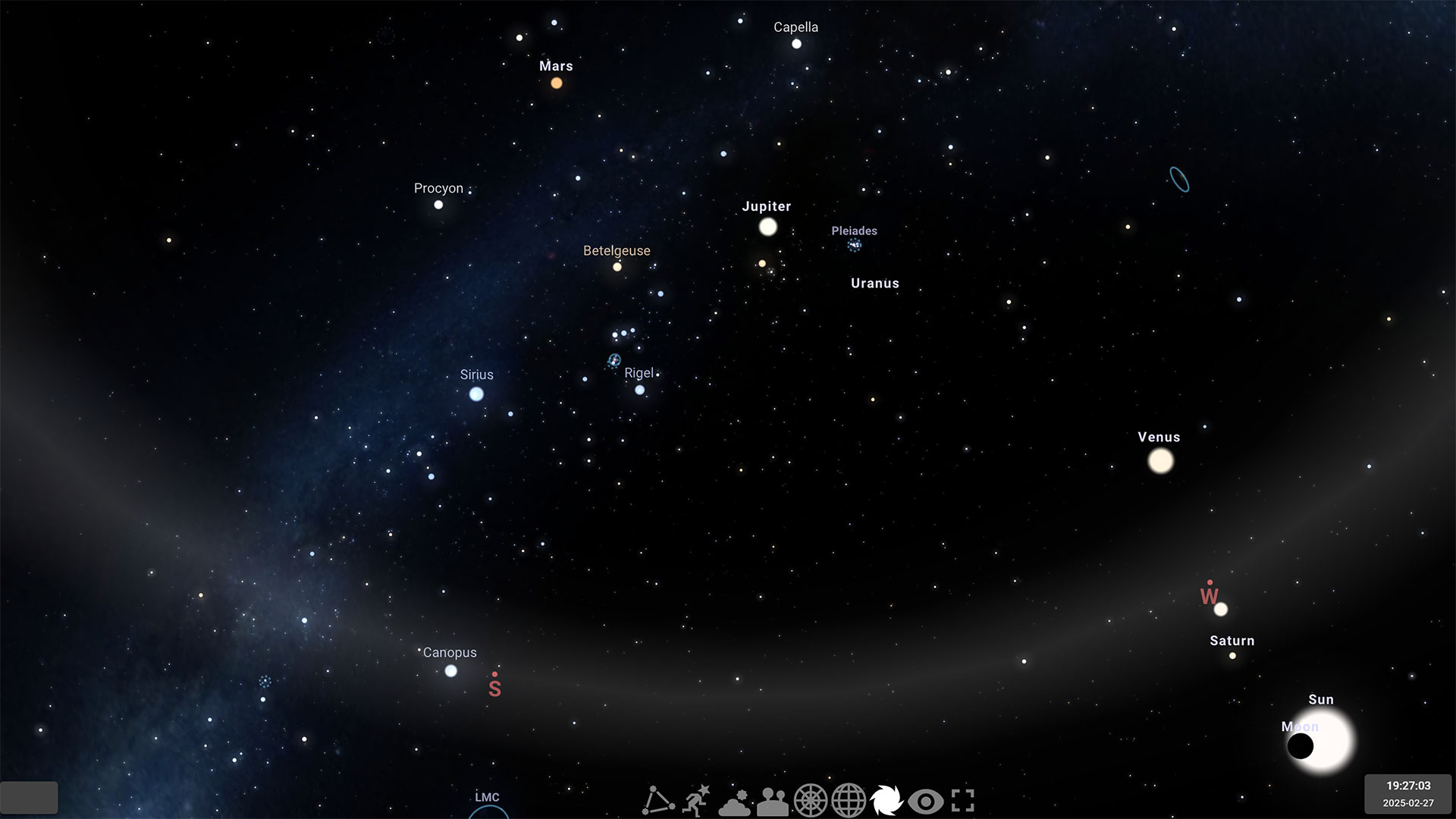
Stellarium screen capture of the southwestern night sky from Rodeo Beacn, California, on February 27, 2025 at 7:27 PM PDT

(Above) Stellarium screen capture of the southwestern night sky from Rodeo Beach, California, on February 27, 2025 at 7:27 PM PDT. Maybe it would have looked like this IRL, had it been clear.

Sintech CFexpress NVMe SSD Adapter

Sintech CFexpress Type-B to NVME M.2 SSD card, PA-CFEM2-N
Sintech CFexpress Type-B to NVME M.2 SSD card, pn: PA-CFEM2-N
The adapter includes six screws, a label and a storage case.

I use a Nikon D500 for some of my photography. When I first bought storage media, I started out with a Lexar Professional 2933x 64GB XQD card and a Lexar Professional 1000X 32GB SDHC UHS-II card. In late 2020, Nikon released a firmware update to give the D500 CFExpress Type B support.

In early February 2022, Tom’s Hardware had a story about an Adapter (that) Turns SSDs Into Cheap CFExpress Cards. The Sintech CFexpress Type-B adapter uses a NVME M.2 SSD. So I bought an adapter and a Western Digital 256 GB SN520 NVMe SSD.

Assembly only requires removing the label from the SSD, applying some heatsink compound to the cover of the adapter and screwing it together. Before I plugged the SSD into the adapter, I used a little DeoxIT on the contacts.

Sintech CFexpress Type-B to NVME M.2 SSD card, PA-CFEM2-N adapter, Western Digital PC SN520 NVMe 256GB SSD

The adapter and 256 GB NVME M.2 SSD cost me about $90. A quick Google search for a SanDisk Extreme Pro 256 GB CFexpress Card Type B found the best price to be around $279. I also had to buy a Sony MRW-G1 CFexpress Type B / XQD Memory Card Reader for $100, so there’s that.

I was a professional photographer in New York City for 20 years (in the film era). I definitely would not use the Sintech card for an assignment where money was involved. I would use a memory card that’s on the Nikon approved list.

In the future, I will do some testing on the Sintech card and will add the results. For now, the card does work in my Nikon D500:

Nikon D500 Control Panel
Nikon D500 Control Panel showing 5.4k image count with the
Sintech CFexpress adapter and WD SN520 NVMe SSD

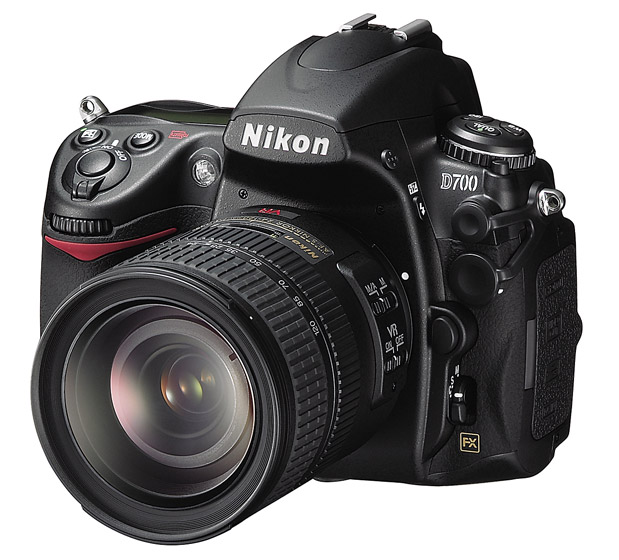
Nikon D700

Nikon introduced the new D700 SLR, their second digital camera with an FX format CMOS image sensor. The sensor is 23.9 x 36mm, almost the same size as 35mm film camera.

Why do photographers want a 35mm film sized sensor? The lenses on the FX format cameras don’t have the 1.5x crop factor of the DX sensor cameras, so you can spend a lot more money getting wide angle lenses. For example, this AF NIKKOR 14mm f/2.8D ED lens on the D700 is going to be the equivalent of a 21mm lens on a DX format sensor camera.

Priced at $2,999.95 USD, the Nikon D700 is a little more attainable than the Nikon D3 at $4,999.95 USD, I guess.

With all the improvements over a few short years, the Nikon D700 is at least 10 times better than my D70.

Nikon D700 (Nikon USA) press release.