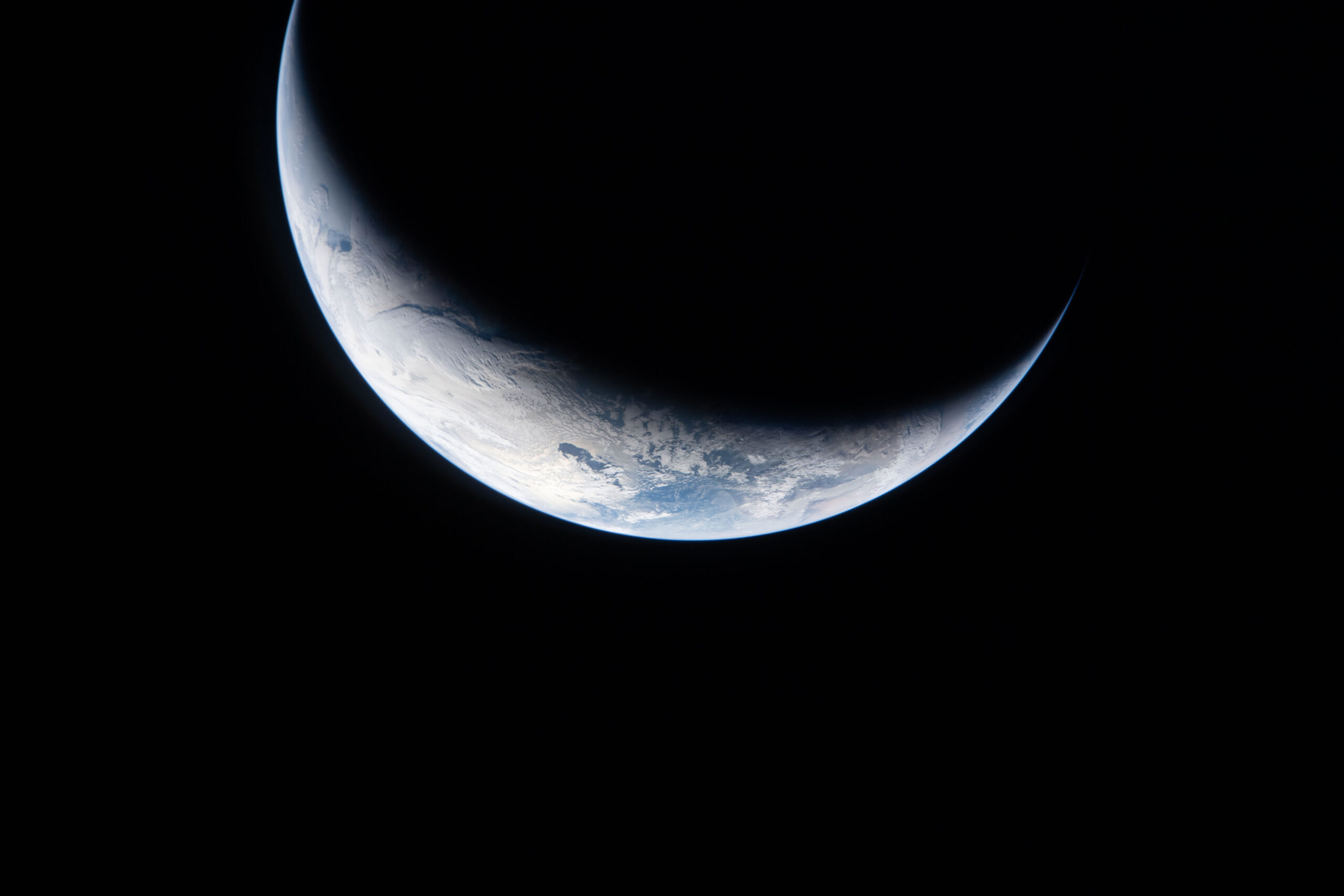
Earth, photographed by Astronaut Christina Koch. EXIF data at the bottom of this post
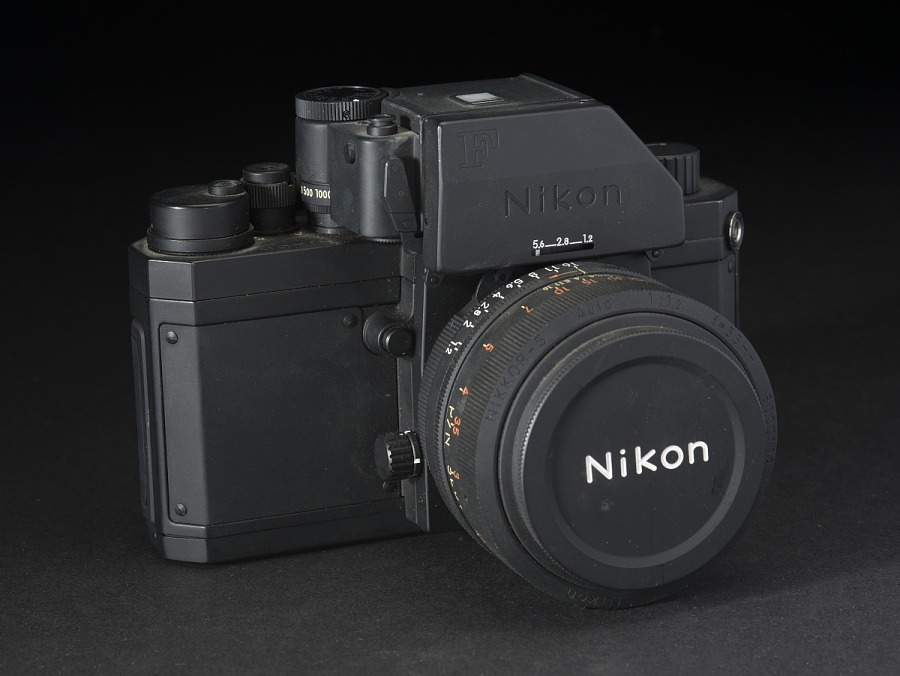
Camera, Nikon F, Dummy (Courtesy National Air and Space Museum) A working version of this specially modified Nikon was used on the Apollo and Skylab Programs
Artemis II photographs were seen all over, after NASA released them in April 2026 at the end of the mission. Alan Taylor curates photography at The Atlantic and it’s always interesting. He did a page of Moon Joy: Photos From Artemis II on April 7, 2026.
I’ve been a Nikon user since the mid-1970s, about the same time NASA started using them on the Apollo missions. Though most of the famous photographs taken on the surface of the moon were taken with Hasselblads, there were Nikon FTNs that were also used in the Apollo command modules for photography. (The Nikon Photomic FTN: A Camera for the Ultimate Shooting Environment — Space)
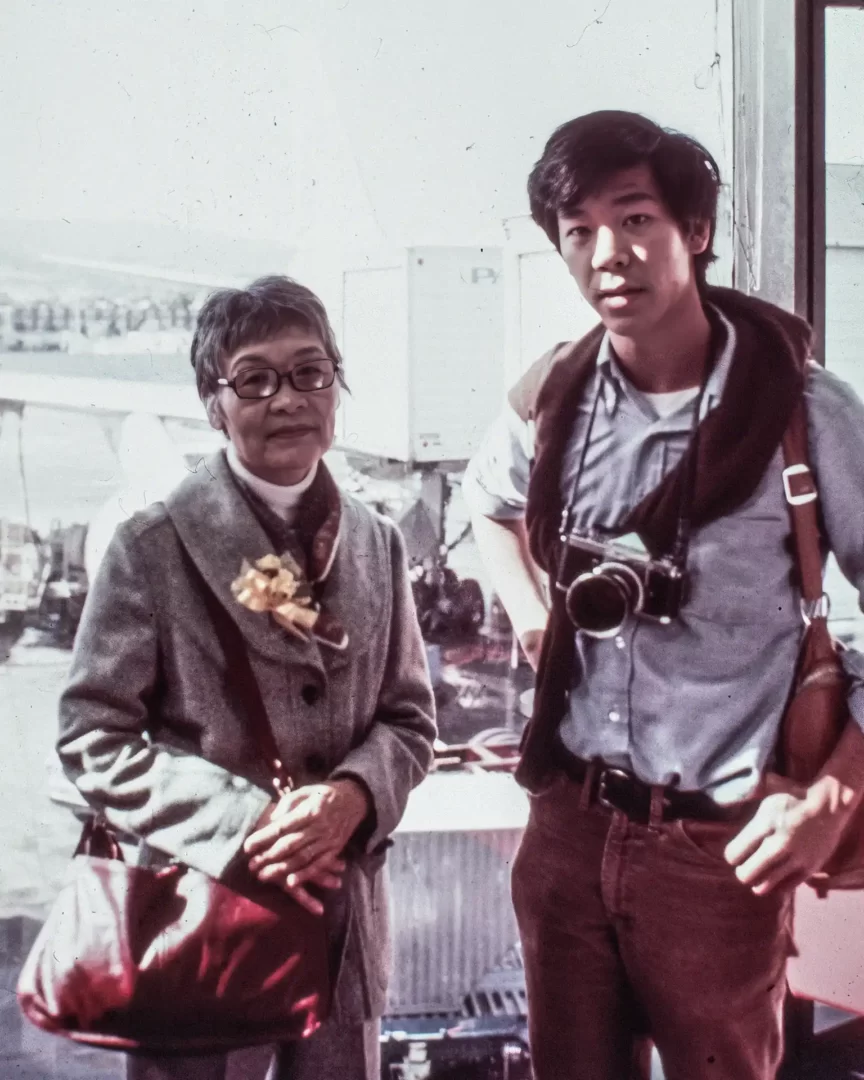
Sophia Wong (Leslie Wong’s mother) and Leslie Wong at SFO, 1975, before departing for China.
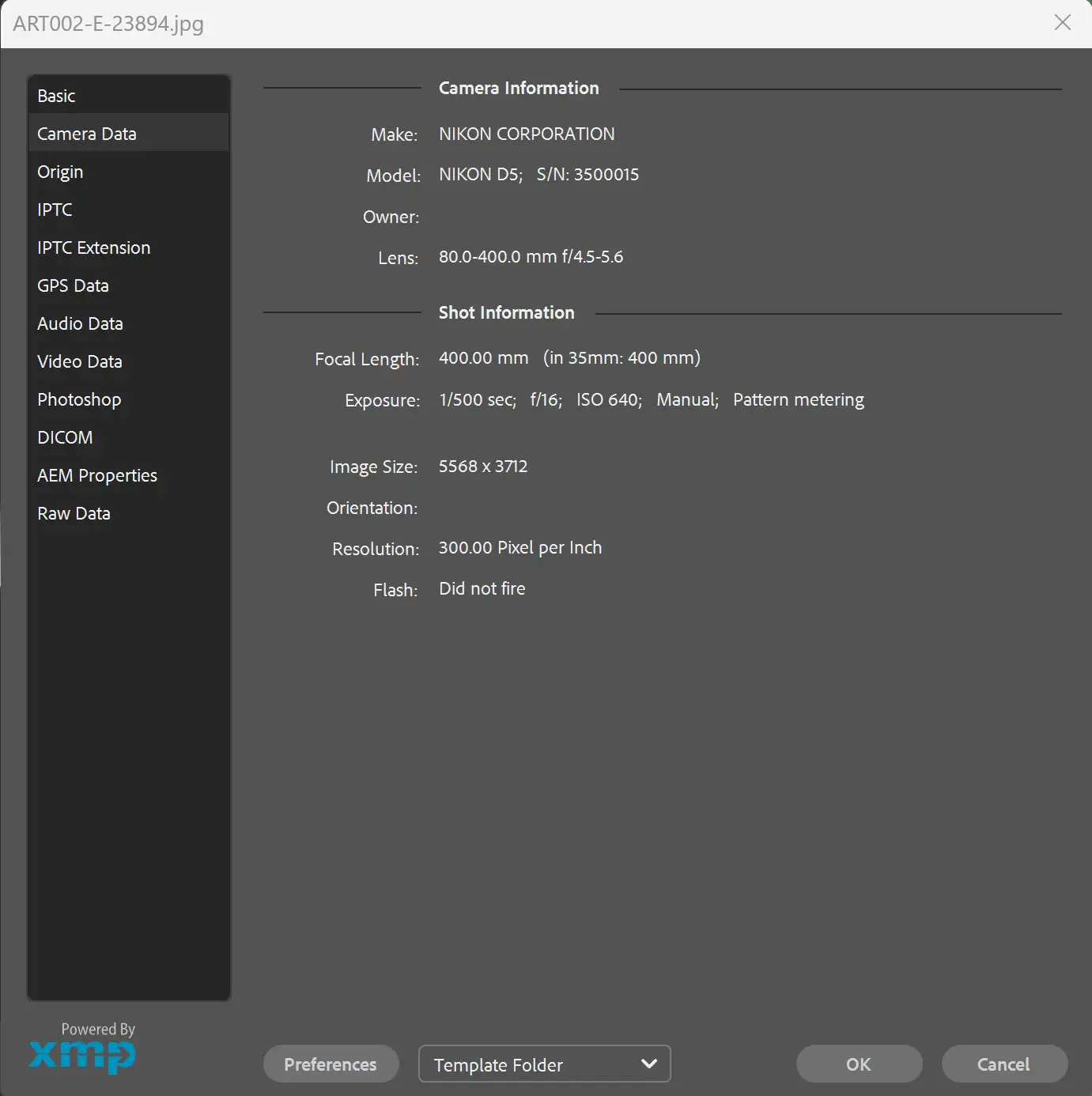
As a former photographer, an interesting thing about them is that the images from NASA still have the EXIF information embedded in the images. For the image of the earth at the top of this post, NASA Astronaut Christina Koch used a Nikon D5 and an AF-S NIKKOR 80-400mm f/4.5-5.6 G ED VR lens.
Adobe Photoshop EXIF information from Artemis II photograph FD03_Returned_1021_D5_015_Koch
I half thought about photographing the “blood moon” eclipse on March 3, 2026 because the next one isn’t going to happen until December 31, 2028 (and it won’t even be visible in California). The next full lunar eclipse that will be visible in California is June 26, 2029. I’ve made a couple of previous attempts.
Because totality wouldn’t happen until ~3:00 AM PST, I was hoping it’d be overcast in my location because of the Marine Layer (the natural air-conditioning that makes the coast of California a nice place to live), but when I went outside around 11:00 PM (PST), March 2nd, the sky was clear.
I grudgingly pulled out my 40-year-old Gitzo 320 Studex Performance tripod paired with a similarly old Arca-Swiss B1 Ball Head. The last film camera I bought as a professional photographer was the Nikon F4s but as a hobbyist, the last serious camera I bought was a Nikon D500, 10 years ago.
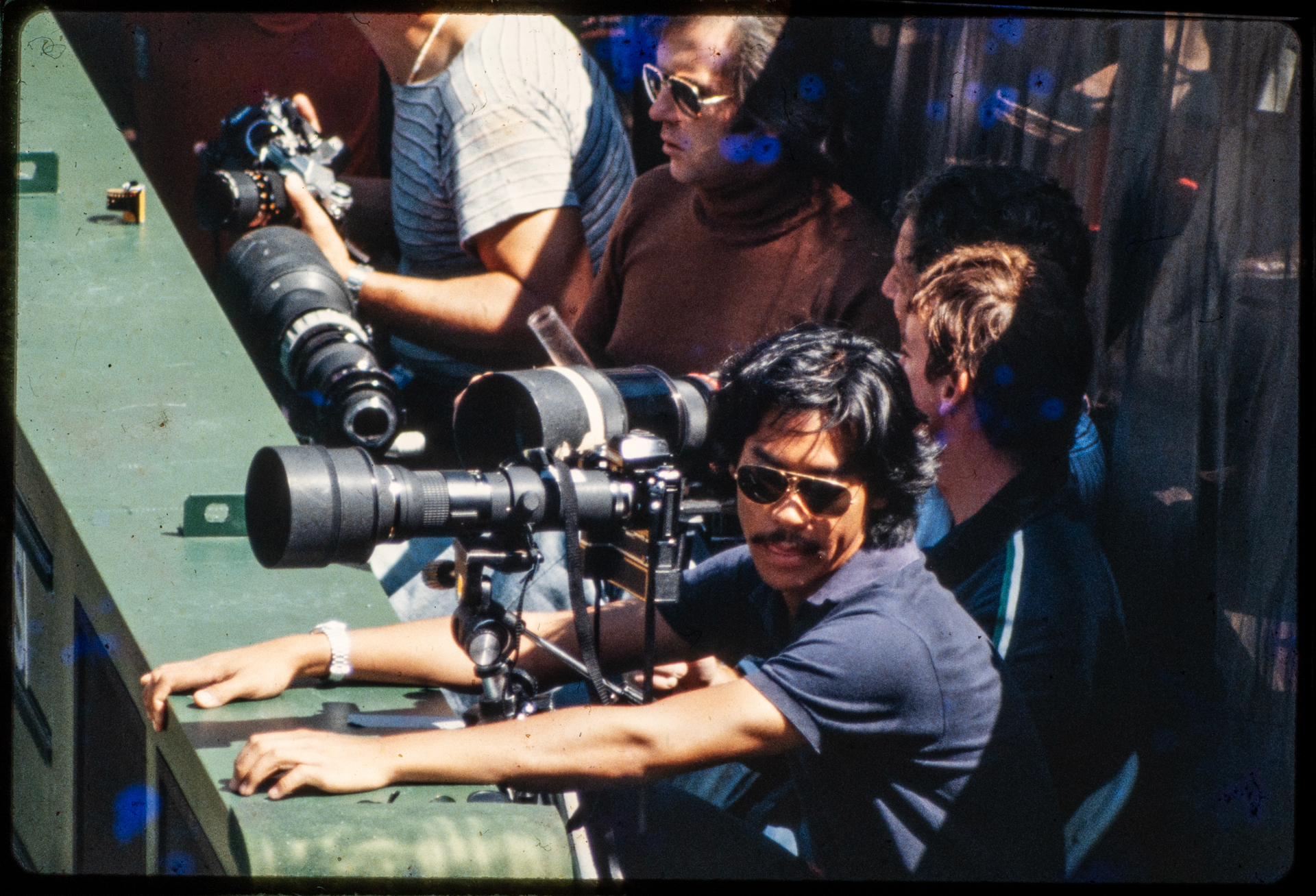
Photographer Leslie Wong (with sunglasses), at the 1978 US Open (tennis) with a Nikon F2 and a Nikkor ED 600mm 1:5.6 IF AI. Photo by Joe McNally
In my professional photography career, I have never owned a big lens. From the late 1970s to the 1990s, whenever I needed one at an event, Nikon Professional Services was there to lend them. Also, I never had the scratch to buy Nikon 300mm, f2.8 let alone a Nikon 600mm f4. Consequently, my longest lens is a Nikon Nikkor 300mm f/4.5 AI-S, which, according to this Nikon lens database, was made in the late 1970s. It was probably a big purchase for me when I was a poor, struggling photographer in New York City in the late 1970s.
Thus equipped, I set up in front of the house and started taking photos a little after 2 AM, when the earth’s shadow started to creep over the moon.
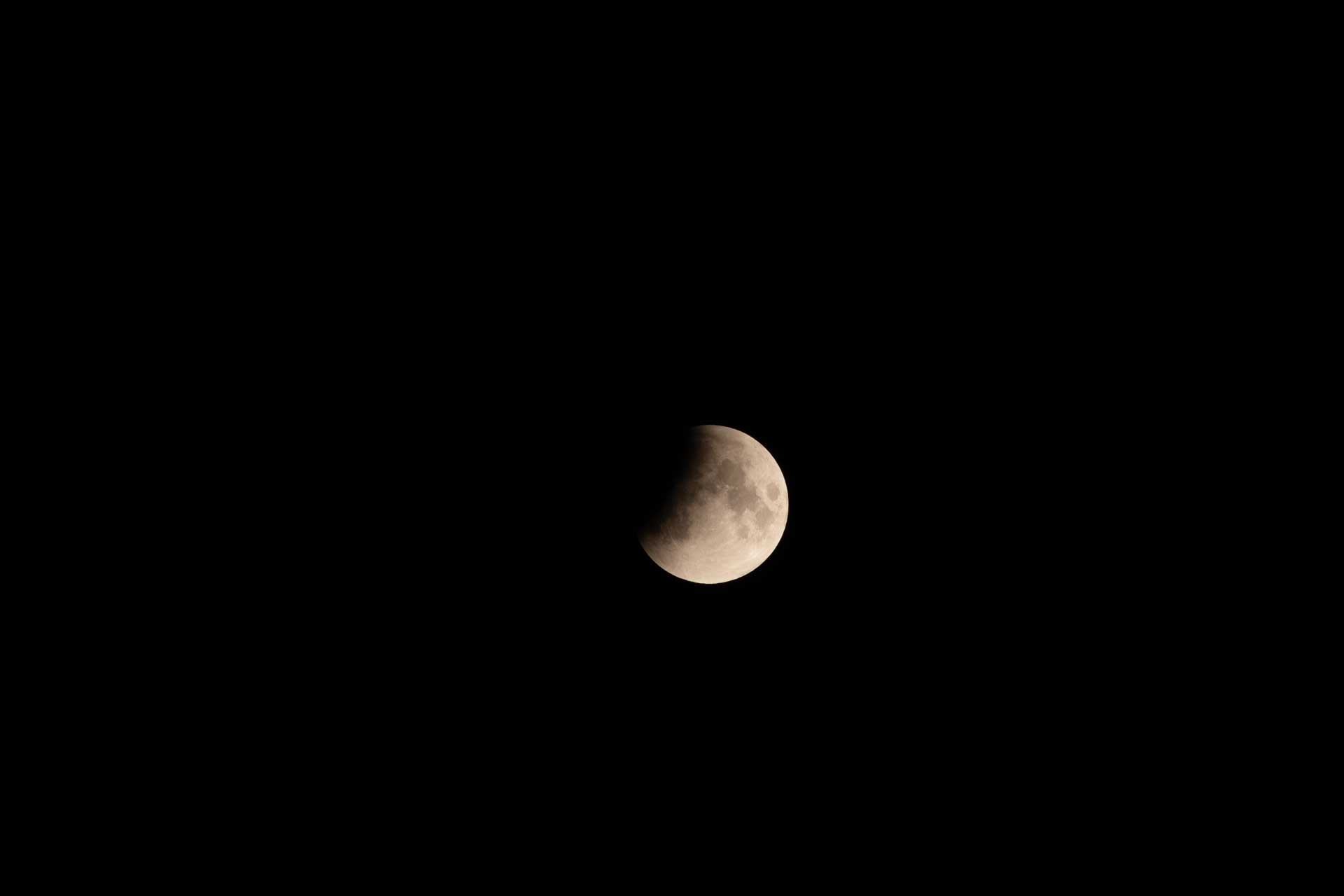
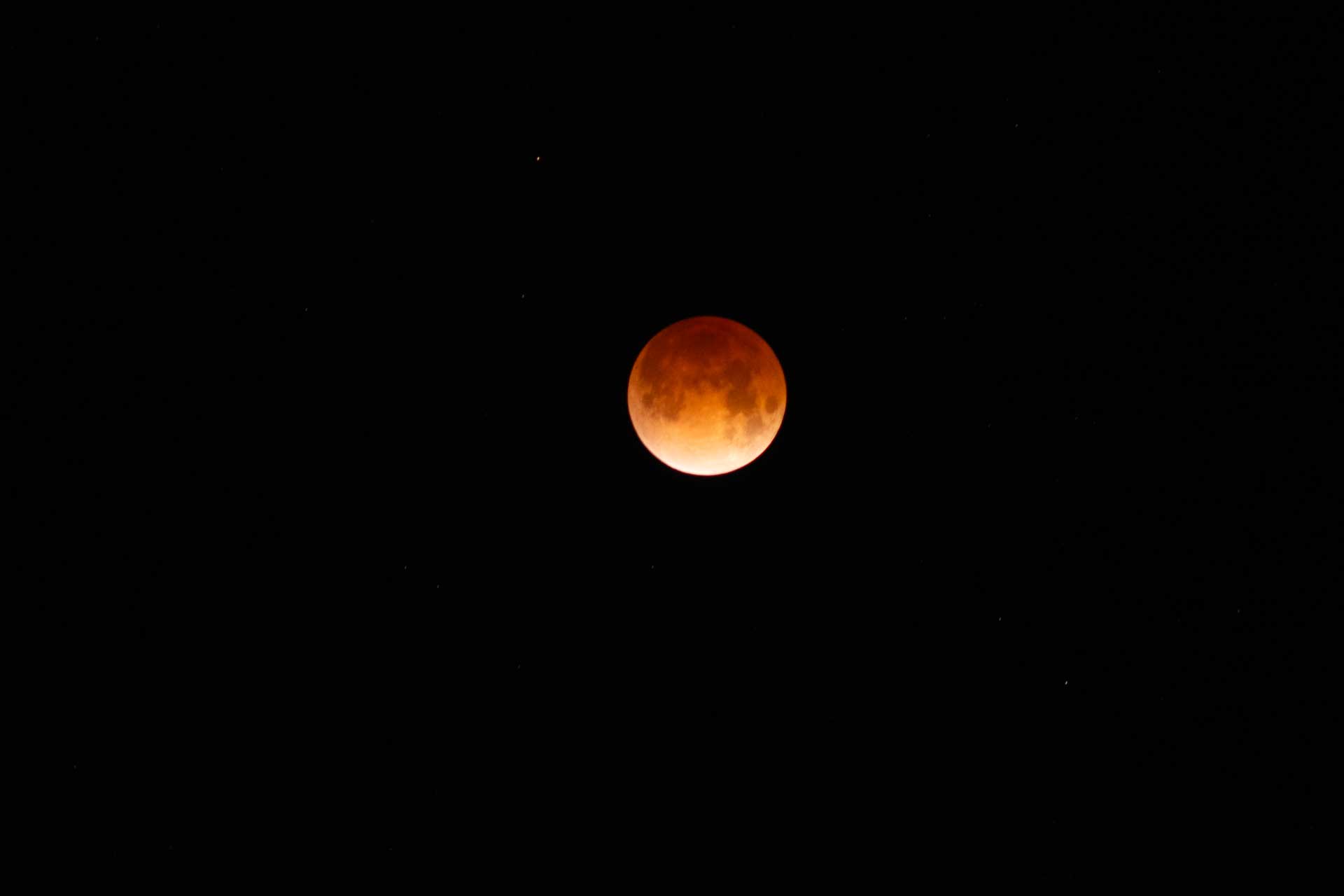
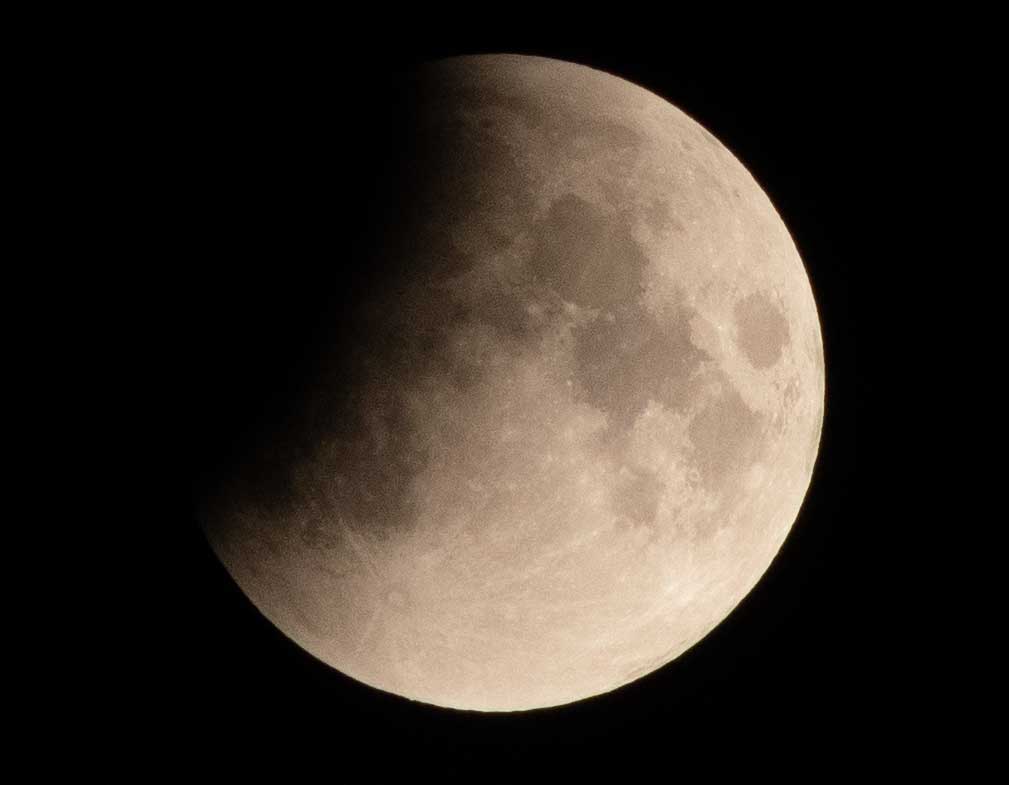
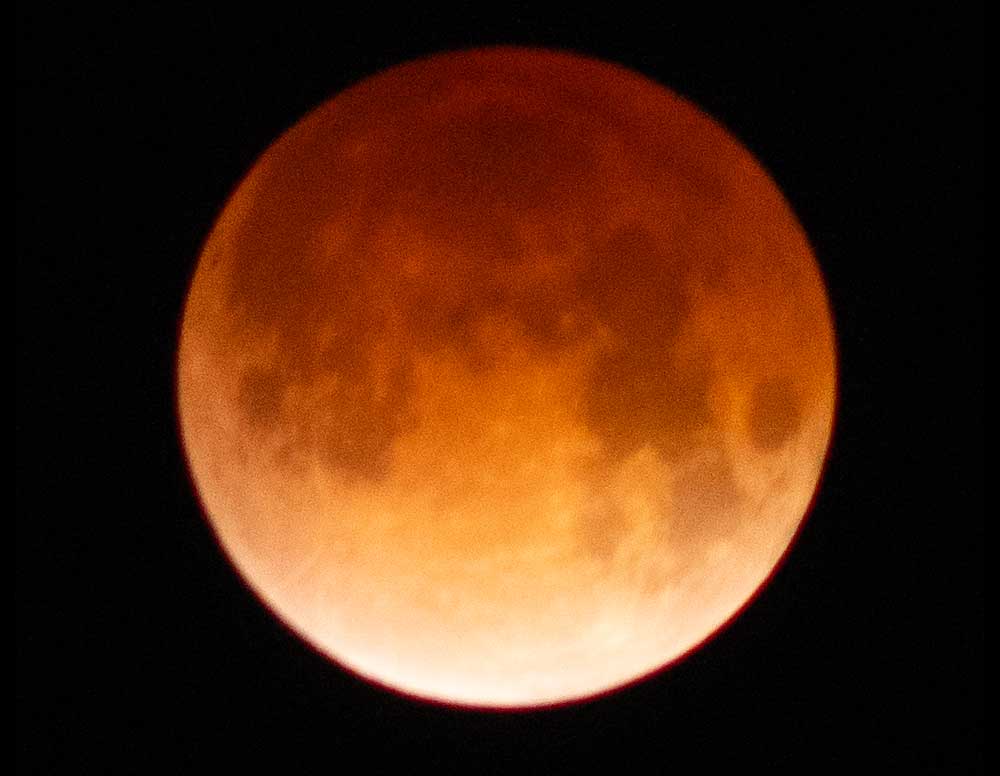
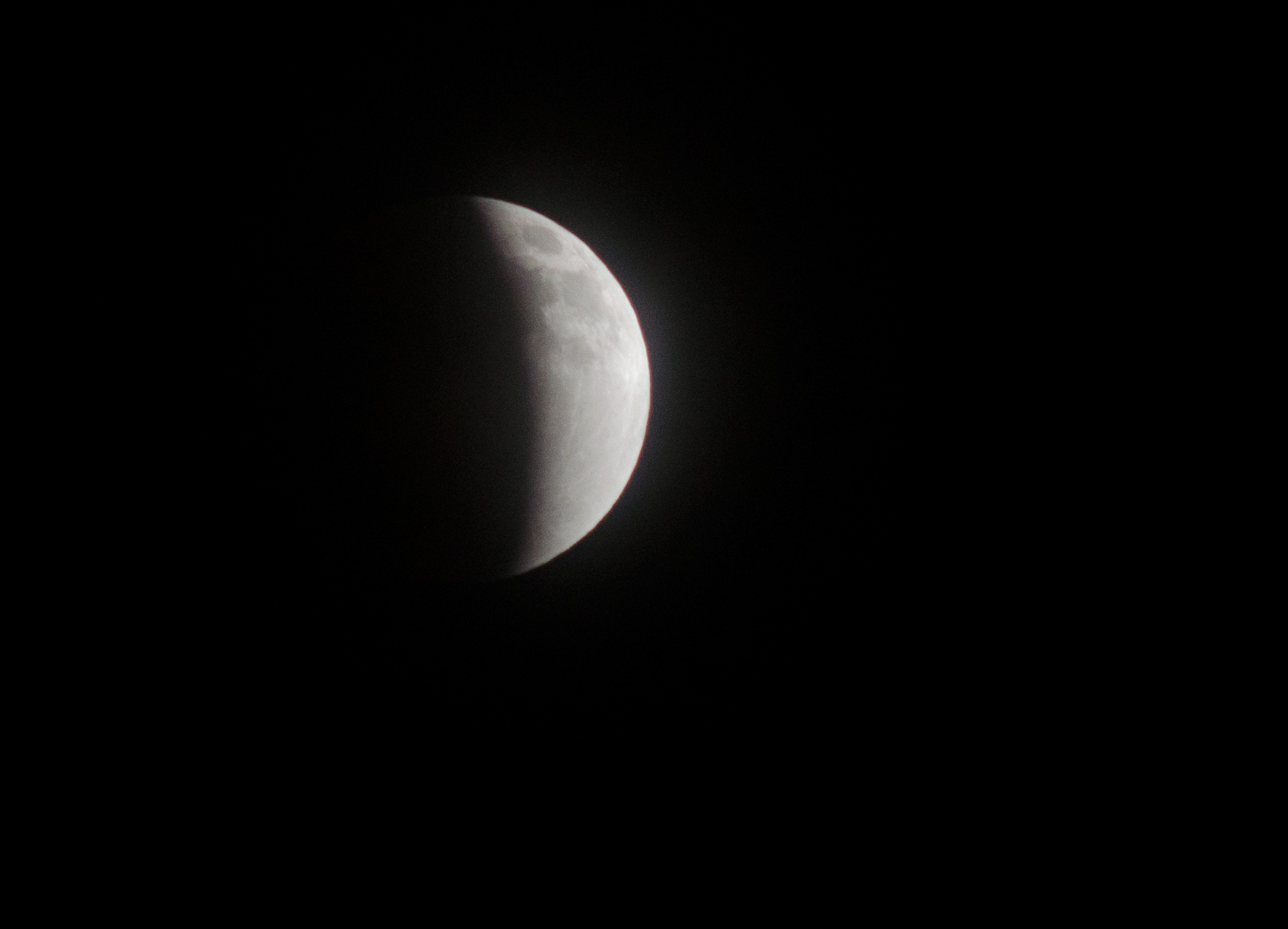
Side by side, the images show the contrast in color between the beginning of the eclipse and full “blood” moon. My disappointment came when I looked at the images at 100% – the full image size.. The first photo was sharp; the exposure was 1/1000 sec @ f11, ISO 800. The full eclipse exposure was ¼ sec. @ f5.6, ISO 1600 and it was blurry. For the long exposures, I used the self-timer delay of 2 seconds, which seems to have not been enough time for the camera to settle down. If I were a careful photographer, I also would have locked up the mirror before taking the photo or used a higher ISO setting. Hopefully, I’ll remember this in 2029.
Lunar Eclipse, 2:03 AM PST, March 3, 2026, 1/1000 sec @ f11, ISO 800 (sharp image)Lunar Eclipse, 3:15 AM PST, March 3, 2026, ¼ sec. @ F5.6, ISO 1600 (blurry image)
Assembly only requires removing the label from the SSD, applying some heatsink compound to the cover of the adapter and screwing it together. Before I plugged the SSD into the adapter, I used a little DeoxIT on the contacts.
Sintech CFexpress Type-B to NVME M.2 SSD card, PA-CFEM2-N adapter, Western Digital PC SN520 NVMe 256GB SSD
I was a professional photographer in New York City for 20 years (in the film era). I definitely would not use the Sintech card for an assignment where money was involved. I would use a memory card that’s on the Nikon approved list.
In the future, I will do some testing on the Sintech card and will add the results. For now, the card does work in my Nikon D500:
Nikon D500 Control Panel showing 5.4k image count with the Sintech CFexpress adapter and WD SN520 NVMe SSD
When I went to Montano Velo to buy some spokes and a rim for a new wheel build, they sold me Phil Wood spokes. I bought double butted spokes, so it took a few minutes to prepare them on the spoke machine. I had always used DT spokes and I really didn’t notice that they weren’t DT spokes until I started threading them through the hub and saw “PHIL” embossed on the butted section near the spoke head. I used Damon Rinard’s free spoke length calculator, which is an Excel spreadsheet with macros, to calculate the length of spokes that I needed. After truing and dishing the wheel, the spoke length calculations proved correct.
I also used a Mavic Open Pro rim. The Mavic Open Pro rims have double eyelets, which hopefully distribute the stresses through the two sections of the rim. I considered the Mavic CXP33, which has more of a V-profile than the Open Pro. I guess I’m a traditionalist. I’m not interested in saving weight – I just need strong wheels that will hold up to someone who weighs 13.8571 stone and occasionally bunny hops on craggy Oakland streets. I have never had any problems with Mavic rims. In the past, I have used the G40, GP3, GP4, MA40 and MA3. On my first ride today, the wheel didn’t pretzel so I guess it’s working.
To provide the best experiences, we use technologies like cookies to store and/or access device information. Consenting to these technologies will allow us to process data such as browsing behavior or unique IDs on this site. Not consenting or withdrawing consent, may adversely affect certain features and functions.
Functional
Always active
The technical storage or access is strictly necessary for the legitimate purpose of enabling the use of a specific service explicitly requested by the subscriber or user, or for the sole purpose of carrying out the transmission of a communication over an electronic communications network.
Preferences
The technical storage or access is necessary for the legitimate purpose of storing preferences that are not requested by the subscriber or user.
Statistics
The technical storage or access that is used exclusively for statistical purposes.The technical storage or access that is used exclusively for anonymous statistical purposes. Without a subpoena, voluntary compliance on the part of your Internet Service Provider, or additional records from a third party, information stored or retrieved for this purpose alone cannot usually be used to identify you.
Marketing
The technical storage or access is required to create user profiles to send advertising, or to track the user on a website or across several websites for similar marketing purposes.




 (lens gift of