I’ve had an interest in the cosmos since I was a kid. On backpacking trips as a Boy Scout in the Sierra Nevada mountains in California, I was able to clearly see, for the first time, the Milky Way under dark night skies.
My first and only view (until a month ago) through a telescope was when I accompanied my sister, Alberta, on a Girl Scout trip to the Chabot Science Center in the Oakland, California hills. It was probably in the early 1960s. I saw Saturn and its rings through Chabot’s 20-inch (510 mm) refractor telescope, Rachel.
After mentioning my interests in the cosmos, my friend Lori told me that the library had telescopes that I could borrow. I found that my library system, the Marin County Free Library, not only has books, but it has a “Library of Things… a collection of physical objects that may be borrowed.”
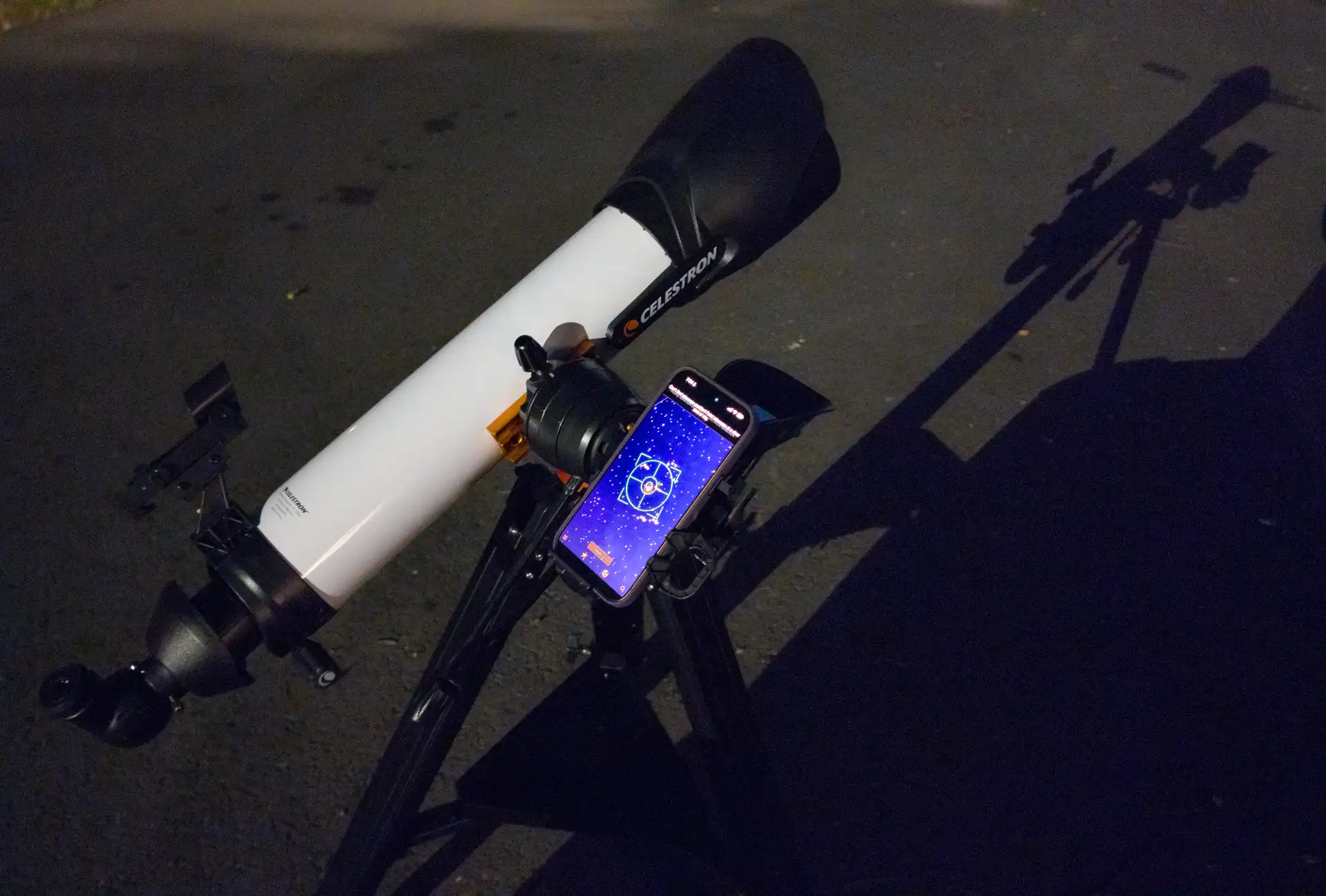
A few weeks ago, I was in my branch library and saw one of the telescope cases on a shelf. It was a little too heavy to carry for ½ mile, so I drove back the next day and picked it up. It is a Popular Science by Celestron StarSense Explorer DX 100AZ telescope.
The telescope was fairly easy to setup, and the library provided the code for the StarSense Explorer app (iOS, Android). I got it just in time to attempt to see Comet Lemmon (C/2025 A6). Kipp went with me to an open field with a view of the western sky but after doing research with ChatGPT (https://chatgpt.com/share/69192772-1800-800a-879e-201d8b332592) and using Stellarium (https://stellarium.org/) and other online resources, I spent about two hours after sunset and never saw Comet Lemmon.
The location of my house is extremely sub optimal for using a telescope. The backyard probably has a 10° view of the sky directly overhead. The front of the house has a streetlight ~110 ft (~33 m) away.
Undaunted, a few days later, I set up the telescope around 11:30 pm and sat down on my front steps to take a look.
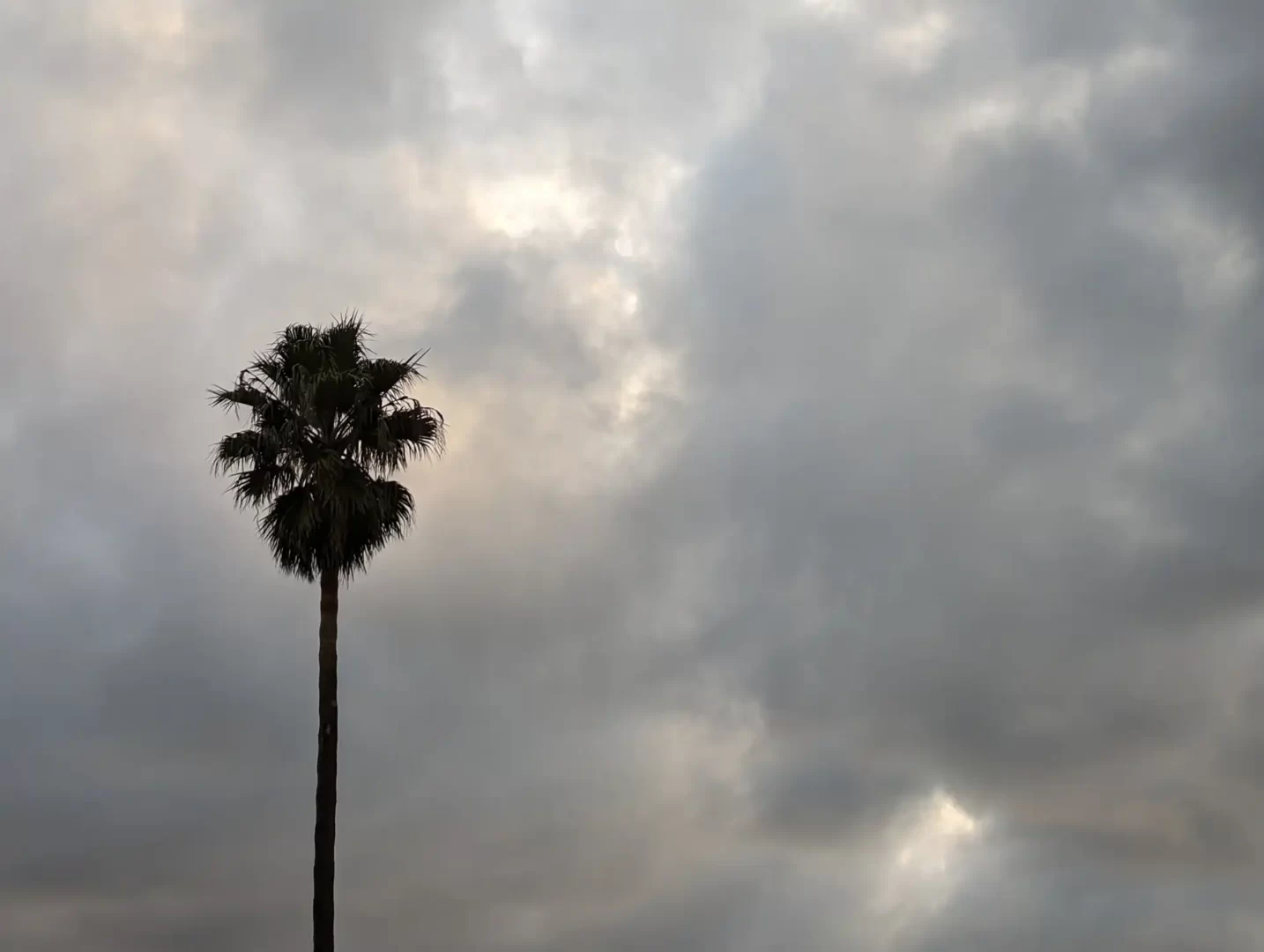
I had previously aligned the finderscope and the StarSense Explorer app by focusing on a palm tree about a quarter mile away.
I used the Stellarium app on my Pixel 10 Pro to locate Jupiter. My iPhone was sitting in the StarSense Explorer phone bracket. I was a little dubious that I could calibrate the app during the day, take the telescope back out at night, put the phone back into the bracket and it would be accurate. I went through re calibrating it by aiming the telescope at a streetlight about 300 ft (91 m) away.
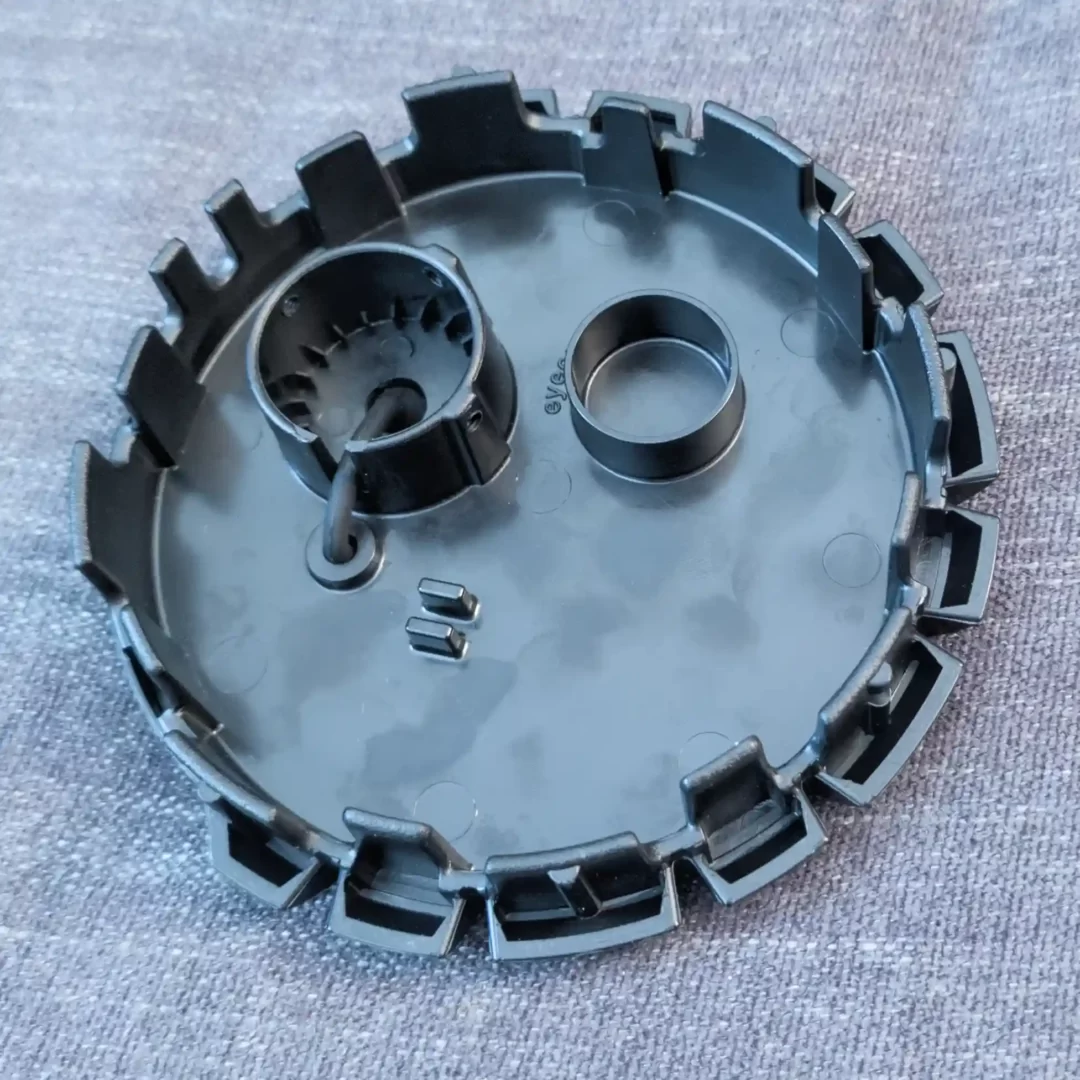
The telescope’s lens cap doubles as a smartphone holder for astrophotography. Unfortunately, my version of the telescope borrowed from the library didn’t have the bungee cords to hold the phone over the hole over the eyepiece, so for my feeble attempts at astrophotography, I tried to hand hold my Google Pixel 10 Pro over the eyepiece to take a photo. Given that the Pixel 10 Pro has three lenses that are visible on the camera bar, it was pretty confusing figuring out which lens I should hold over the eyepiece. On the Pixel camera setting, I set the lens selection to manual, so I could select ultra-wide, wide and tele without the slider.
The pictures were pretty sub optimal. That’s when I learned about more about visual astronomy and astrophotography.
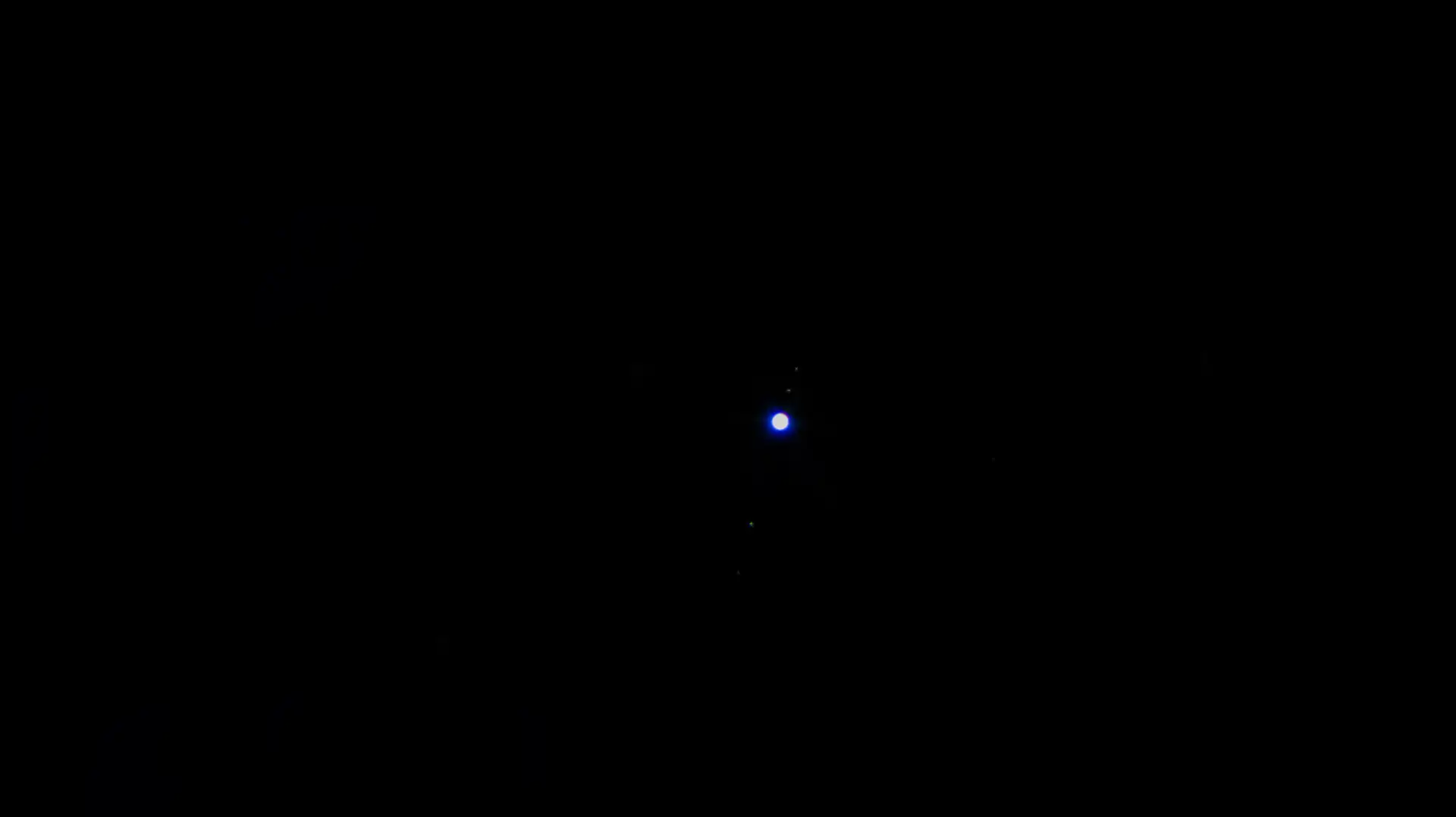
Looking through the telescope with the 25mm eyepiece, I could see the barely see two atmospheric bands around Jupiter and four moons very distinctly (the bands don’t show in the image taken by the Pixel 10 Pro held over the eyepiece).
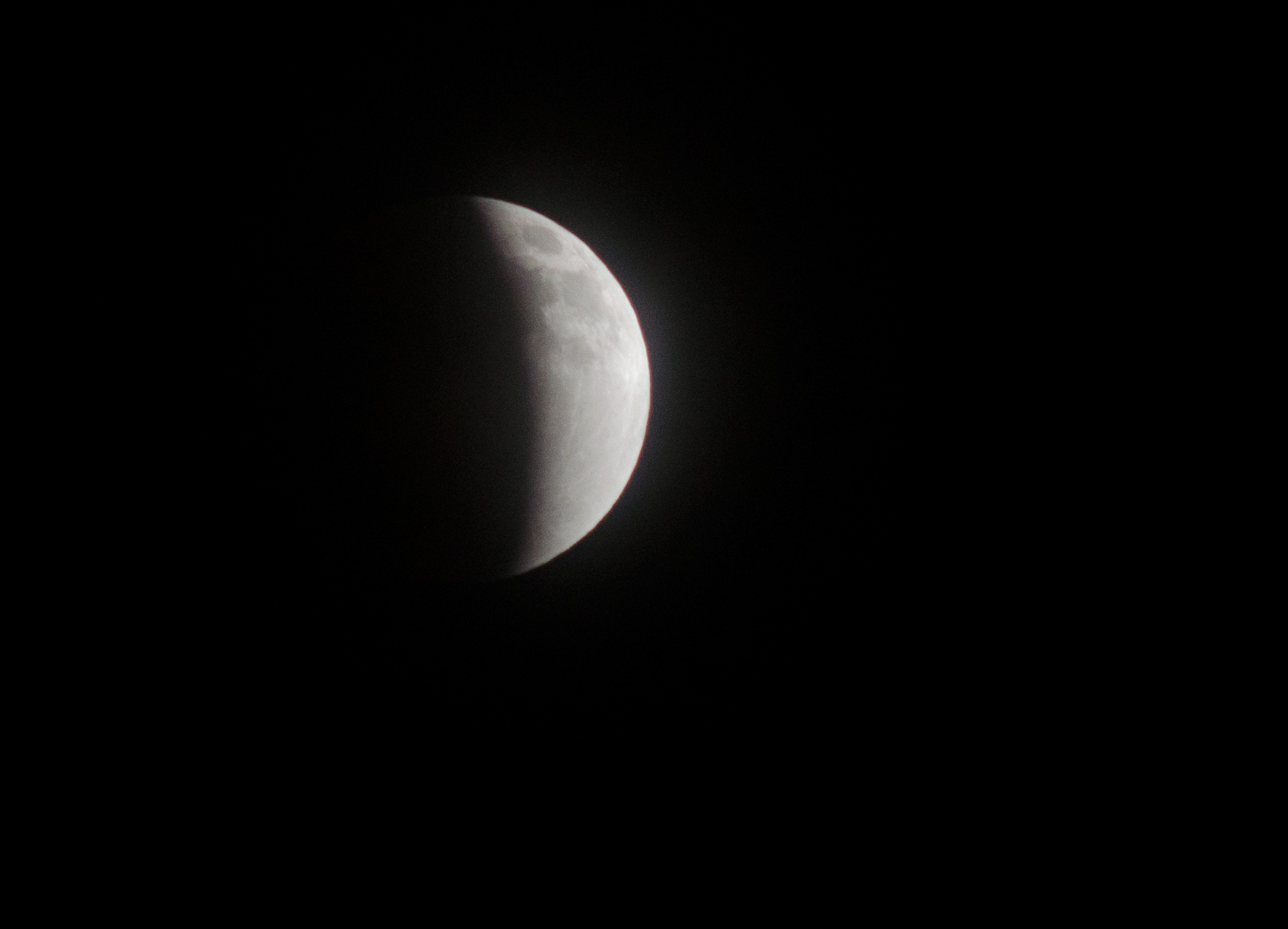
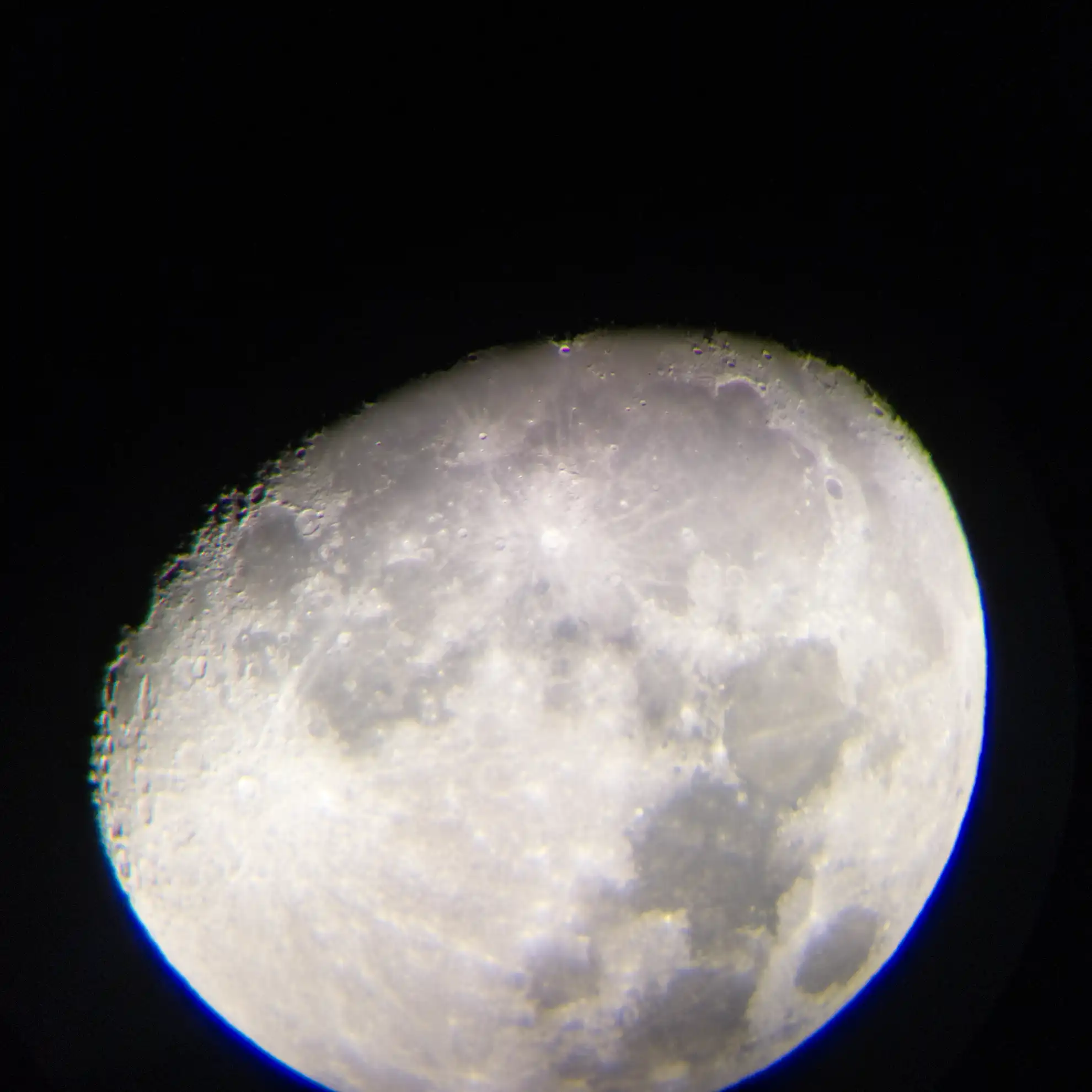
The quarter moon I saw was dramatic. Visible were mountains, craters, and the terminator. I had a very difficult time holding the phone over the eyepiece to get a decent photograph.
When I turned the telescope towards Saturn, the rings appeared as a tiny wisp sticking out from the planet. I read that in late October and early November 2025, when I was looking, Saturn’s rings were oriented nearly edge-on to Earth’s line of sight, making them appear to “disappear” or become nearly invisible.
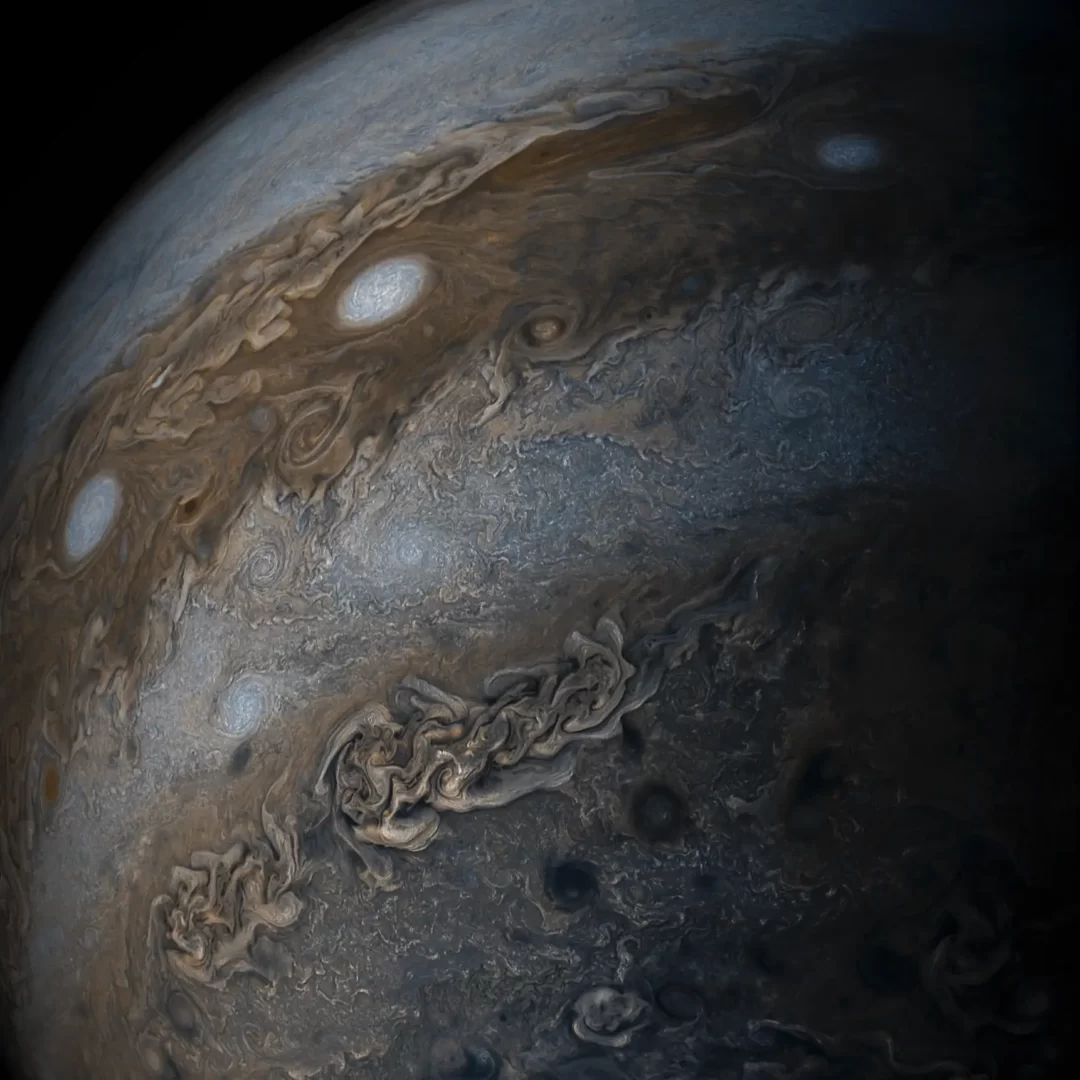
There is undeniably a thrill for my first time with visual astronomy. But with the entry level Popular Science by Celestron StarSense Explorer DX 100AZ telescope, planets are fuzzy bright lights, stars are bright pinpoints and visible galaxies looked like gray smudges. You can find spectacular images of the planets like this “enhanced-color image of Jupiter’s bands of light and dark clouds was created by citizen scientists Gerald Eichstädt and Seán Doran using data from the JunoCam imager on NASA’s Juno spacecraft” or even live streaming view from the Hubble telescope and Webb telescope.
These are direct links to sites where I read news about space (I get their RSS feeds and read them using feedly.com):