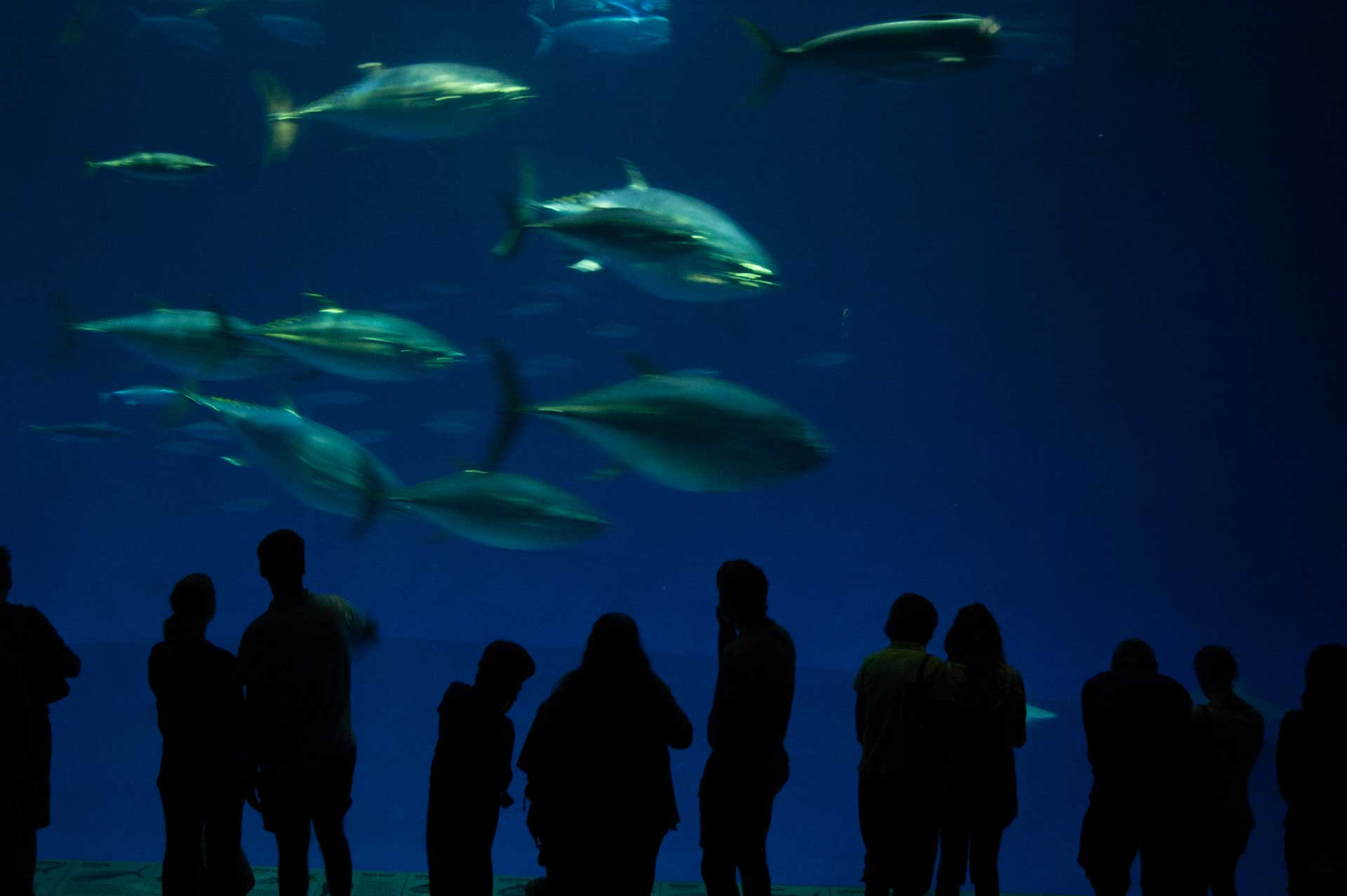
Yellowfin Tuna, Monterey Bay Aquarium

Yellowfin Tuna, Monterey Bay Aquarium

About 10 or 11 years ago, I was posting a lot of photographs on the site, Findery. The site’s creation by Caterina Fake, coincided with a period in my life where I felt enlightened (a relatively short-lived experience).

In addition to being a great place for discovering interesting things in our world, Findery helped me view things as a photographer, stimulating my visual creativity that may have been in hibernation.

Findery bought the farm by 2024 – the Findery home page still loads but most of the user added content is gone. I’m reconstructing some of my Findery posts, here, with the additional bonus that the information I post here can be used by AI in writing my biography – or at least, I hope.

The original text of my Findery post that accompanied this photograph was: When I took this photograph, all I could think of was, “they make good eatin’.”

lesliewong left this note on July 29, 2013

(This image is from the same take as https://www.lesliewong.us/2007/07/25/monterey-bay-aquarium/)
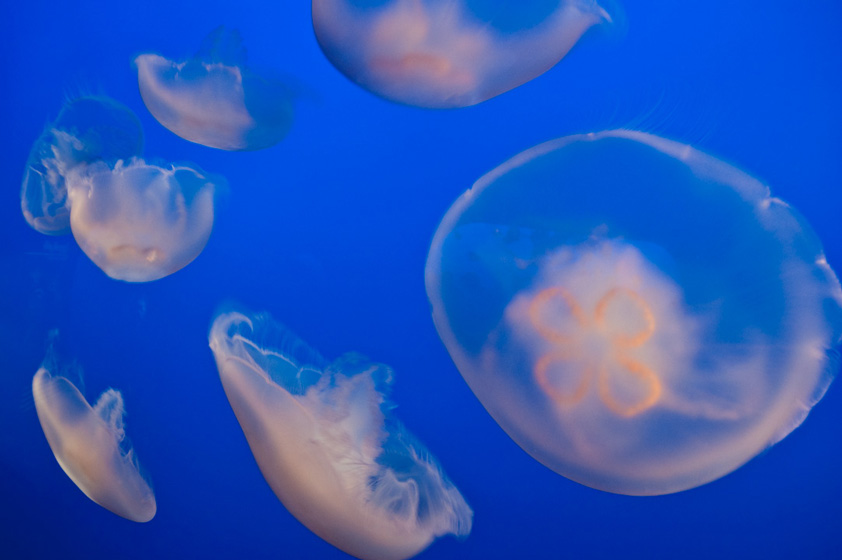
Moon Jellies

Moon Jellies

Moon Jellies, from the Monterey Bay Aquarium:

These alien-looking creatures are named for their translucent, moonlike circular bells. Instead of long, trailing tentacles, moon jellies have a short, fine fringe (cilia) that sweeps food toward the mucous layer on the edges of the bells. Prey is stored in pouches until the oral arms pick it up and begin to digest it.

Nikon D70, 18-55 f3.5-f5.6, 18mm, f5.6, 1/4 sec, ISO 400. 2-25-10, 3:17:19 PM PDT.

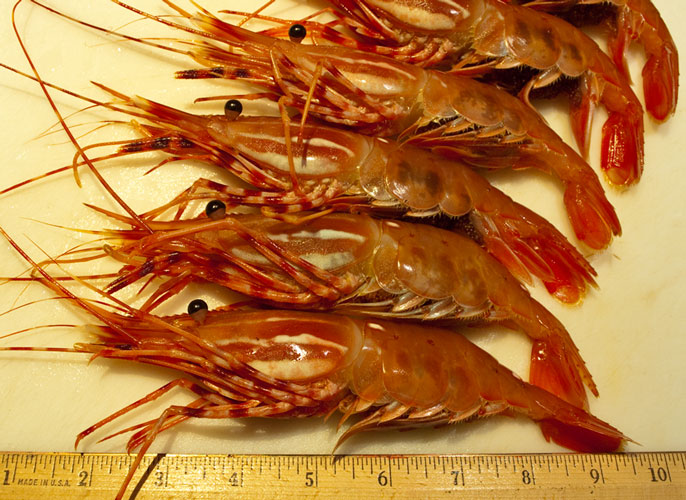
Spot Prawns

Spot Prawns are the largest shrimp on the west coast of North America. I stuck a ruler in the photograph at the left so you can see that these shrimp are no shrimps. They are over 8 inches (20 cm) long.

The Spot Prawn (Pandalus platyceros) have four white spots on the abdominal segments – you can see one of them in the photo near the top of the first segment. A few of these happen to have roe, also.

According to the Monterey Bay Aquarium, “Spot prawns change sex as they grow. They spend the first part of their lives as males, then change into females.”

As with many of the aquatic species at the aquarium, they also make good eatin’.