Charley the Monkey

Monkey Memories

Charley the Monkey
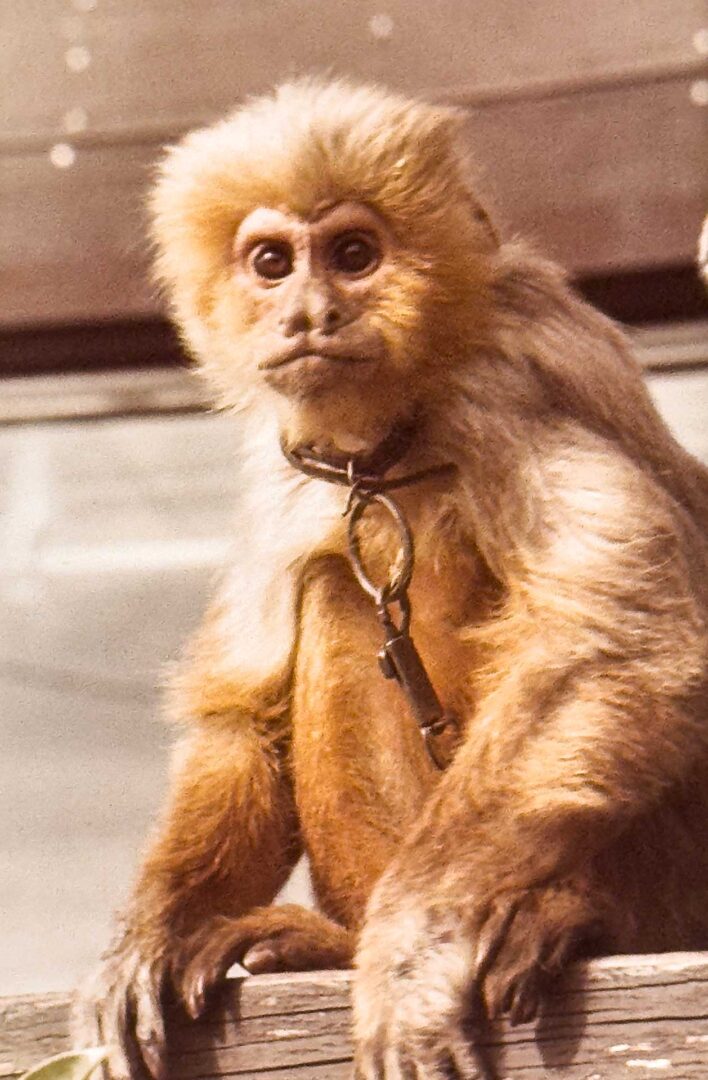
A photograph of Charley, a member of the Wong family for over 30 years

One morning, before my day in 5th or 6th grade at Crocker Highlands School, I was in the kitchen getting something to eat. I heard a noise in the downstairs water closet. The small room had only a toilet and a single window eight feet above the floor that opened to the garage roof. When I opened the door, I saw a light tan colored tail, curled and sticking out from behind the toilet. It was attached to a monkey.

My parents were still in their bedroom when I went to tell them. They called the”Oakland pound” (Oakland Animal Services). The “pound” came out and picked up the monkey to quarantine it, and three weeks later, they said, it’s yours. Somehow, my parents agreed to have a fifth member join the family, and we named him Charley.

I have a faint recollection of seeing a monkey on our clothesline a few days before. Our backyard had a lot of fruit trees: pear, loquat, orange, apple and lemon trees. There were also blackberries, wild strawberries. Maybe that’s why Charley was hanging around our house. But we never found where Charley came from. When we found him, he was very young, had a gash on his leg and no collar.

In the early 60s, monkeys were sold in pet stores. We went to a pet shop on Fruitvale Avenue in the Dimond District of Oakland and bought a cage and a book – “Monkey Business,” by Gus and Casey Augspurg.

The cage that we put in the basement was about 4’x3’x3’ . At first, during the day, we kept Charley outside in the front yard with his leash attached to a spiral tie out stake. He could jump up and climb on the magnolia tree. At night, Charley would sleep in his cage in the basement and in the morning, he would let us know that he was awake by shaking his cage.
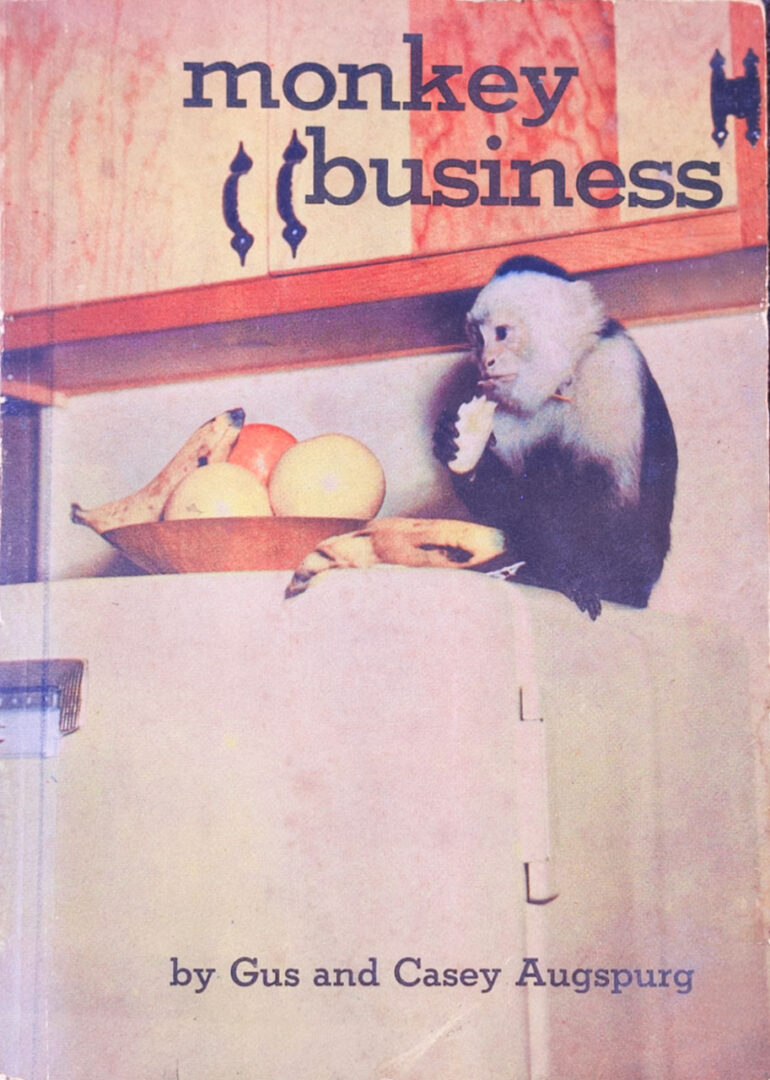
A photograph of the cover of the book, “Monkey Business” by Gus and Casey Augspurg.

Charlie’s canine teeth were sharp. Once, when he bit the middle finger on my right hand, I instinctively pulled my hand away and caused a laceration. I still have scars on my hand from Charlie’s bites.

When he bit a kid, Charlie moved into a big cage. My Mom got a cage from one of her bridge player friends who had something to do with Children’s Fairyland. It was a big cage on casters, maybe 6’x5’x4’ with a bar at the top for a perch, and a rope hanging down the middle for swinging.

Our morning routine was the give Charley some milk to drink, about two or three ounces, warmed up in an old pill bottle. My dad (an accountant) used to get produce from one of the supermarkets that was one of his clients. Charlie ate lettuce, carrots, nuts, fruit, insects and an occasional raw egg. Besides those things, we started feeding him food that we ate. We’d put some cooked rice in a cupcake baking cup with whatever protein our dinner had: a shrimp, a little piece of beef.

Most of the time, my dad took Charley inside to his basement cage at night. They’d sit on the front porch for a while as my dad smoked a cigar before going down to the basement.

Once Charley got out of his cage and ran down the street. He climbed a tree in front of the Duhe’s. I ran down the street after him and when I called him, he came right down to me.

So we could take Charlie on vacation with us, Dad bought a 1964 Ford Fairlane 500 Ranch Wagon. It was Wimbledon white with a 289. (I later probably cracked the engine block on a trip to LA with Bruce Baxley, by pouring cold water into an overheating engine). I remember one trip to Monterey. My dad had a friend that owned the Casa Carmelkorn store on Fisherman’s Wharf. Our family would drive down from Oakland and stay at the Borg’s Motel. Charley slept in a cage in the car.
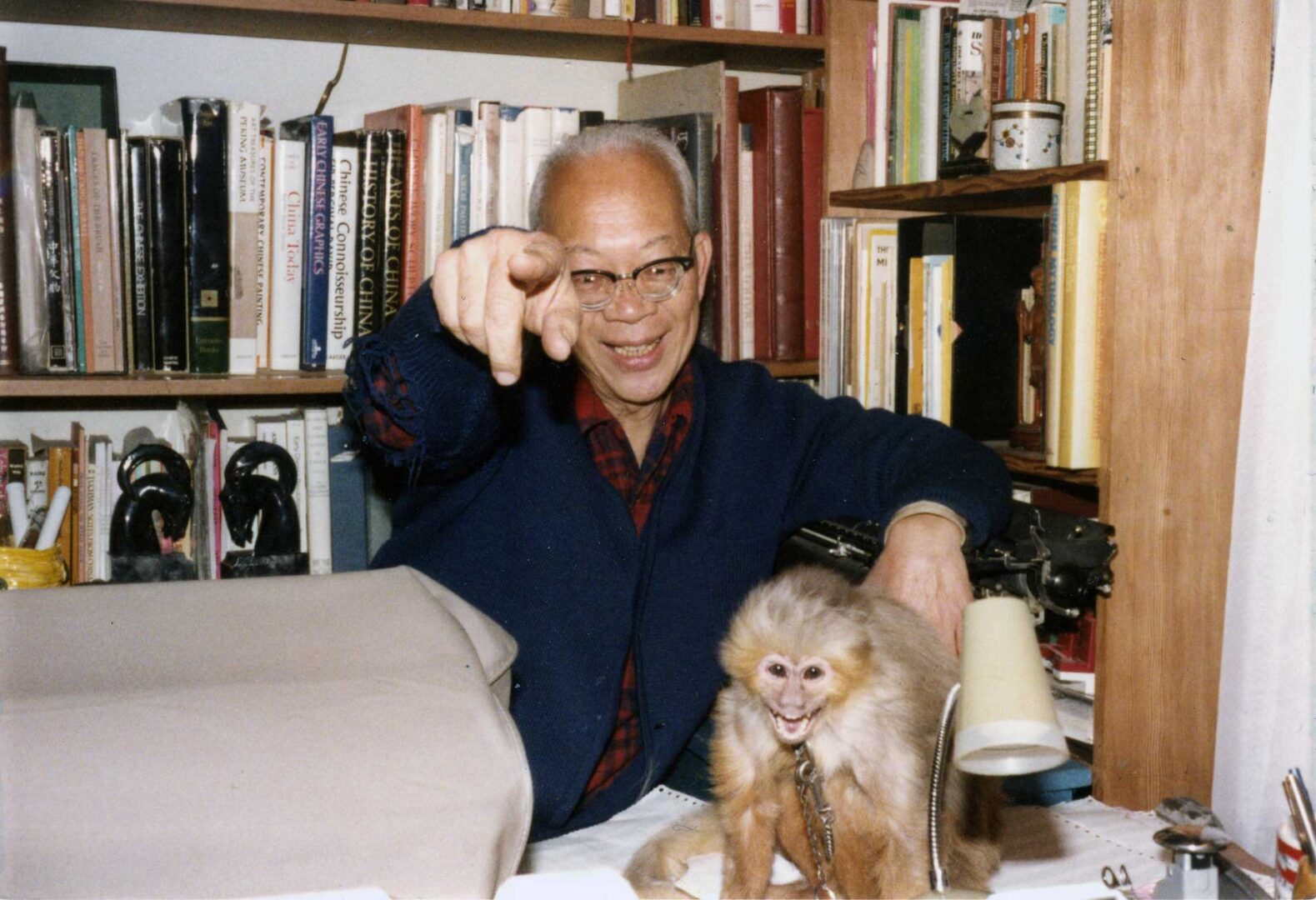
Honki L Wong and Charley the Monkey
Honki L Wong (dad) and Charley in my dad’s office; Charley is not smiling (from my sister’s (Alberta Mayo) Old Family Photos flickr album

Charley liked to draw. On the way to the basement, Dad and Charley would go through my Dad’s office. Dad had those large continuous form computer printouts and Charley would take a pen or pencil (after chewing on it a little) and scribble on the printouts. It seemed that Charley was aware that he was having an effect with his drawing.

We only had one telephone for the entire house. It had a long extension cord that reached almost to the top of the stairs to the second floor. My mom used to sit on the stairs talking to her friends in Chinese. (That’s how my ear became attuned to the Shanghai dialect, even though I can’t understand it) My mom would be on the phone with Charley on a leash. Charley would draw on the wall with a pencil.

After my dad died in 1980, it was just mom taking care of Charley. My sister, Alberta was living in Houston or Boise, and I was living in New York.

One time I came home from New York, Charley had a large tumor on his chest. My mom took him to the vet, and the tumor was removed. The vet said that Charley wasn’t getting enough fat in his diet. The vet said to feed him Purina High Protein Monkey Chow. Charley didn’t like it.

By the early 90’s, Charley had been in the family for almost 30 years. He was getting a little too difficult for my mom. She found a primate sanctuary (though I can find no record of it) near Davis, California that took Charley.
Calmar Ave, Oakland California

Growing Up on Calmar Avenue in Oakland

I grew up in Oakland, California, in the 1950s and 1960s, on Calmar Avenue. The house we lived in had been in my father’s family since the early 1940s. I only know this because my Uncle Jimmy once told me that what was then my father’s den used to be his bedroom. I never knew if any of my father’s other brothers and sisters lived in the house.

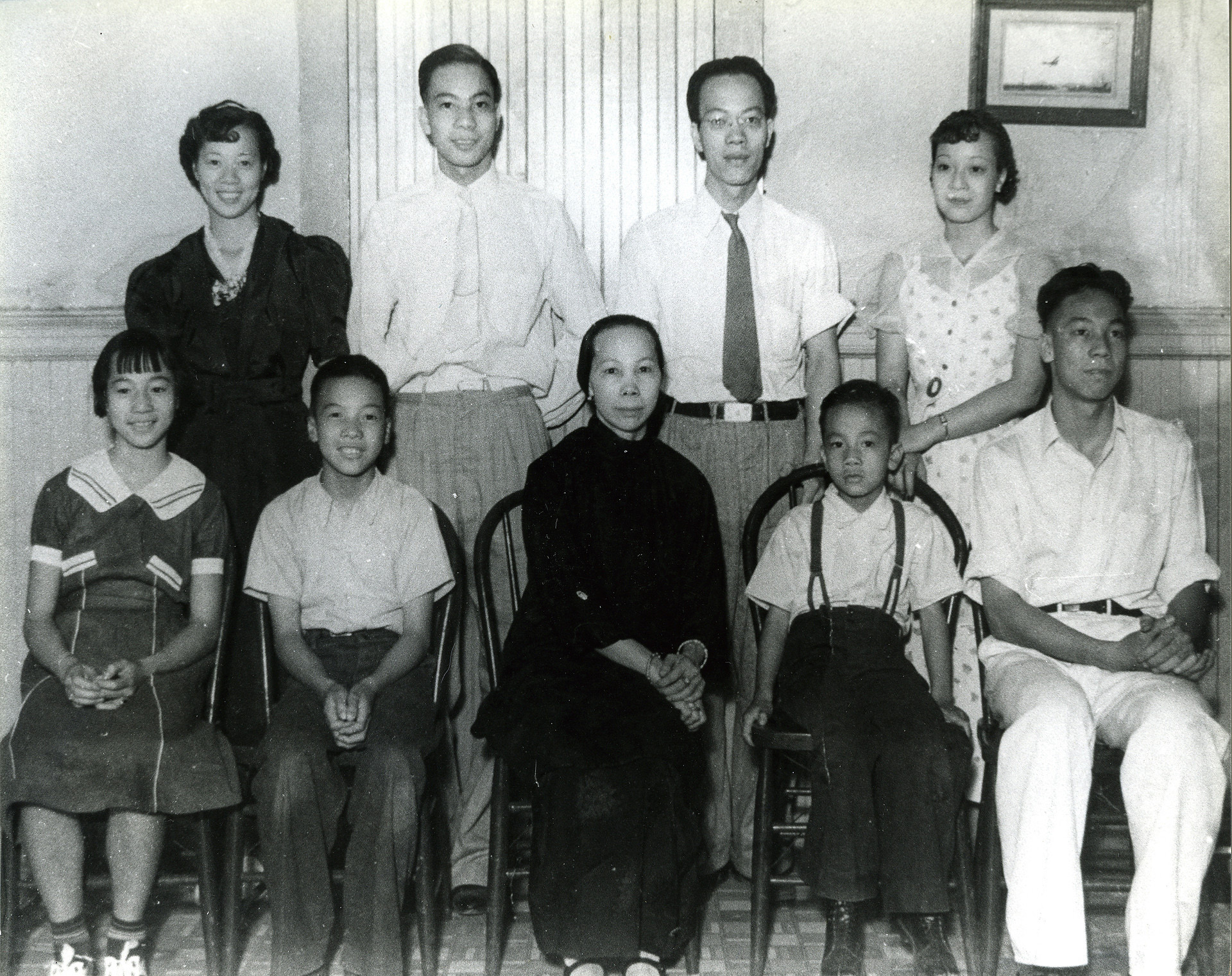
The mother, brothers and sisters of Honki Wong
My paternal grandmother, Mok Shee Wong, and her children. Back row from left: Frances Lee , Joe Wong, Honki Wong (my father), Flora Lee. Front row from left: Rose Jan, Jimmy Wong, Mok Shee Wong, Robert Wong, John Wong.

The foot of Calmar Avenue begins at Mandana Blvd, a little east of the beginning of the Lakeshore shopping district. The street is narrow and steep in some places as it rises 180 feet along a ridge. It’s a hilly neighborhood. Our part of Calmar plateaued in a group of about 15 houses, with downslopes behind the houses on either side towards Santa Ray Avenue or Balfour Avenue. It was a good place to learn to ride a bike because it was level. My sister and I would ride our bikes down to King Narcisse’ driveway and turn around.

Our House: Then and Now

Today, in real estate terms, the house is described as a 4 bedroom, 2 bath, 2500 sq ft property. In my childhood reality, it was a 3-bedroom house. There was a bedroom for my parents, one for my sister Alberta, and one for me.

We all shared a single bathroom located on the second floor. The downstairs bathroom served as our laundry room. I don’t think it was properly plumbed as the washing machine’s drain hose simply hung over the edge of the bathtub. You had to carefully step over it to reach the tiny sink. Off the back hallway, there was a separate small room – a “water closet,” which housed the toilet. Behind the toilet, about eight feet from the floor, there was a small window that was hinged from the top that opened to the roof of the garage.

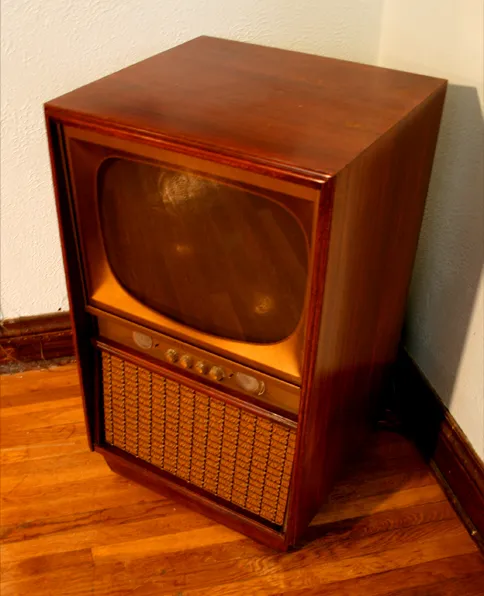
1950's Magnavox Black and White Television
We had a Magnavox Black and White Television sort of like this (photograph courtesy of Leo Kemph)

At one time, our TV was downstairs in the living room. It was a Magnavox, similar to this one, but with a lighter finish. I still own the cabinet, because one of my mañana projects is to stick a display in it, maybe driven with a Raspberry Pi.

I also remember that the TV was in the living room because during a fairly big earthquake, I was playing in front of the TV. I was about 4 ½ years old and my father told me to get under the dining room table. The dining room chandelier was swinging, but I remember that I wasn’t very scared.

When we got a color TV, we moved our TV viewing to a room that spanned the entire width of the second floor in the back of the house. At one end, we had the sofa, coffee table and television, and at the other, my mom had her desk.

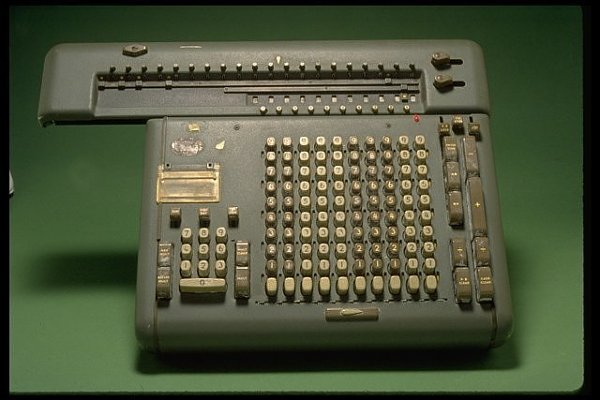
Friden STW Electro-Mechanical Calculator
Calculating machine, Friden Model STW 10. MA*335419. Photograph courtesy of the National Museum of American History, Behring Center

On the ground floor, between the foyer and the back hallway, my dad, Honki L. Wong, had an office. Because he was an accountant, he had an amazing electo-mechanical Friden calculator on the center of his desk and another adding machine to the side. @CuriousMarc has a page dedicated to the Friden STW 10. As a kid, I remember using it, just to listen mechanical noises that accompanied a simple calculation. I also remember now knowing what I was doing and jamming it to the point where a service call was needed.

Formica® Laminate 6942 Charcoal Boomerang

Sometime in the 1950s, my parents had the kitchen remodeled. It featured white painted steel cabinets and grey Formica® countertops with a mid-century Charcoal Boomerang (6942) pattern. Our stove was a 1950s Wedgewood, complete with a griddle. On the rare occasions that we made pancakes using the griddle, I learned that they were ready to be flipped when a certain number of bubbles appeared in the uncooked batter.

The narrow garage attached to our house had room for just one car. A wall separated it from a second, smaller room within the garage. Over the years, the concrete floor in the back part of the garage developed cracks, because of earth movement. There was an empty lot on Balfour Avenue behind our house and there has never been a house built there.

The Neighborhood and some of the Neighbors

A driveway ran along the east side of our house, immediately adjacent to the Algies’ driveway, though theirs was a couple of feet higher than ours. Our neighbors on the other side were the Taylors. They had three sons.

John Algie owned a machine shop and was a car collector. He owned some impressive cars, including a 1937 Mercedes Benz 540K Cabriolet, a Facel Vega, a Packard and a BMW Isetta (among others), that rotated through their driveway. Mr Algie used to start the 540K on weekends. The supercharged, straight eight engine sounded like a frantic, electric eggbeater to me. Once, Mr Algie took me for a ride in the 540K down to Lakeshore. The two toned, black and ivory paintwork had running boards with spare tires mounted on them. Two gigantic exhaust pipes exited out the right side of the engine, plunged down into the running boards and made a long trip to the twin exhaust tips at the rear of the car.

The Algies’ daughter Joanie, used to babysit me. They also had a black dachshund named Freddie, that I liked to play with. At the side of the house, they had a doggie door that I was able to crawl through. I guess when I was little.

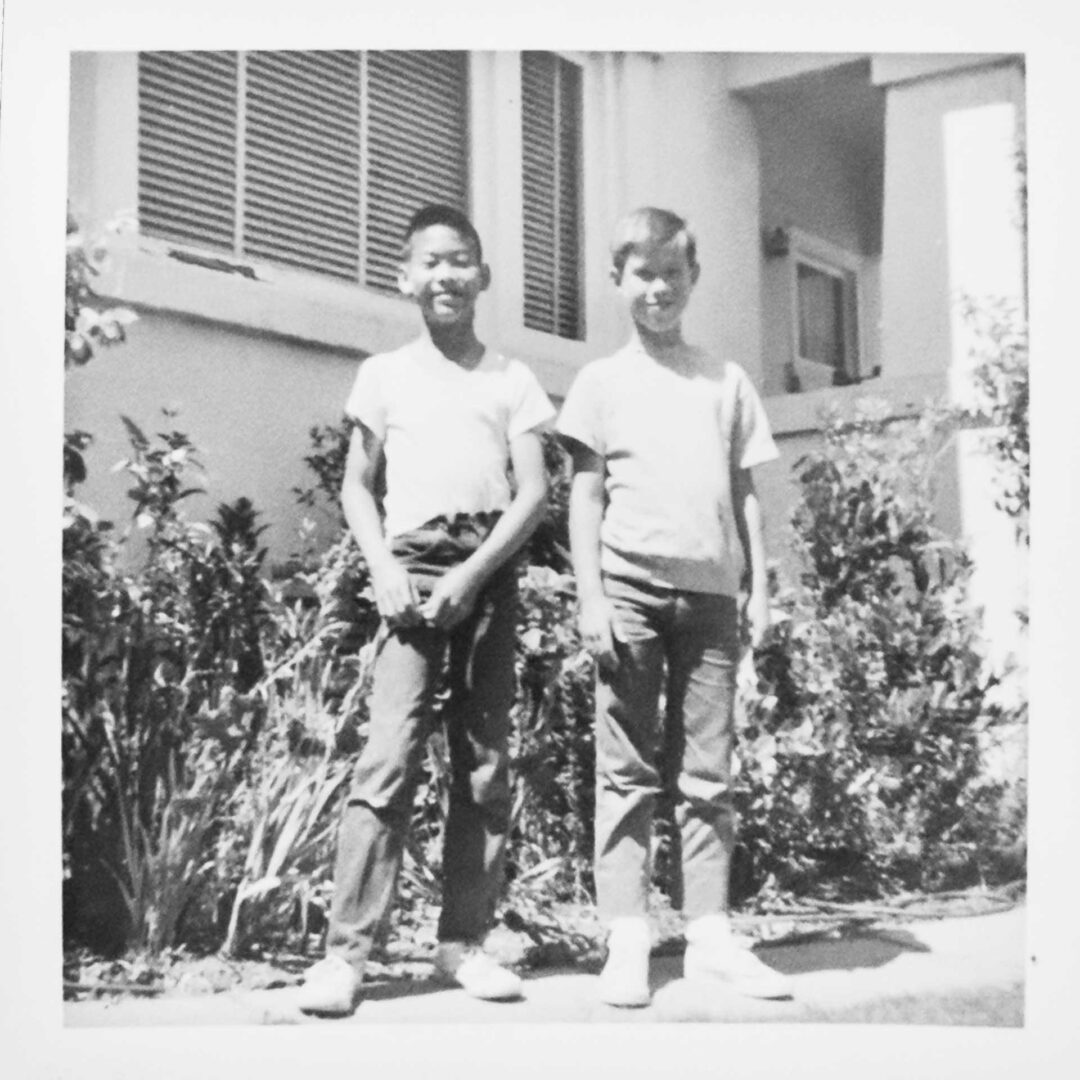
Leslie Wong and Bruce Baxley, June 1964 in front of 778 Calmar Avenue, Oakland, California

There were only a few kids my age living on our stretch of Calmar. I occasionally played with Mark Johnson, who lived three houses up, but he wasn’t a school mate because he went to a Catholic school. I went to the public elementary school, Crocker Highlands School. The close friendships I made at Crocker Highlands were with kids who lived blocks away.

The Duhes lived down the street. Since the kids also went to a Catholic school, I didn’t have much interaction with them even though the eldest son Philip, was my age.

At the very top of the hill resided the Cliftons; Joel and Sammy were older, though their French poodle, Bonjour used to roam the street.

Down the street, King Narcisse had a Rolls Royce and several Cadillacs. He owned a third generation Cadillac Series 62. I remember it because it had a hidden fuel filler that was accessed by flipping up the left tail light on the fin. King Narcisse had a red carpet rolled out for him when he made an entrance into his house. In 2021, Philip Duhe wrote a Facebook post about it.

My Father’s Family

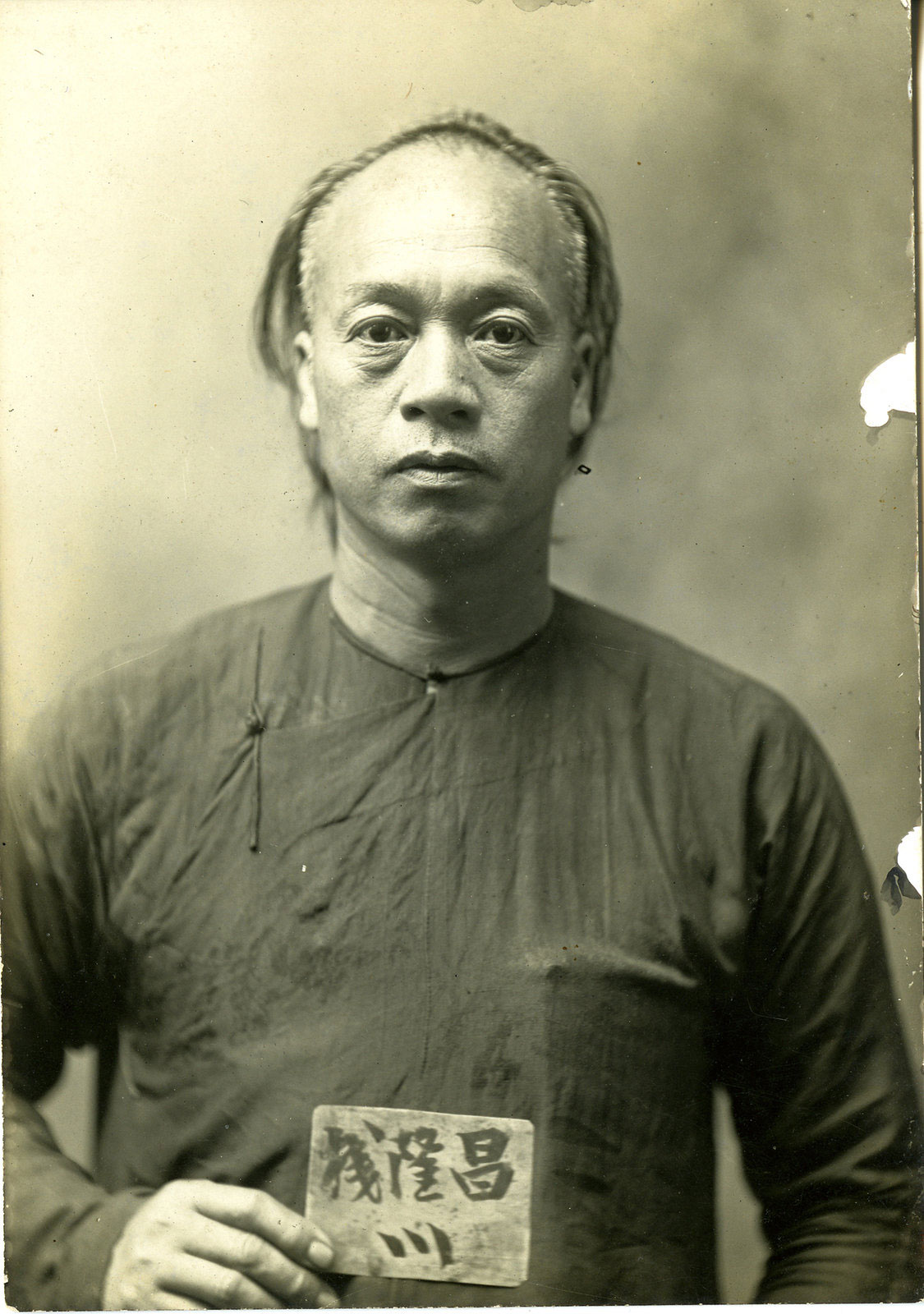
Wong Hing Chong (aka Wong Yep Cheung), c. 1915; paternal grandfather of Leslie Wong (from a photo scanned by my sister, Alberta Mayo)

My paternal grandfather, Wong Hing Chong (aka Wong Yep Cheung), was born in 1861 Baisha town (白沙镇), a township in Taishan city (台山市) in Guangdong province, China. He died in Phoenix, Arizona, ca 1930.

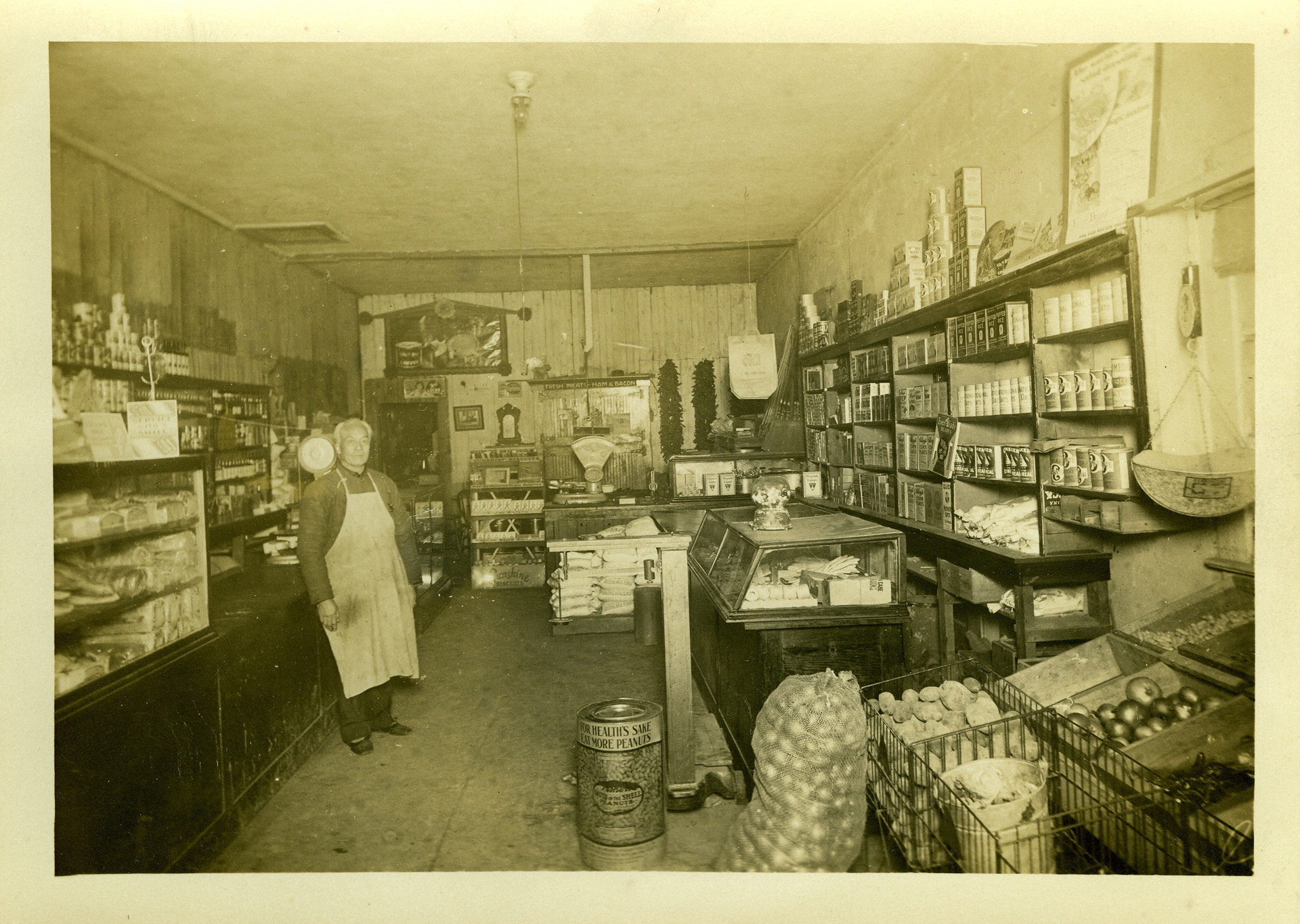
I’m lucky to know this because in 2008, my Uncle Bobby, (my father’s youngest brother, Robert B. Wong), spent considerable time doing family research at the National Archives in San Francisco. Uncle Bobby was researching his father’s (my paternal grandfather’s) paper trail of documentation for travel to China from the US. Wong Hing Chong had a general store and lived in Clifton, Arizona. It wasn’t a trivial thing, because of the Chinese Exclusion Act of 1882 and the Geary Act of 1892.

My father, Honki L. Wong, was the oldest son of the eight children of Wong Hing Chong. My father had four brothers, John, Joe, Jimmy and Bobby and three sisters, Frances, and Rose.

Wong Hing Chong in his general store, Clifton, Arizona (from a photo scanned by my sister, Alberta Mayo)

This is part of the text of the summary that Uncle Bobby wrote for us:

Evidently, our father (grandfather, great grandfather, etc.) immigrated to the United States in 1882, which was the year the Chinese Exclusion Act was passed. According to Joseph Sanchez, Archives Technician who assisted me in the research, Dad probably arrived just before the Exclusion Act was implemented (passed in 1882 and initially enforced from 1882 thru 1884). Before the Act, foreigners, including Chinese, needed very little documentation to come to the US; they literally just walked off the boat. This must have been the situation with Dad. There is no information on which ship he came on, or other information prior to 1906 since many records were destroyed in an Angel Island fire in 1884. So Dad’s sojourn begins in 1906 when he applied for permission to go back to China for a visit.

My Parents at Bimbo’s 365 c 1962

Sophia C. Wong and Honki L. Wong, parents of Alberta Mayo and Leslie Wong mrlesliewong

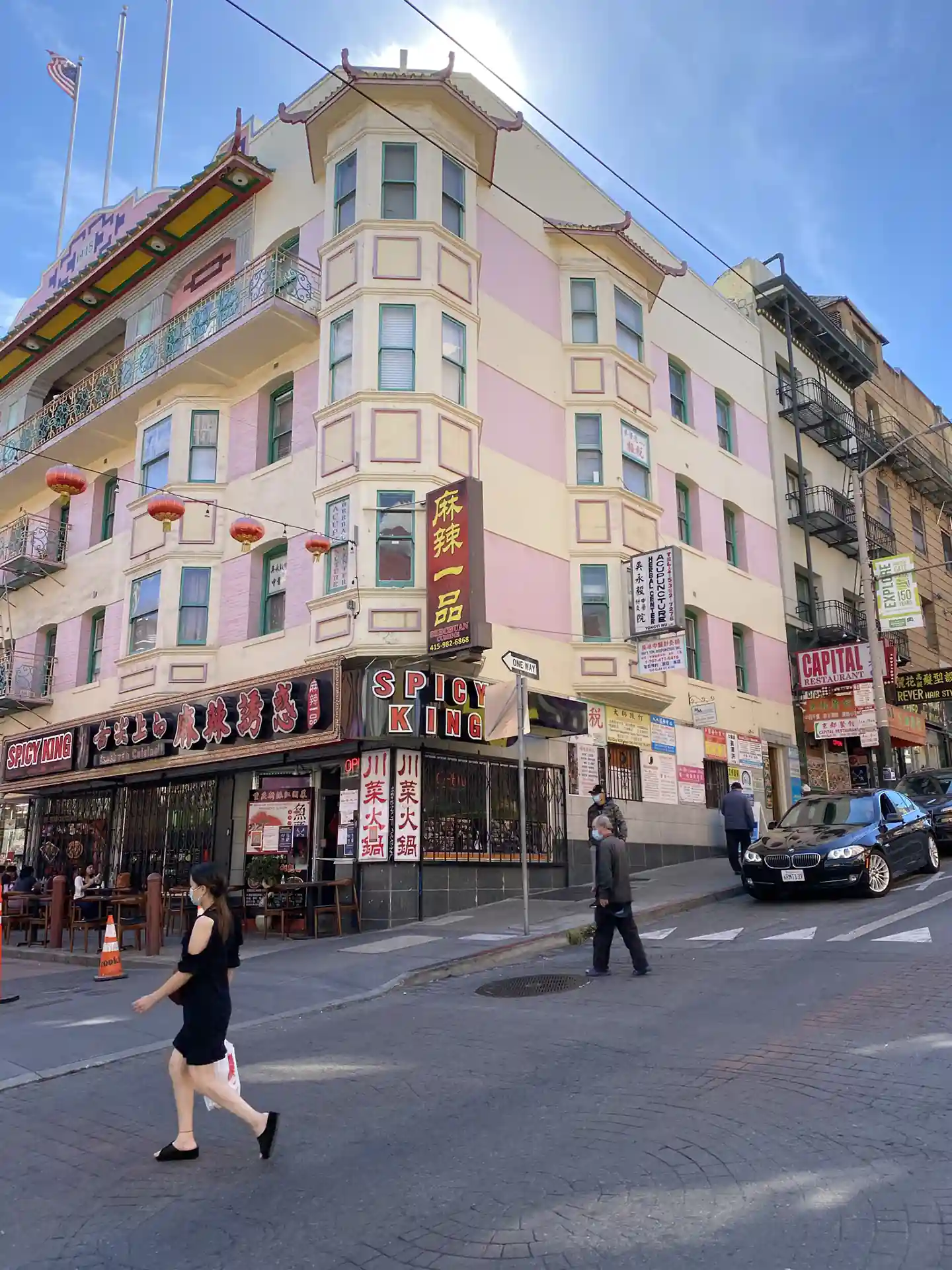
Though my family lived in Oakland, we had a close connection with San Francisco. In the 50’s and 60’s, my dad, an accountant, had an office in 835 Clay St in San Francisco’s Chinatown.

A small political pin-back button with black on white lettering that reads: [Dizzy Gillespie for President] Collection of the Smithsonian National Museum of African American History and Culture, Gift of Jeff Gold and Jody Uttal Gold
A small political pin-back button with black on white lettering that reads: [Dizzy Gillespie for President]

From the collection of the Smithsonian National Museum of African American History and Culture, Gift of Jeff Gold and Jody Uttal Gold

Our family often had dinner in Chinatown and afterwards we would stop at the Lucky Corner, a mom and pop grocery store on Grant and Washington that was one of my father’s accounts. I’d get candy for desert. Once, in the store, a tall, African-American man bent over and gave me a Dizzy Gillespie for President pin.

former office of Honki L. Wong, 835 Clay St, San Francisco mrlesliewong
The former office of Honki L. Wong, 835 Clay St, San Francisco mrlesliewong

Then we would walk over to City Lights, the North Beach bookstore. My father, mother and sister browsed the books. As a 12-year-old, I was bored in the bookstore.

On Broadway, we walked past the topless club barkers, who thankfully did not encourage us to go in. When I was older, my father, somewhat embarrassingly, talked about going to the Condor Club to see Carol Doda with my friends’ fathers.

My parents also liked to go out on special occasions. This portrait of them at Bimbo’s 365 Club, probably taken in the early 60’s, was in a frame that sat on our TV room bookcase for 30 years. I can imagine it was taken by a house photographer, dressed in a skimpy outfit and fishnet stockings.