
In the late 1950s to the early 1960s, from kindergarten to the sixth grade, I was a student at Crocker Highlands Elementary School in Oakland,
The Oakland educators must have been forward looking, because I remember taking a Strong Vocational Interest test (Strong Vocational Interest Blank). I also received a bunch of small pamphlets distributed by the New York Life Insurance Company Career Information Service. (Link to Career opportunities; a series of articles designed to help guide our children to a better future on the Internet Archive) There were titles, “Should You Be…” an Accountant, an Actuary, an Aeronautical Engineer, etc. And “Should You Go Into…” Advertising, Agriculture, the Construction Business, etc.
One pamphlet in particular stood out: ‘Should You Be an Engineer?’ It was one of the things that seems to have pointed me towards engineering through high school and my college applications.
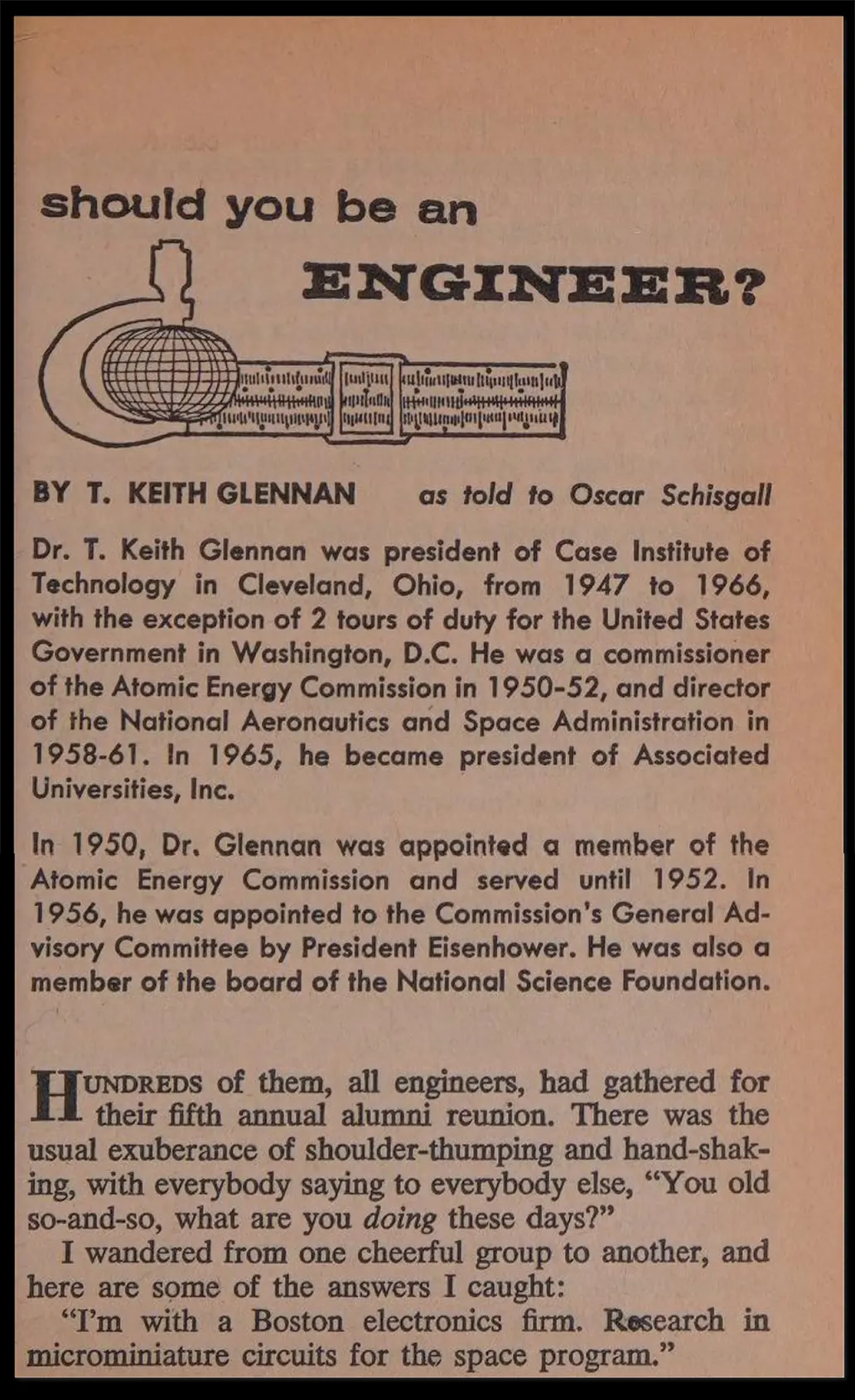
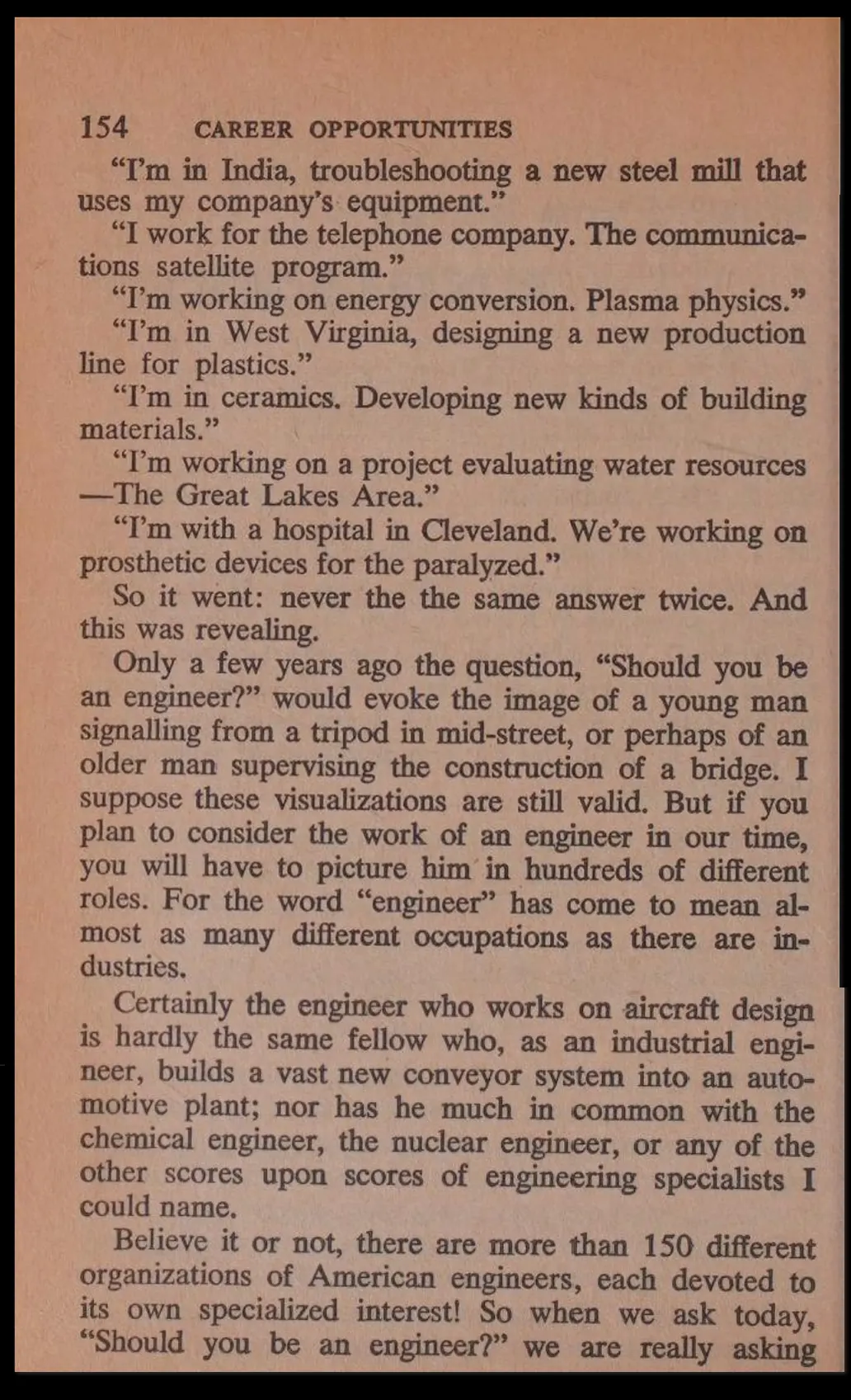
Should You Be an Engineer, T. Keith Glennan; New York Life Insurance Company; career information service; 8th revision; September 1966. An excerpt from the 8th revision (1966) of a New York Life Insurance Company career information service pamphlet
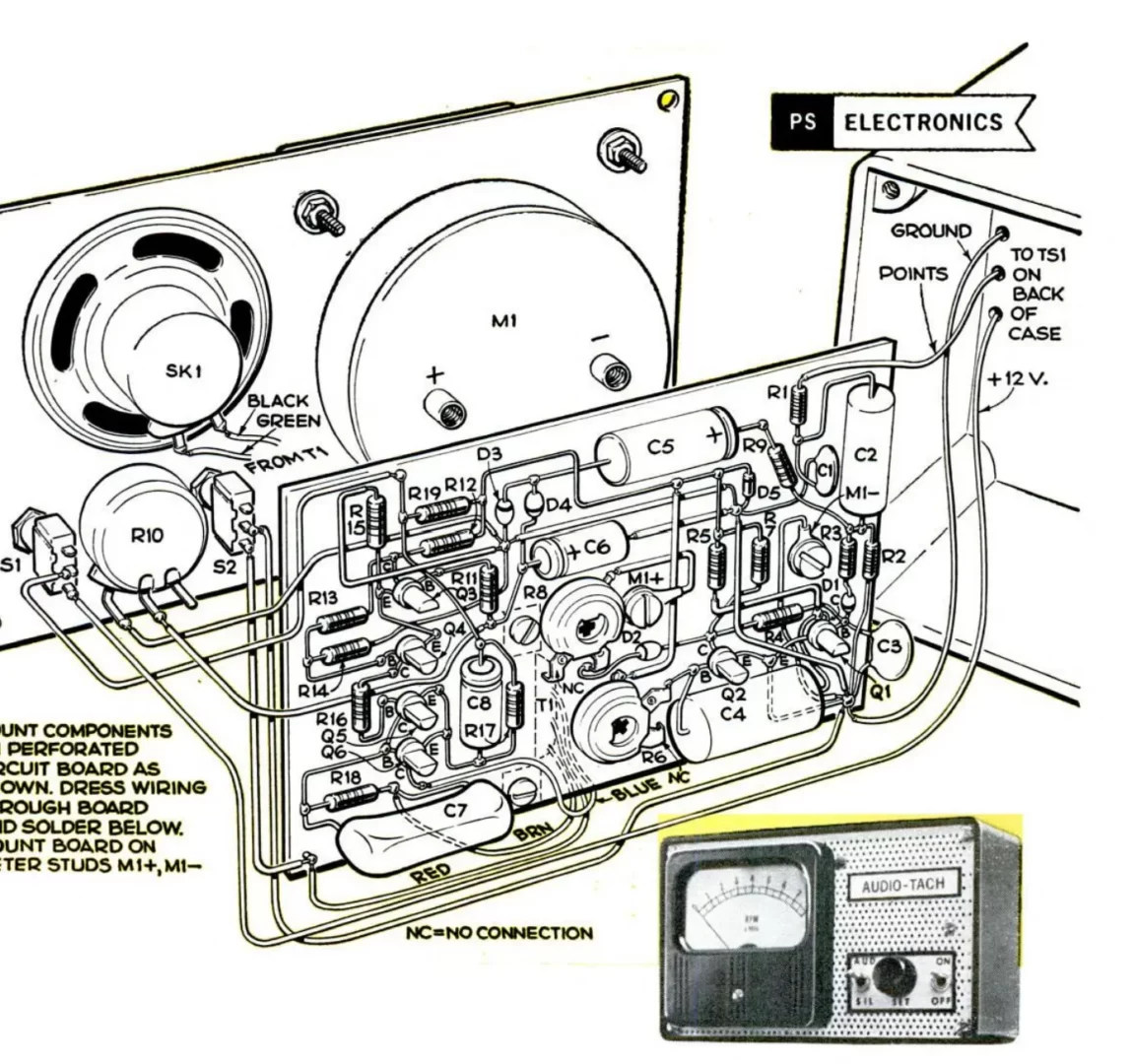
I liked making things. I carried around this Popular Science Audible Tach project for weeks while I worked on it in my Electronics class in high school. We also built power supplies and amplifiers from vacuum tubes. I still have the schematics. My electronics teacher at Oakland High, Mr. Ferguson, piqued my interest in engineering by explaining that an engineer might create a device to measure the temperature differential on a leaf.
I was an A or B student in math, physics and chemistry so accordingly, I applied to the engineering programs at UC Berkeley, Caltech, MIT and Harvey Mudd. I was accepted only at Berkeley.
In the fall of 1970, I started at the College of Engineering at Berkeley. My first quarter, I took Math 1A, Engineer 1, Philosophy, Art History, and Asian Studies. My advisor told me it was too heavy a load, but he let me do it. It may have been my downfall. I didn’t realize it at the time, but I was trying to learn a new mathematical language (Calculus) and a new machine language (Fortran) while simultaneously writing papers for three different departments.
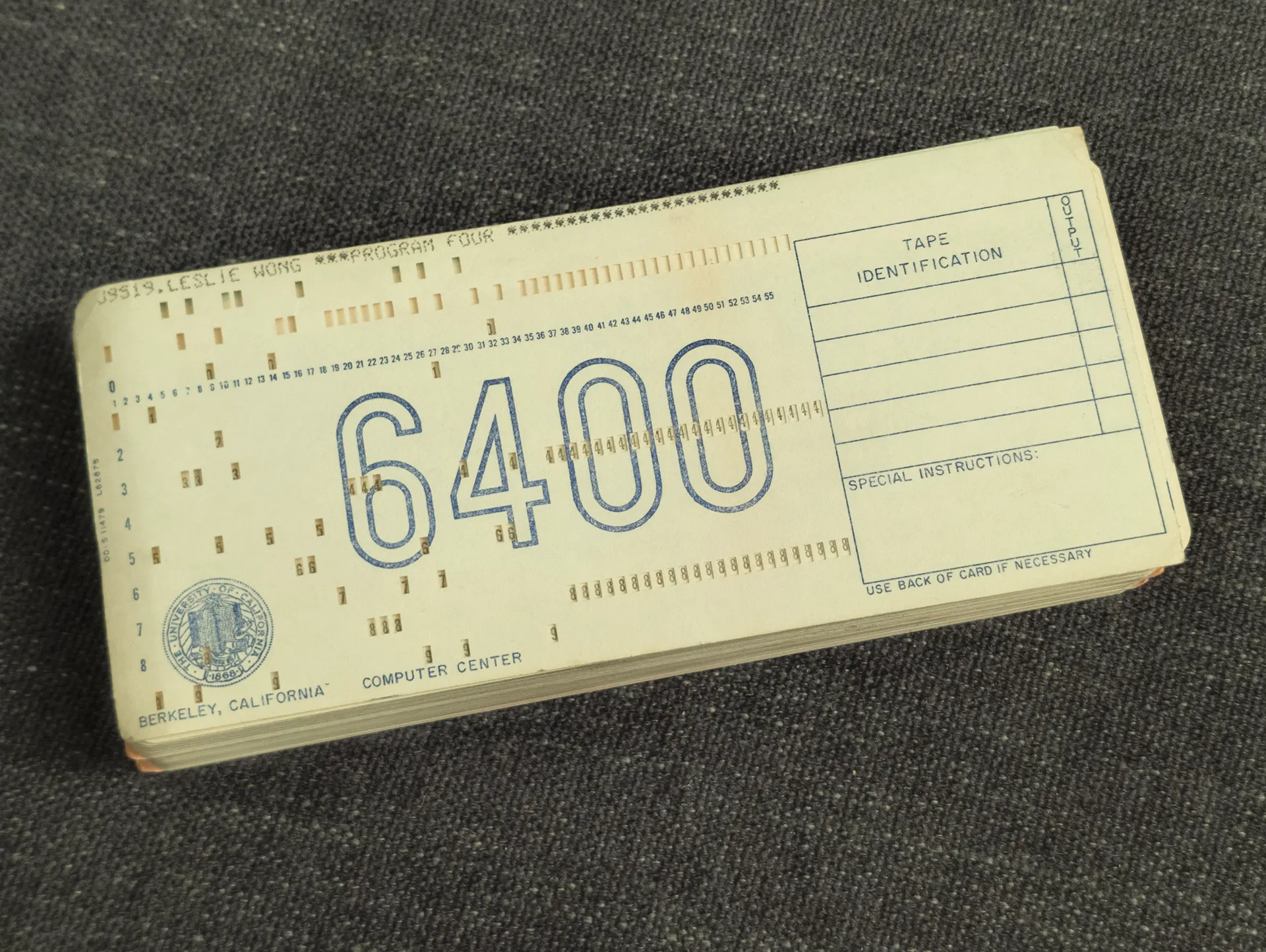
Engineering 1 was something like Computers and their Applications. We learned Fortran IV, used an IBM 029 Keypunch to write the code to punch cards, then submitted the deck to Computer Center. The next day, you’d pickup your green-and-white striped printout.
I learned how to jump the line at the Computer Center using a remote terminal that produced your program on paper tape. Gemini says was likely a Teletype Model 33 ASR.
My engineering education at Berkeley didn’t last too much longer.