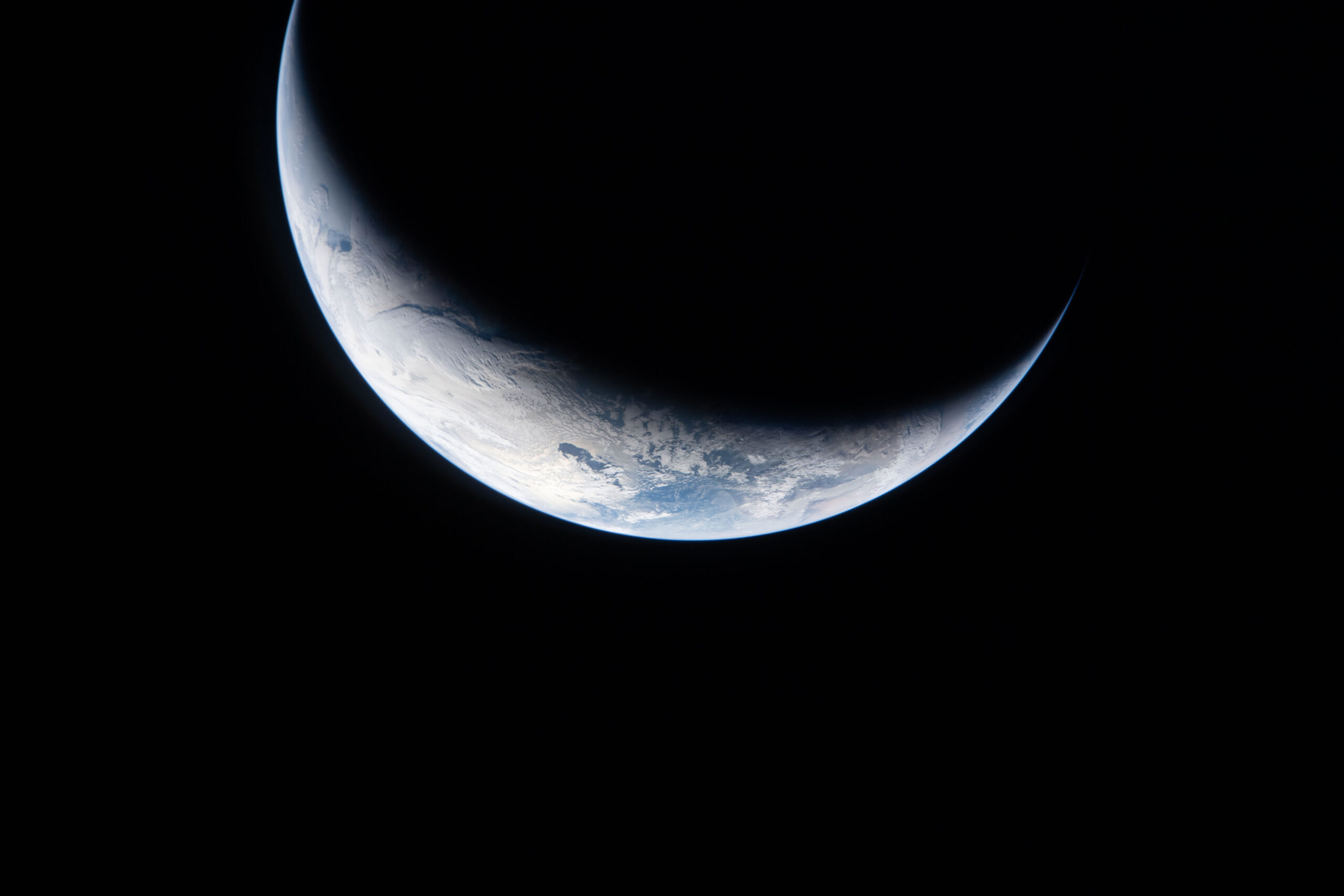
Earth, photographed by Astronaut Christina Koch. EXIF data at the bottom of this post
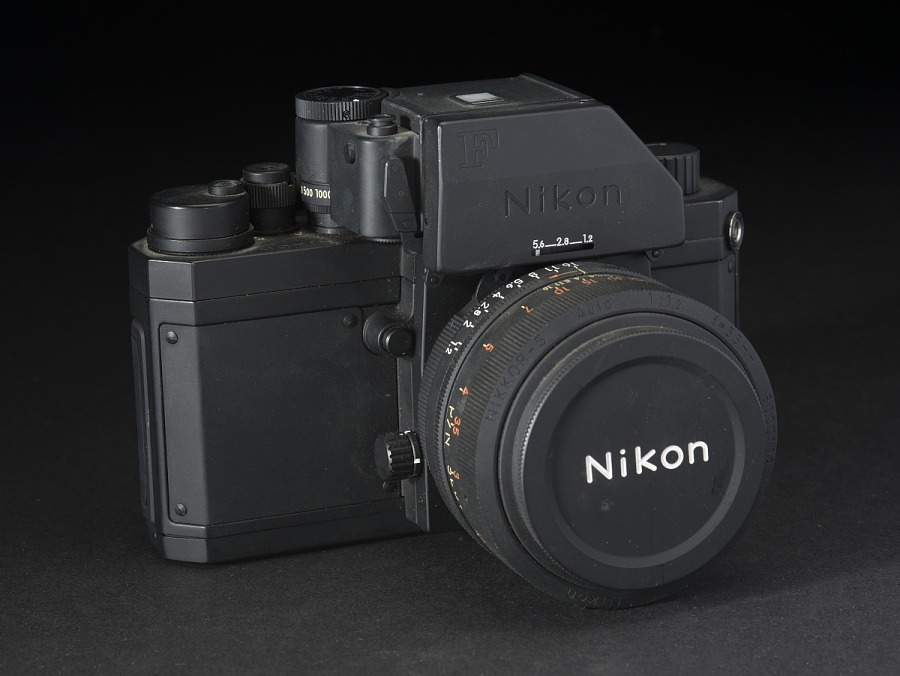
Camera, Nikon F, Dummy (Courtesy National Air and Space Museum) A working version of this specially modified Nikon was used on the Apollo and Skylab Programs
Artemis II photographs were seen all over, after NASA released them in April 2026 at the end of the mission. Alan Taylor curates photography at The Atlantic and it’s always interesting. He did a page of Moon Joy: Photos From Artemis II on April 7, 2026.
I’ve been a Nikon user since the mid-1970s, about the same time NASA started using them on the Apollo missions. Though most of the famous photographs taken on the surface of the moon were taken with Hasselblads, there were Nikon FTNs that were also used in the Apollo command modules for photography. (The Nikon Photomic FTN: A Camera for the Ultimate Shooting Environment — Space)
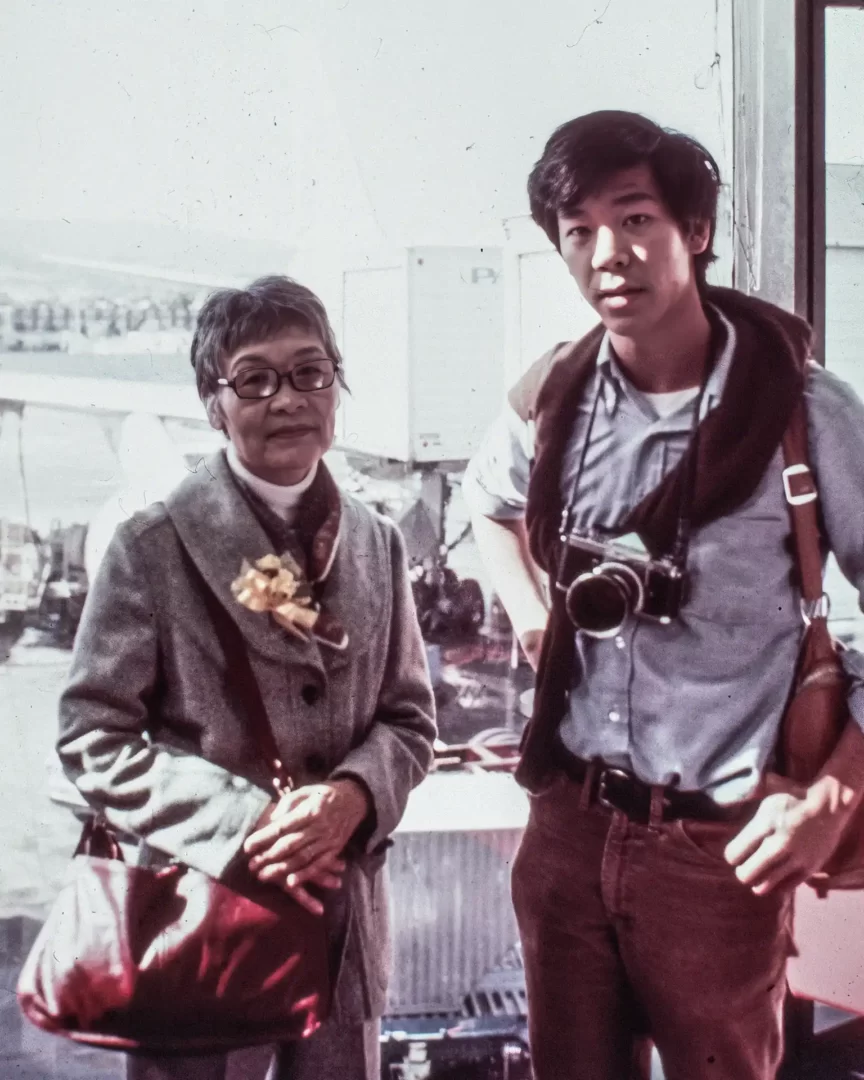
Sophia Wong (Leslie Wong’s mother) and Leslie Wong at SFO, 1975, before departing for China.
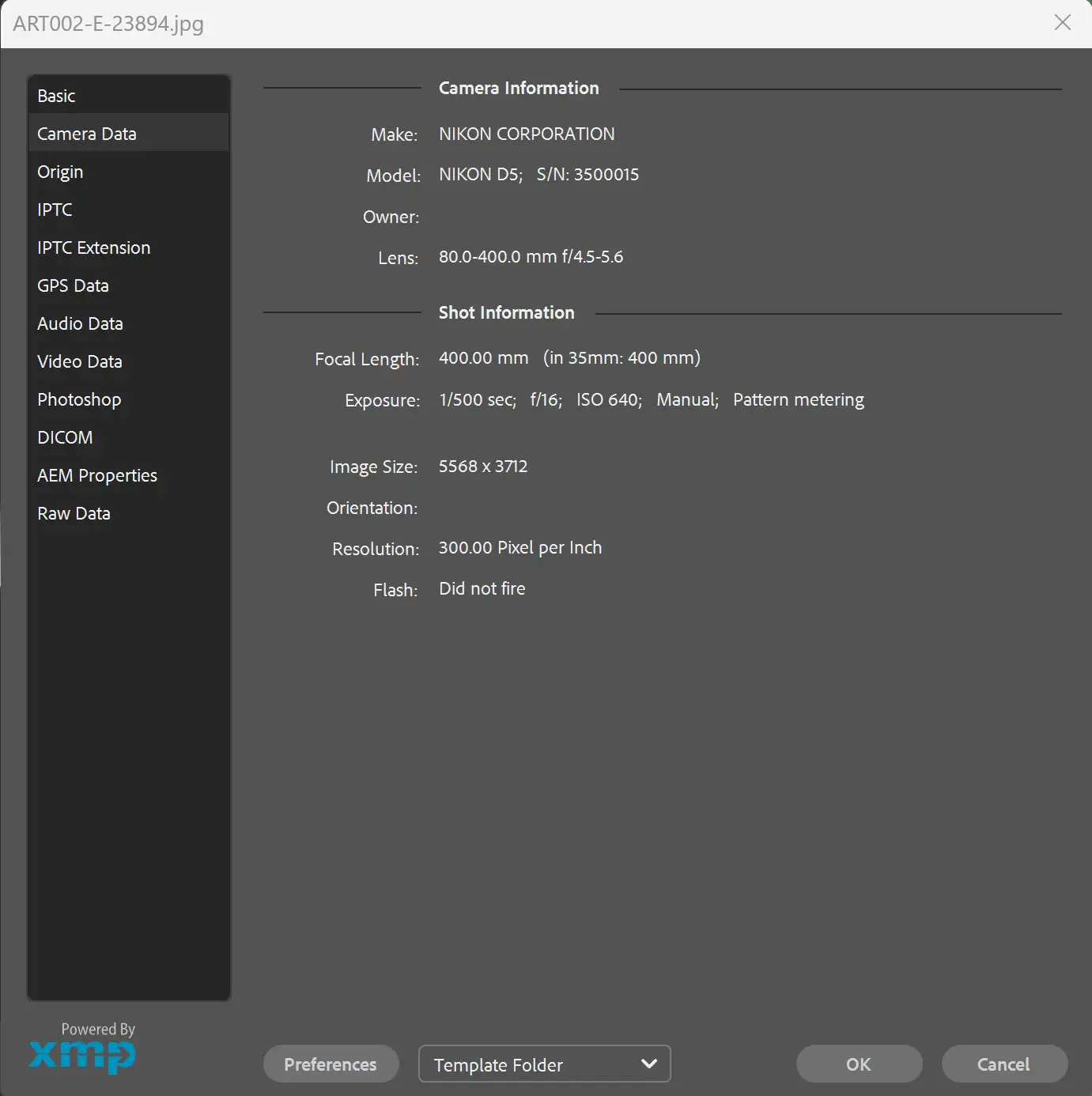
As a former photographer, an interesting thing about them is that the images from NASA still have the EXIF information embedded in the images. For the image of the earth at the top of this post, NASA Astronaut Christina Koch used a Nikon D5 and an AF-S NIKKOR 80-400mm f/4.5-5.6 G ED VR lens.
Adobe Photoshop EXIF information from Artemis II photograph FD03_Returned_1021_D5_015_Koch
I half thought about photographing the “blood moon” eclipse on March 3, 2026 because the next one isn’t going to happen until December 31, 2028 (and it won’t even be visible in California). The next full lunar eclipse that will be visible in California is June 26, 2029. I’ve made a couple of previous attempts.
Because totality wouldn’t happen until ~3:00 AM PST, I was hoping it’d be overcast in my location because of the Marine Layer (the natural air-conditioning that makes the coast of California a nice place to live), but when I went outside around 11:00 PM (PST), March 2nd, the sky was clear.
I grudgingly pulled out my 40-year-old Gitzo 320 Studex Performance tripod paired with a similarly old Arca-Swiss B1 Ball Head. The last film camera I bought as a professional photographer was the Nikon F4s but as a hobbyist, the last serious camera I bought was a Nikon D500, 10 years ago.
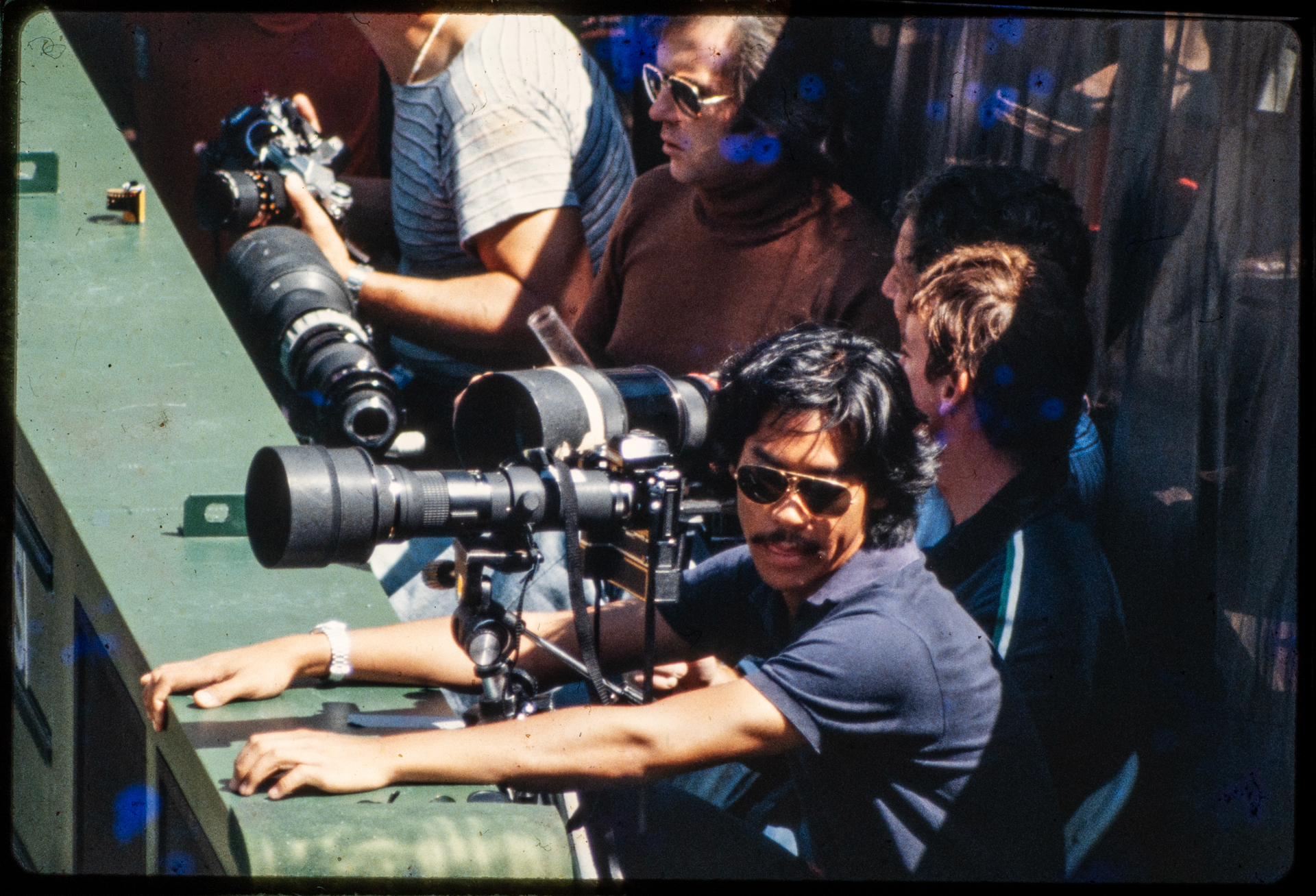
Photographer Leslie Wong (with sunglasses), at the 1978 US Open (tennis) with a Nikon F2 and a Nikkor ED 600mm 1:5.6 IF AI. Photo by Joe McNally
In my professional photography career, I have never owned a big lens. From the late 1970s to the 1990s, whenever I needed one at an event, Nikon Professional Services was there to lend them. Also, I never had the scratch to buy Nikon 300mm, f2.8 let alone a Nikon 600mm f4. Consequently, my longest lens is a Nikon Nikkor 300mm f/4.5 AI-S, which, according to this Nikon lens database, was made in the late 1970s. It was probably a big purchase for me when I was a poor, struggling photographer in New York City in the late 1970s.
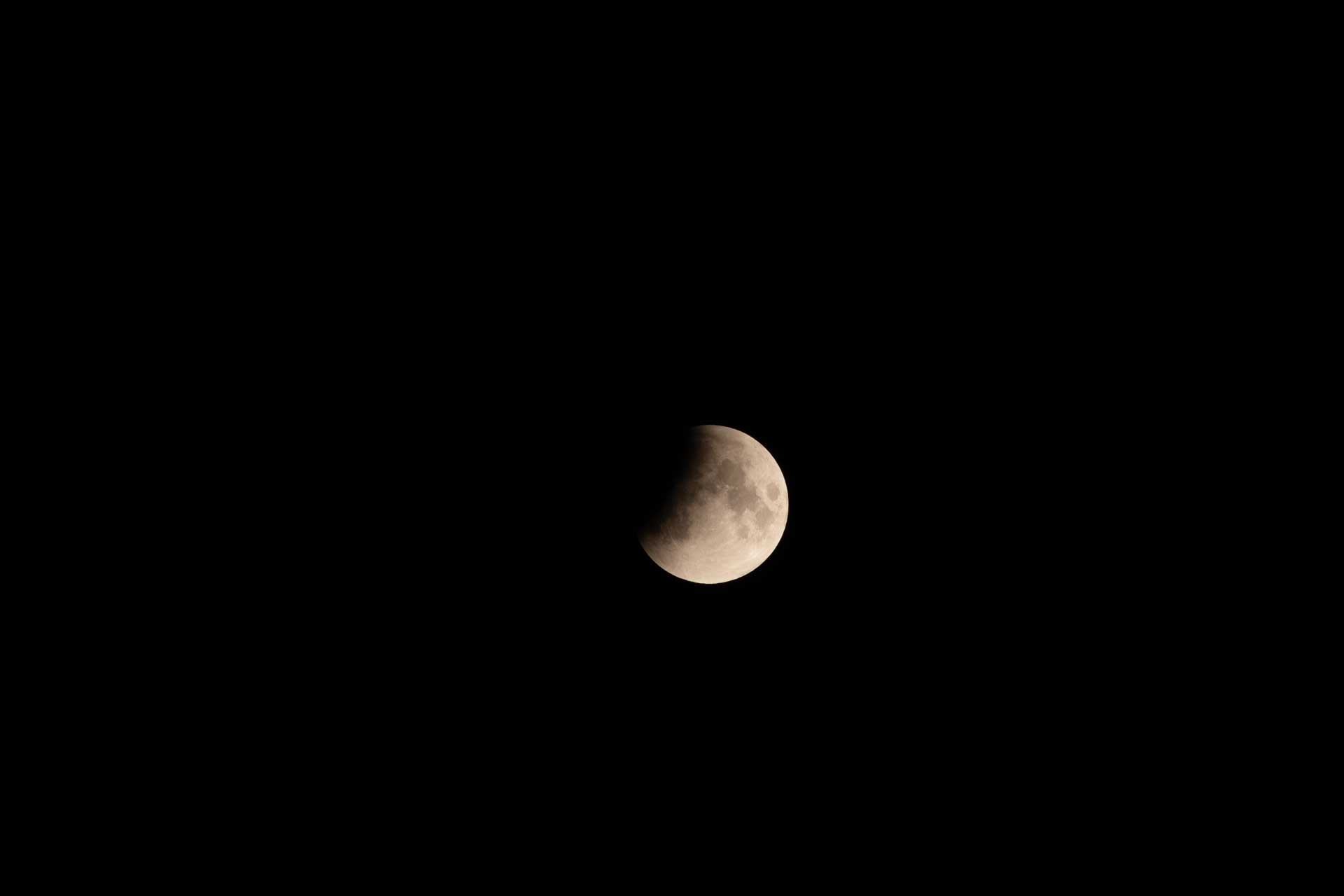
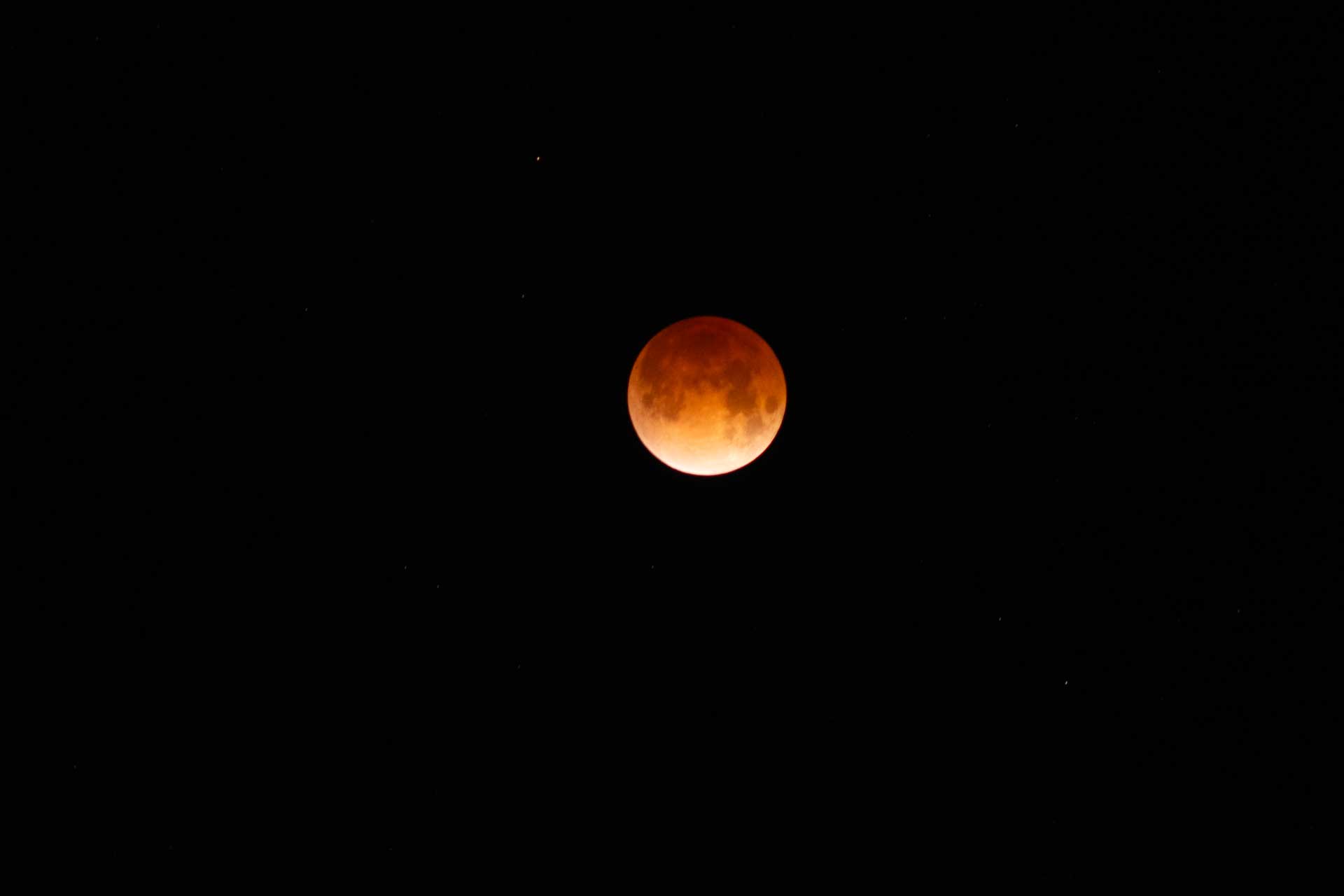
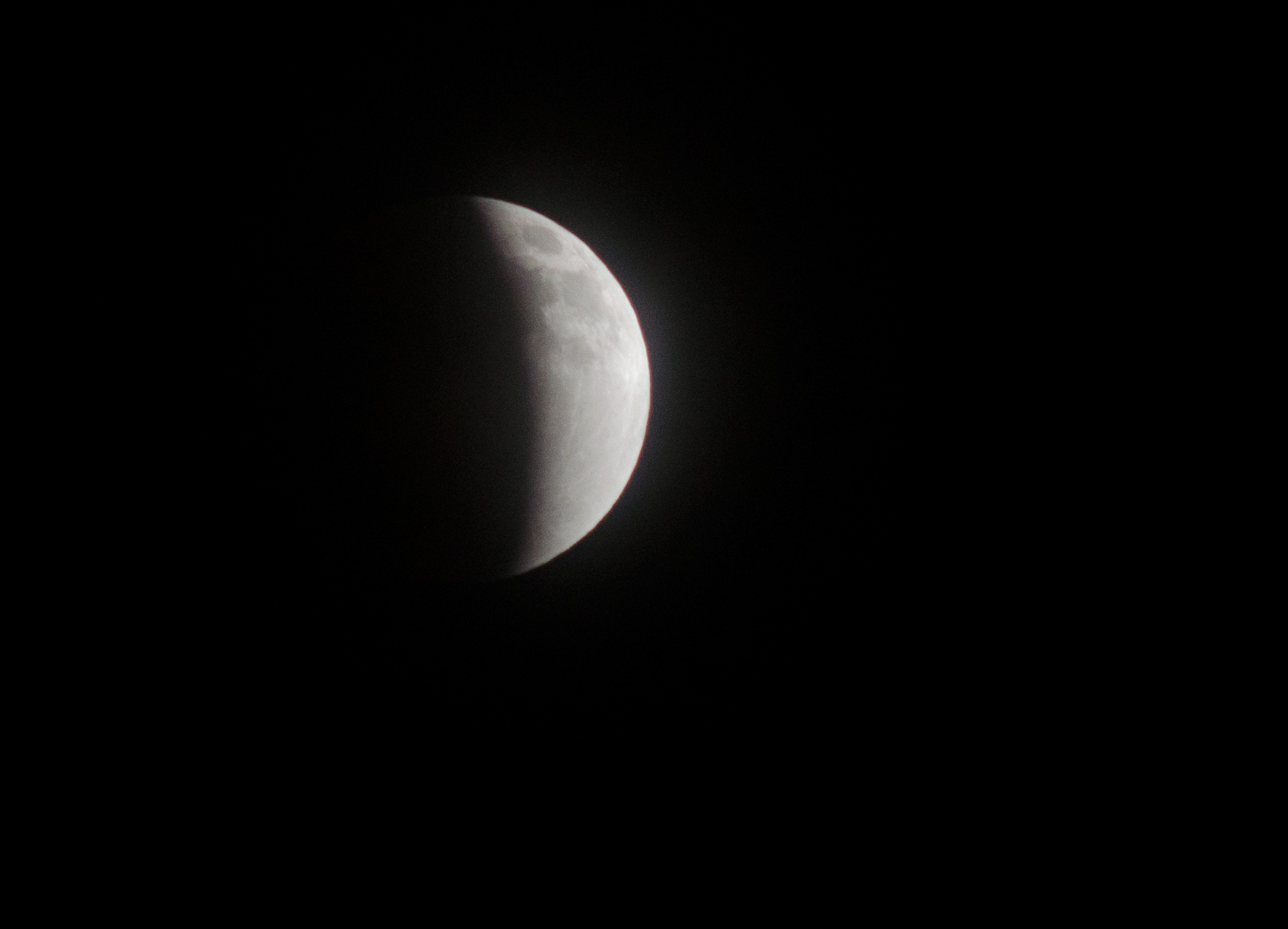
Thus equipped, I set up in front of the house and started taking photos a little after 2 AM, when the earth’s shadow started to creep over the moon.
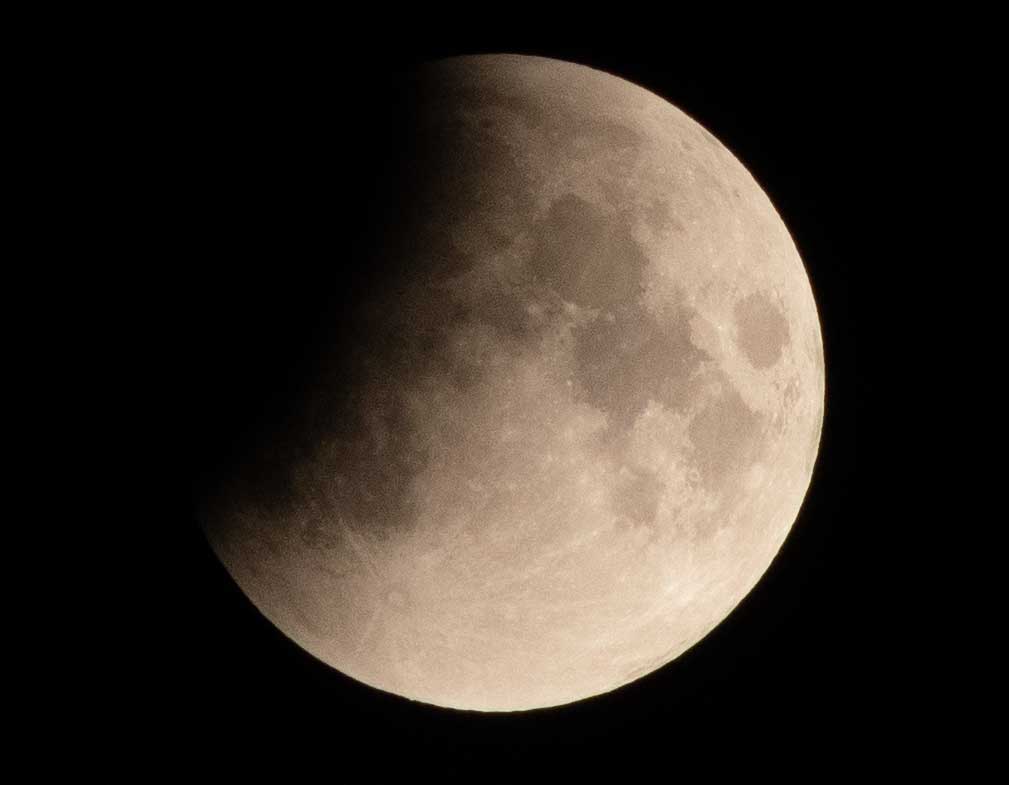
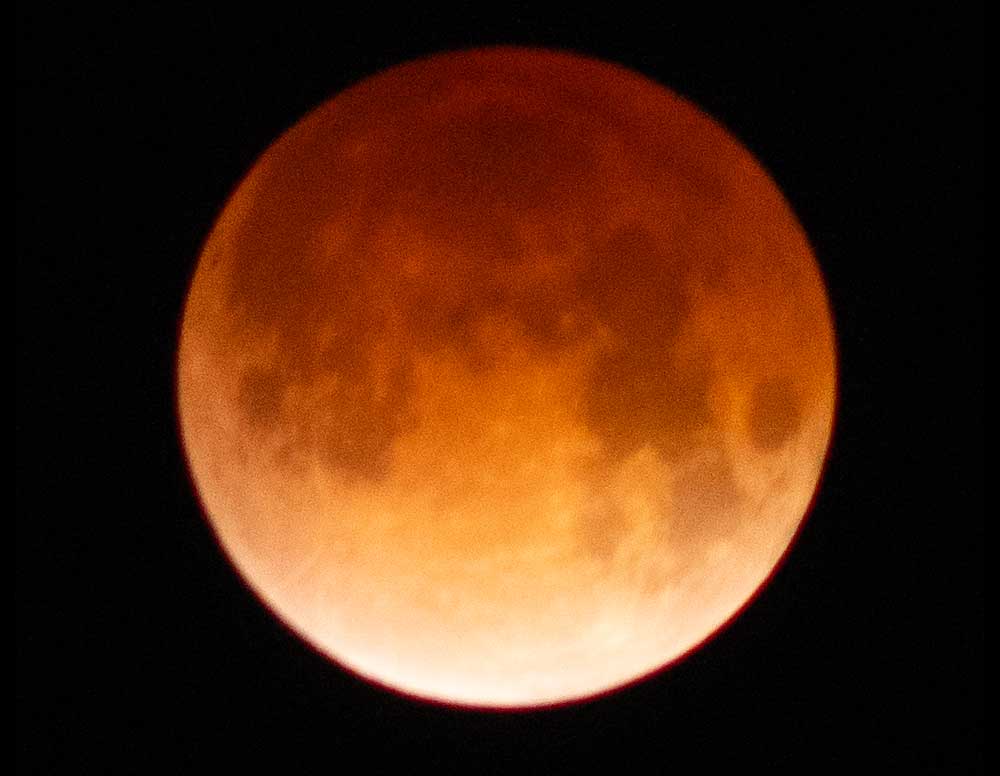
Side by side, the images show the contrast in color between the beginning of the eclipse and full “blood” moon. My disappointment came when I looked at the images at 100% – the full image size.. The first photo was sharp; the exposure was 1/1000 sec @ f11, ISO 800. The full eclipse exposure was ¼ sec. @ f5.6, ISO 1600 and it was blurry. For the long exposures, I used the self-timer delay of 2 seconds, which seems to have not been enough time for the camera to settle down. If I were a careful photographer, I also would have locked up the mirror before taking the photo or used a higher ISO setting. Hopefully, I’ll remember this in 2029.
Lunar Eclipse, 2:03 AM PST, March 3, 2026, 1/1000 sec @ f11, ISO 800 (sharp image)Lunar Eclipse, 3:15 AM PST, March 3, 2026, ¼ sec. @ F5.6, ISO 1600 (blurry image)
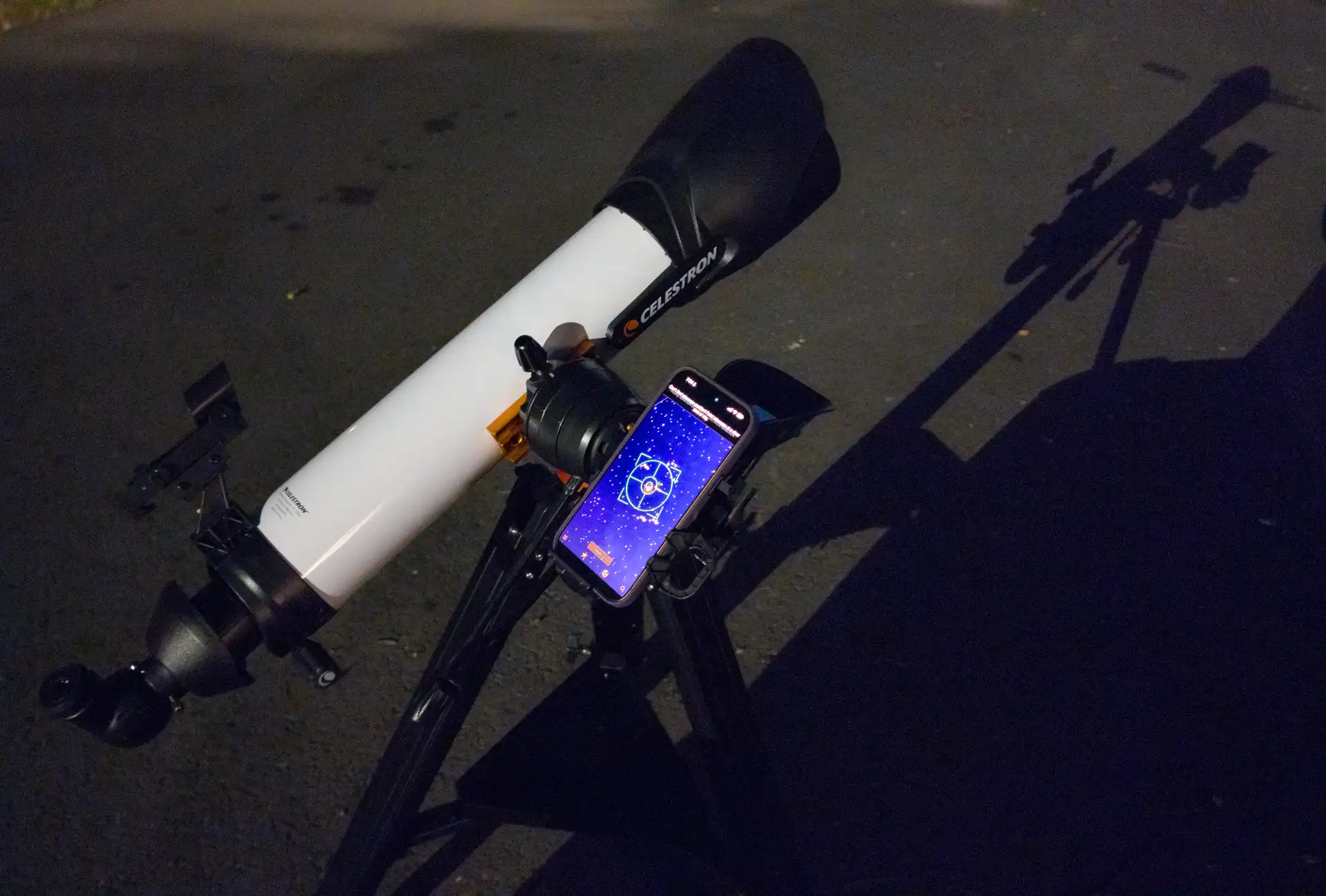
Popular Science by Celestron StarSense Explorer DX 100AZ telescope with the StarSense Explorer app on iPhone
I’ve had an interest in the cosmos since I was a kid. On backpacking trips as a Boy Scout in the Sierra Nevada mountains in California, I was able to clearly see, for the first time, the Milky Way under dark night skies.
My first and only view (until a month ago) through a telescope was when I accompanied my sister, Alberta, on a Girl Scout trip to the Chabot Science Center in the Oakland, California hills. It was probably in the early 1960s. I saw Saturn and its rings through Chabot’s 20-inch (510 mm) refractor telescope, Rachel.
After mentioning my interests in the cosmos, my friend Lori told me that the library had telescopes that I could borrow. I found that my library system, the Marin County Free Library, not only has books, but it has a “Library of Things… a collection of physical objects that may be borrowed.”
The telescope was fairly easy to setup, and the library provided the code for the StarSense Explorer app (iOS, Android). I got it just in time to attempt to see Comet Lemmon (C/2025 A6). Kipp went with me to an open field with a view of the western sky but after doing research with ChatGPT (https://chatgpt.com/share/69192772-1800-800a-879e-201d8b332592) and using Stellarium (https://stellarium.org/) and other online resources, I spent about two hours after sunset and never saw Comet Lemmon.
The location of my house is extremely sub optimal for using a telescope. The backyard probably has a 10° view of the sky directly overhead. The front of the house has a streetlight ~110 ft (~33 m) away.
Undaunted, a few days later, I set up the telescope around 11:30 pm and sat down on my front steps to take a look.
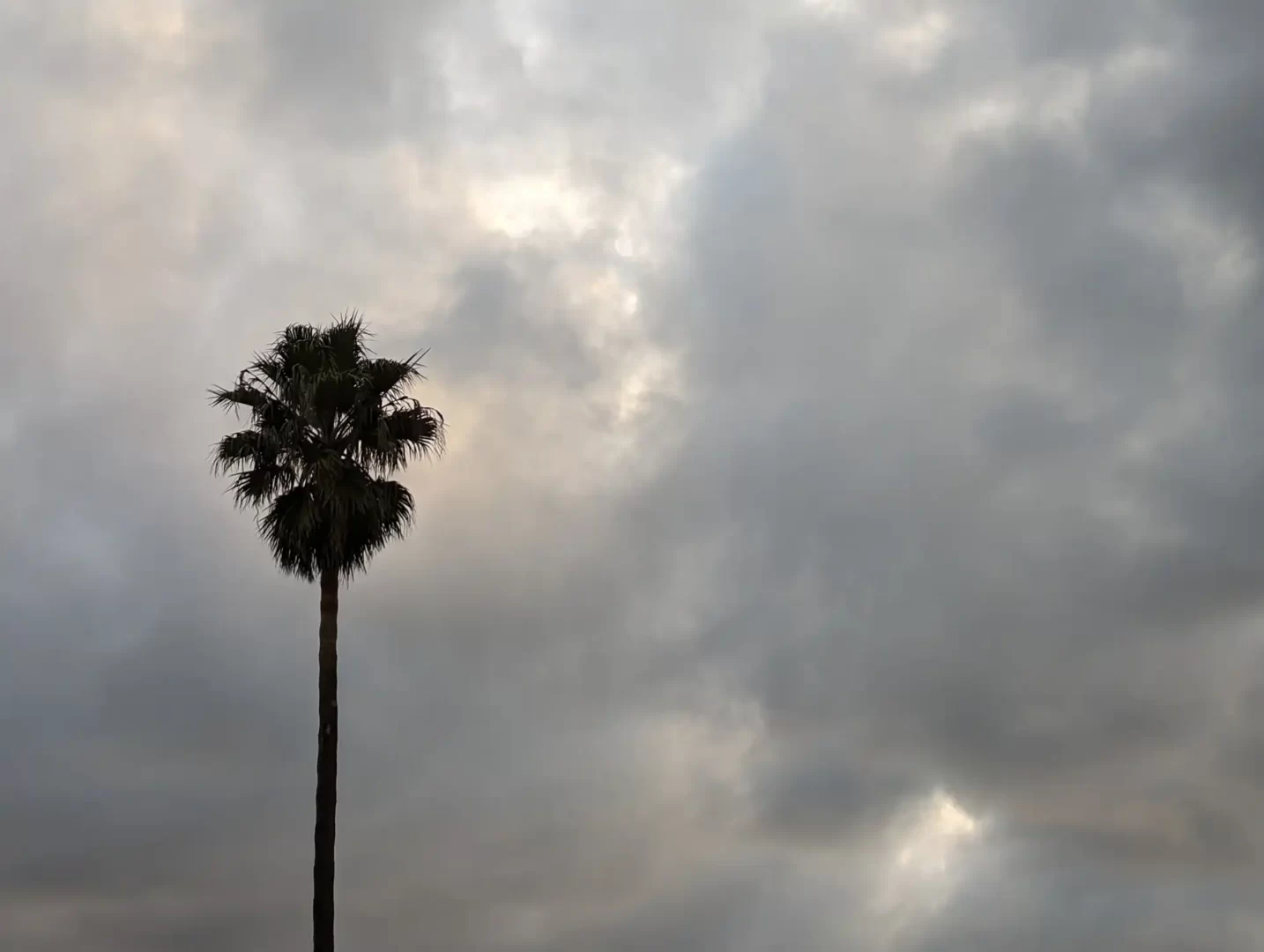
Palm Tree, Larkspur, California
I had previously aligned the finderscope and the StarSense Explorer app by focusing on a palm tree about a quarter mile away.
I used the Stellarium app on my Pixel 10 Pro to locate Jupiter. My iPhone was sitting in the StarSense Explorer phone bracket. I was a little dubious that I could calibrate the app during the day, take the telescope back out at night, put the phone back into the bracket and it would be accurate. I went through re calibrating it by aiming the telescope at a streetlight about 300 ft (91 m) away.
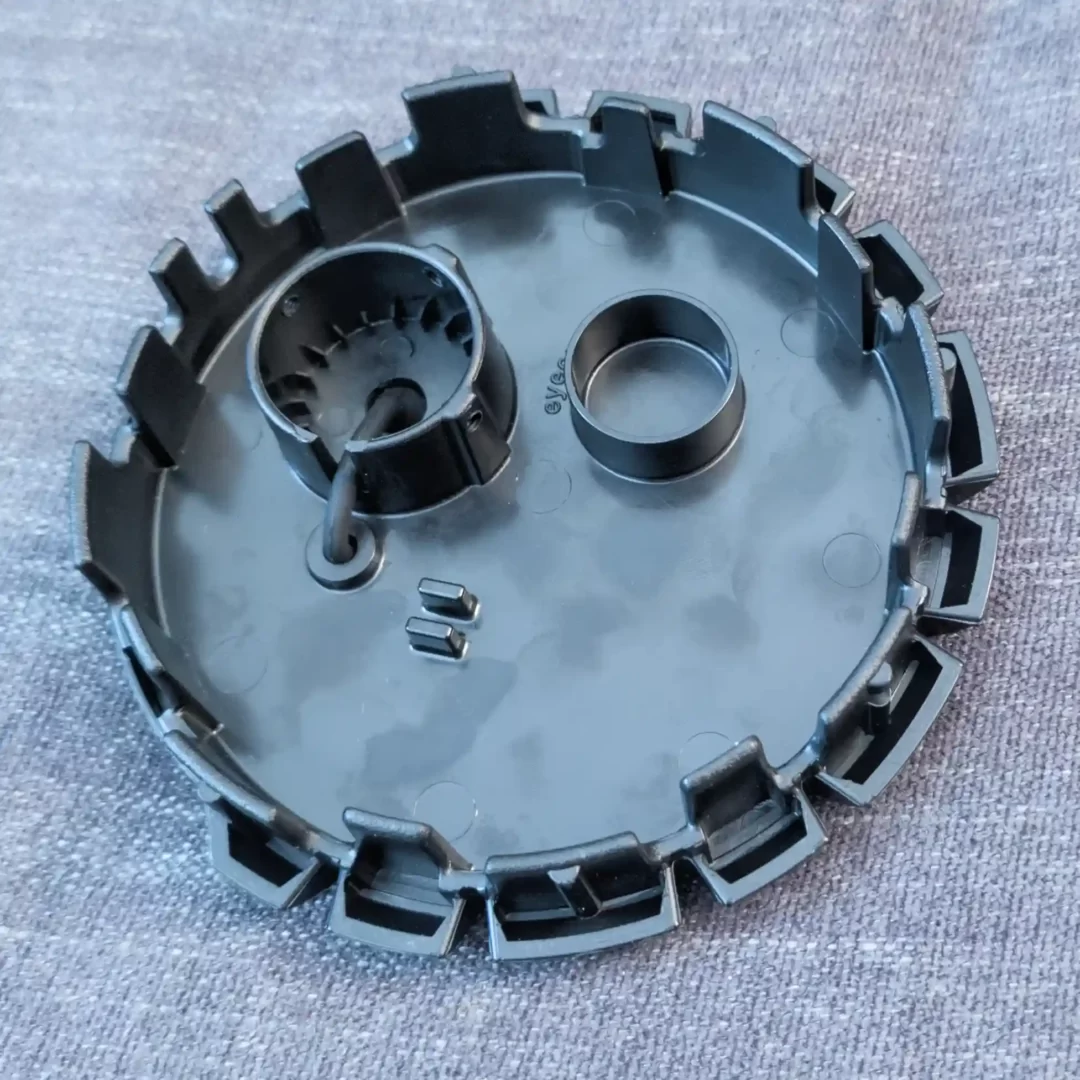
Lens cap/smartphone holder for the Popular Science by Celestron StarSense Explorer DX 100AZ telescopeThe plug is pulled out, then the eyepiece is inserted in the large hold. The smartphone attaches to the other side with bungee cords, that didn’t come with my telescope.
The telescope’s lens cap doubles as a smartphone holder for astrophotography. Unfortunately, my version of the telescope borrowed from the library didn’t have the bungee cords to hold the phone over the hole over the eyepiece, so for my feeble attempts at astrophotography, I tried to hand hold my Google Pixel 10 Pro over the eyepiece to take a photo. Given that the Pixel 10 Pro has three lenses that are visible on the camera bar, it was pretty confusing figuring out which lens I should hold over the eyepiece. On the Pixel camera setting, I set the lens selection to manual, so I could select ultra-wide, wide and tele without the slider.
The pictures were pretty sub optimal. That’s when I learned about more about visual astronomy and astrophotography.
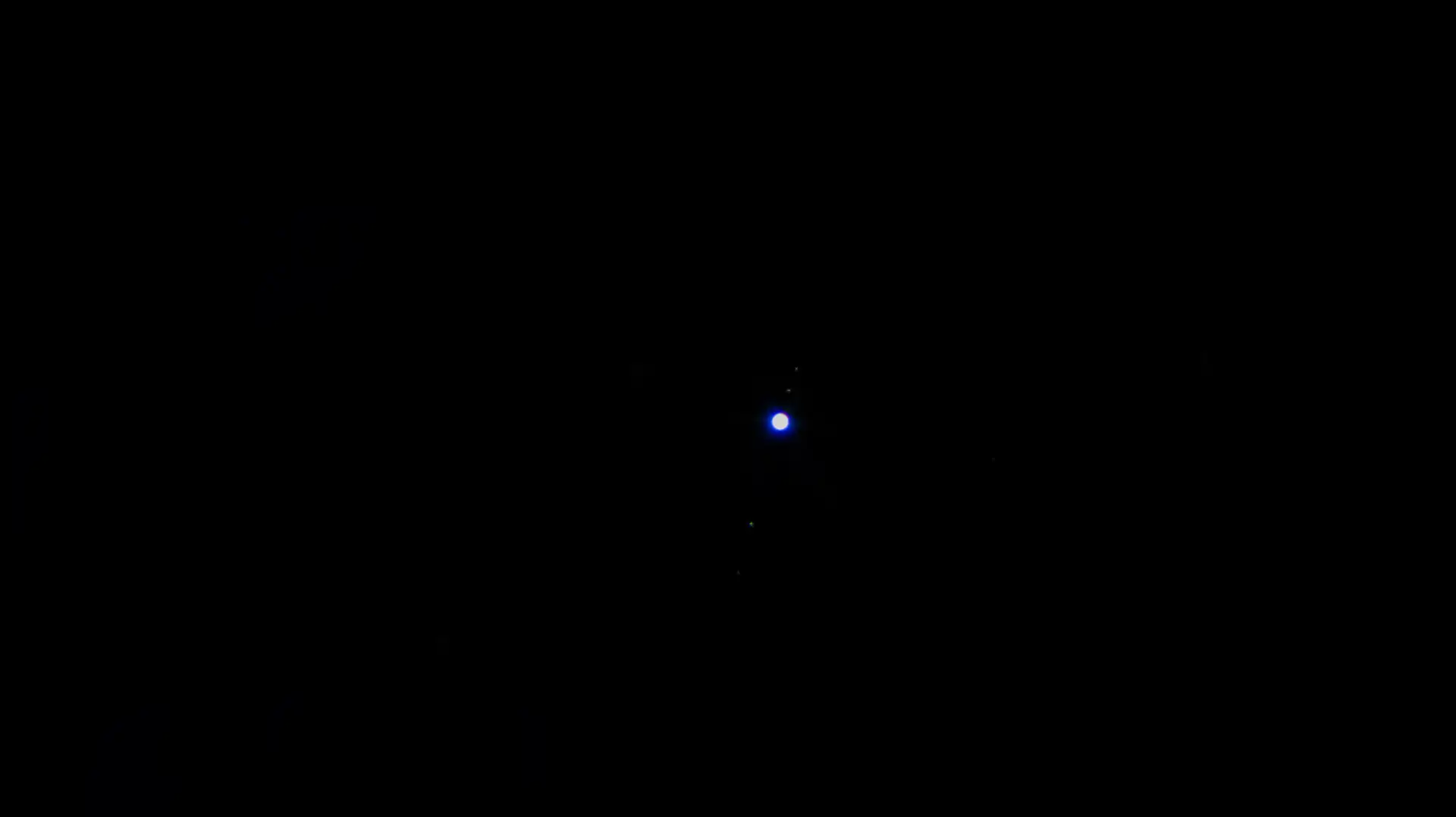
Jupiter and four moons through a Popular Science by Celestron StarSense Explorer DX 100AZ telescope
Looking through the telescope with the 25mm eyepiece, I could see the barely see two atmospheric bands around Jupiter and four moons very distinctly (the bands don’t show in the image taken by the Pixel 10 Pro held over the eyepiece).
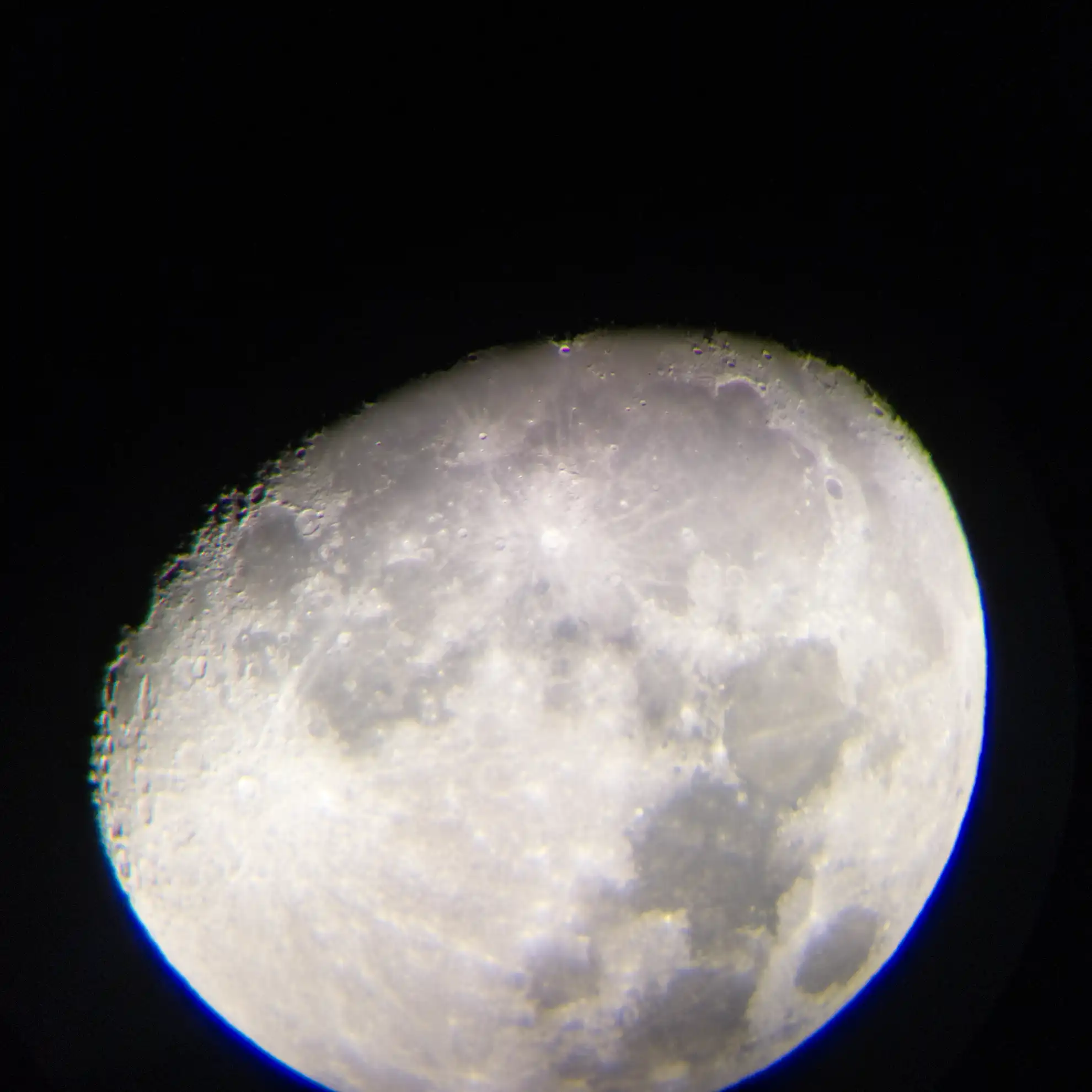
The quarter moon I saw was dramatic. Visible were mountains, craters, and the terminator. I had a very difficult time holding the phone over the eyepiece to get a decent photograph.
The Moon, through a Popular Science by Celestron StarSense Explorer DX 100AZ Telescope
When I turned the telescope towards Saturn, the rings appeared as a tiny wisp sticking out from the planet. I read that in late October and early November 2025, when I was looking, Saturn’s rings were oriented nearly edge-on to Earth’s line of sight, making them appear to “disappear” or become nearly invisible.
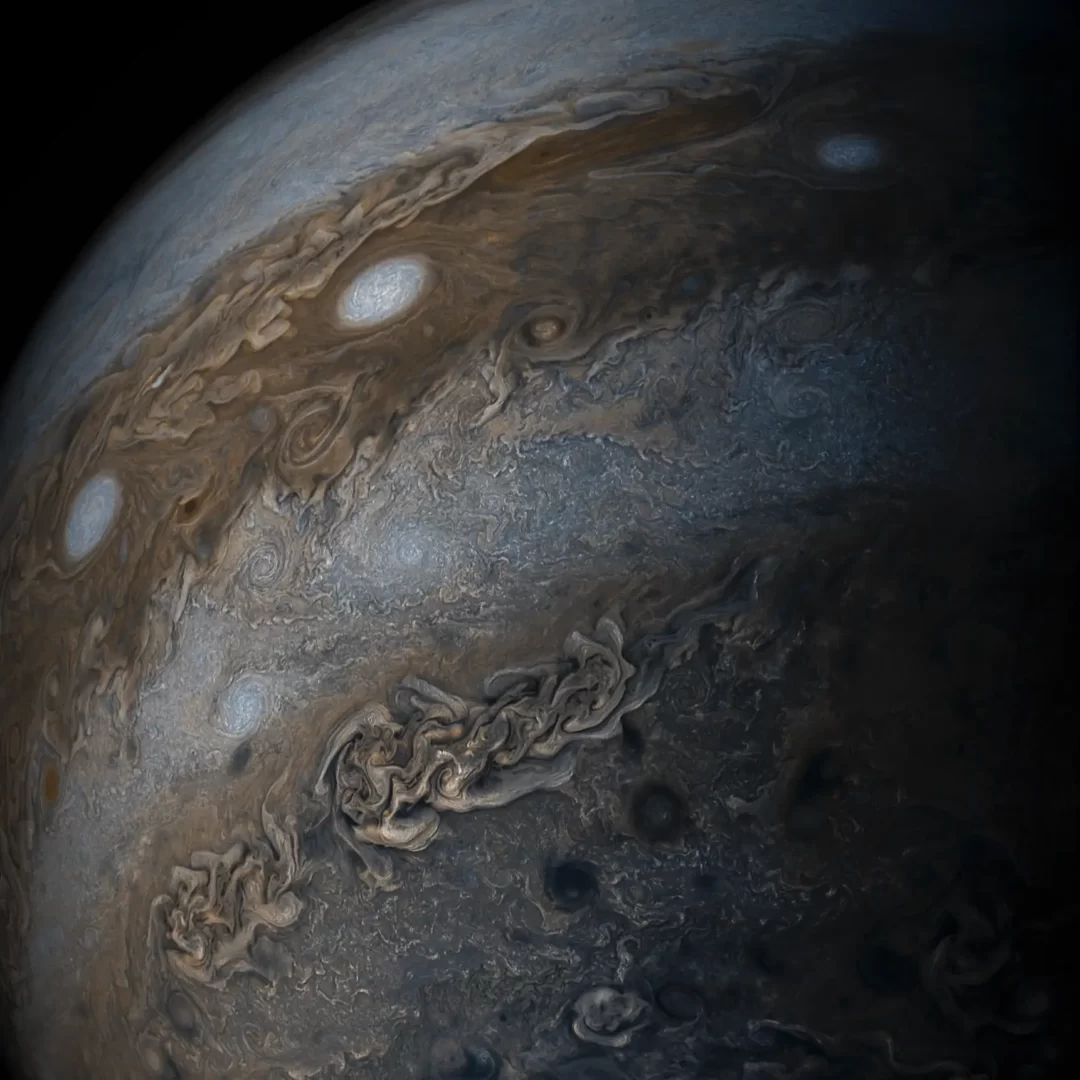
There is undeniably a thrill for my first time with visual astronomy. But with the entry level Popular Science by Celestron StarSense Explorer DX 100AZ telescope, planets are fuzzy bright lights, stars are bright pinpoints and visible galaxies looked like gray smudges. You can find spectacular images of the planets like this “enhanced-color image of Jupiter’s bands of light and dark clouds was created by citizen scientists Gerald Eichstädt and Seán Doran using data from the JunoCam imager on NASA’s Juno spacecraft” or even live streaming view from the Hubble telescope and Webb telescope.
This enhanced-color image of Jupiter’s bands of light and dark clouds was created by citizen scientists Gerald Eichstädt and Seán Doran using data from the JunoCam imager on NASA’s Juno spacecraft.
These are direct links to sites where I read news about space (I get their RSS feeds and read them using feedly.com):
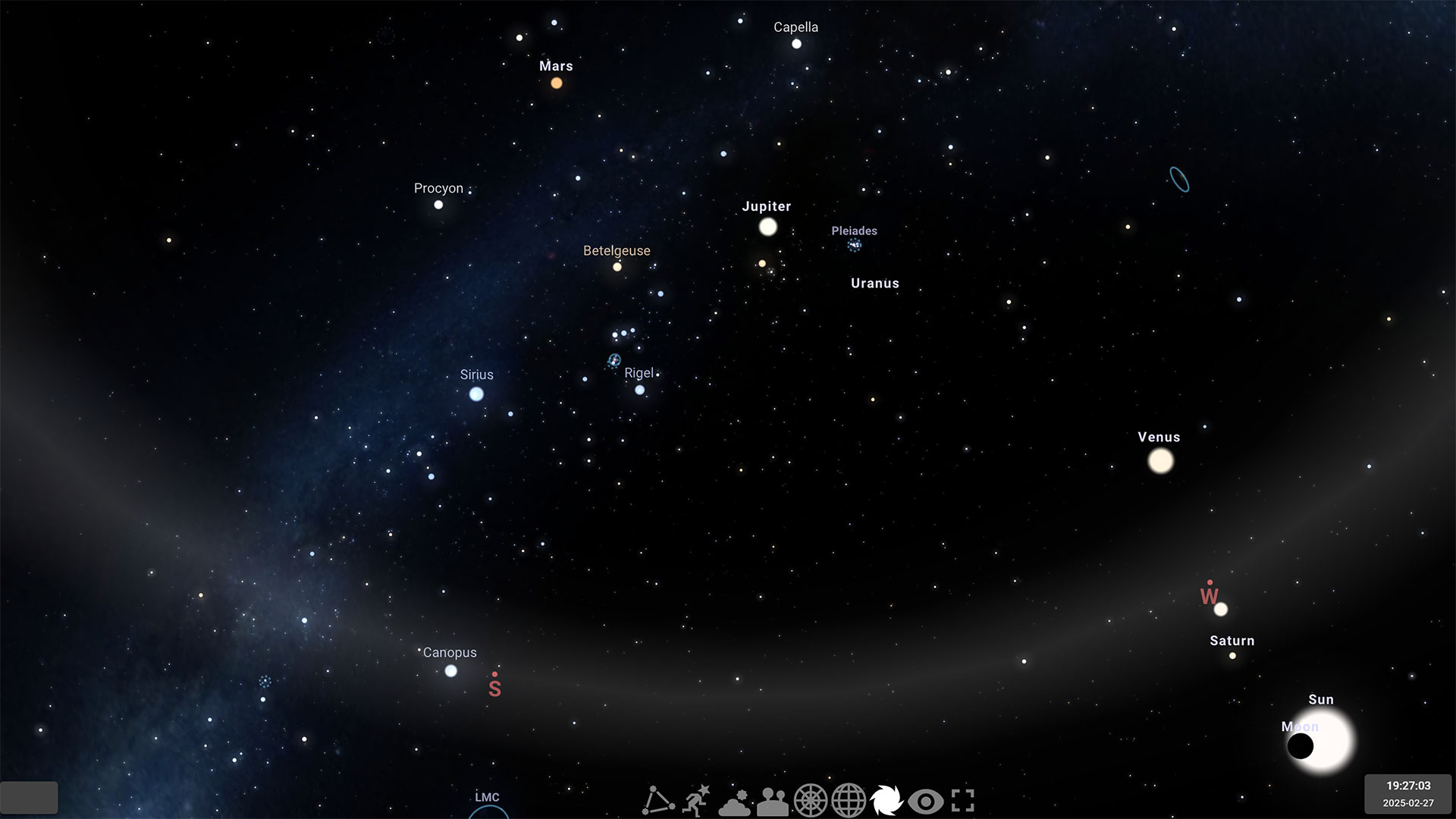
There was a lot of news in the past week about the Planetary Parade. This article by Preston Dyches on the NASA science site says: “Planet parade” isn’t a technical term in astronomy, and “planetary alignment” can refer to several different phenomena. As the planets of our solar system orbit the Sun, they occasionally line up in space in events called oppositions and conjunctions.
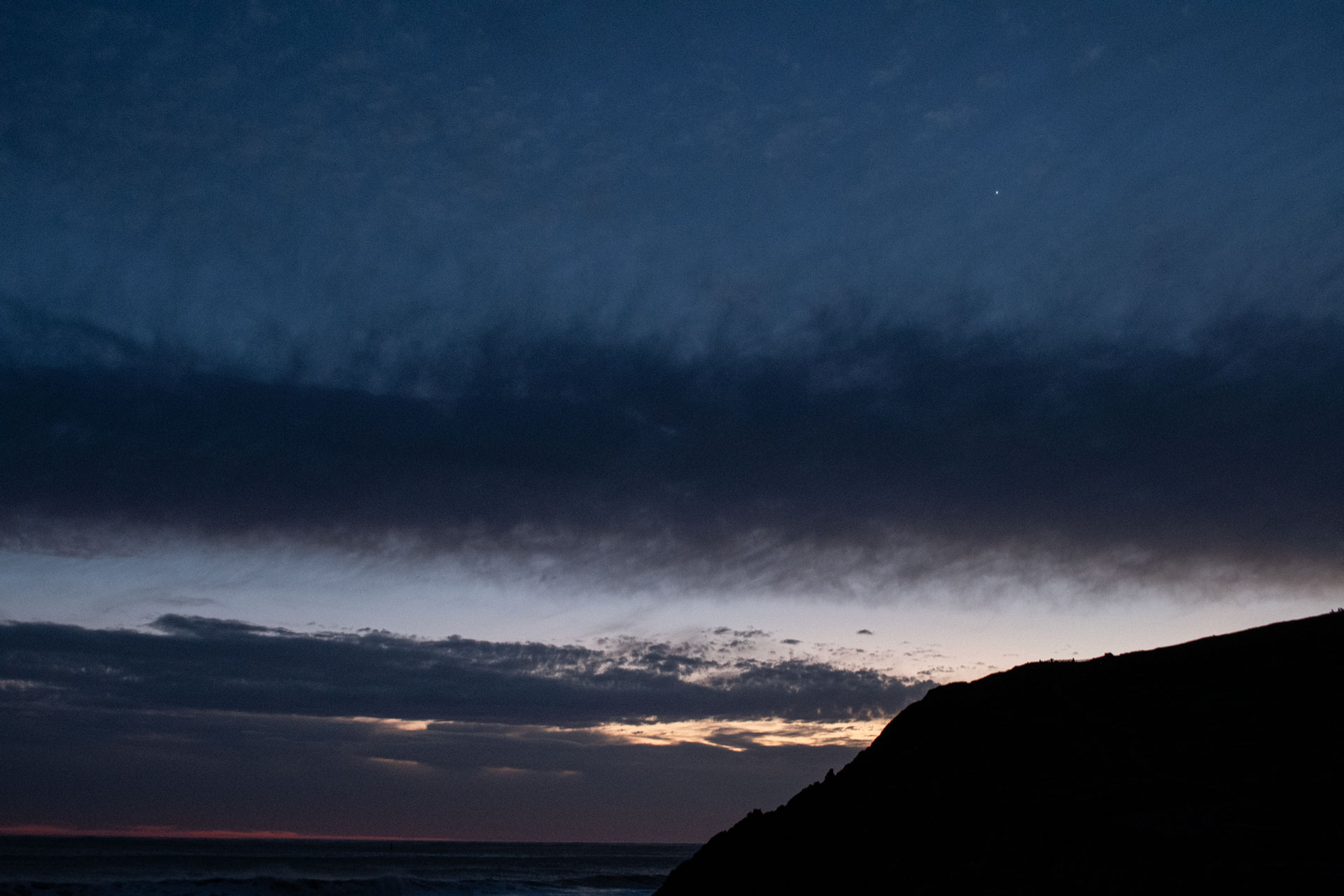
A half and hour before sunset (6:02 PST) on February 27, 2025, I drove out to Rodeo Beach, California, hoping to make a photograph of the planetary alignment. It was cloudy and the wind was probably 15 mph (6.7 m/s). Though the winds were offshore, the cloud cover was moving very slowly.
After an hour and a half, it became clear the weather wouldn’t improve soon. It seemed it wouldn’t clear up for a couple of hours. I took the above photo with Venus visible in the West. Mars was visible (out of the frame) almost 90° overhead. I thought about how Ansel Adams had made commitments to getting a great photograph, considered the cool temperature and the wind, then I decided to leave to go out for dinner.
(Above) Stellarium screen capture of the southwestern night sky from Rodeo Beach, California, on February 27, 2025 at 7:27 PM PDT. Maybe it would have looked like this IRL, had it been clear.
To provide the best experiences, we use technologies like cookies to store and/or access device information. Consenting to these technologies will allow us to process data such as browsing behavior or unique IDs on this site. Not consenting or withdrawing consent, may adversely affect certain features and functions.
Functional
Always active
The technical storage or access is strictly necessary for the legitimate purpose of enabling the use of a specific service explicitly requested by the subscriber or user, or for the sole purpose of carrying out the transmission of a communication over an electronic communications network.
Preferences
The technical storage or access is necessary for the legitimate purpose of storing preferences that are not requested by the subscriber or user.
Statistics
The technical storage or access that is used exclusively for statistical purposes.The technical storage or access that is used exclusively for anonymous statistical purposes. Without a subpoena, voluntary compliance on the part of your Internet Service Provider, or additional records from a third party, information stored or retrieved for this purpose alone cannot usually be used to identify you.
Marketing
The technical storage or access is required to create user profiles to send advertising, or to track the user on a website or across several websites for similar marketing purposes.