MintyBoost USB Charger v1.1

MintyBoost v 1.1

Update: This post is about version 1.1 of the MintyBoost. ladyada has updated the kit to version 3.0.

In high school, I used to love building electronic things. That was so long ago, I was using vacuum tubes to make power supplies.

Once I made an audible tachometer for my car from a schematic in Popular Science. I even thought I wanted to be an EE and started at UC Berkeley in the School of Engineering. After a few quarters I realized that if I didn’t like learning engineering, I probably wouldn’t like doing

Minty Boost Kit Components

engineering. (I think my friend Dan Kalman told me that)
Over the years, I still enjoyed making electronic things. Back in the mid 70’s, I had just moved to New York.

Minty Boost Circuit Board

As a photo assistant, I used an answering service home answering machines weren’t in wide use.
By the late 70’s, I bought an answering machine and a pager. In those days, the only people who used pagers were doctors. I needed a way to know immediately that I had received a message on my answering machine.

MintyBoost Kit Solder Side

I put a roller switch on one of the answering machine cassette solenoids that triggered a bunch of 555 timers. That dialed my pager’s number from a chopped up Radio Shack phone that had my pager’s numberprogrammed in one of the speed dial locations.

Years later, answering machines had their own call transfer feature.
When Make Magazine started publishing, I became a charter subscriber. The projects they were doing were all the kinds of things that I used to do. One of the projects I saw at the Make Blog, was kit called the MintyBoost, a USB charger designed by ladyada, that fits in an Altoids tin and runs on two AA batteries.

It basically takes the 3 volts from the batteries and boosts it to the 5 volts that USB devices use. Since we have a couple of iPods and cell phone that can be charged with the MintyBoost, I bought a kit.
You can update the v1.1 by adding a resistor.

It’s a great beginner’s kit and easy to assemble. You have to solder the components to the circuit board but you’ll learn basic soldering skills in the process.

The hardest part for me was finding the Altoids gum.

Once you’ve built the charger, you’ll have a something that is useful and may give you the satisfaction of making something yourself. That’s got to be worth something.
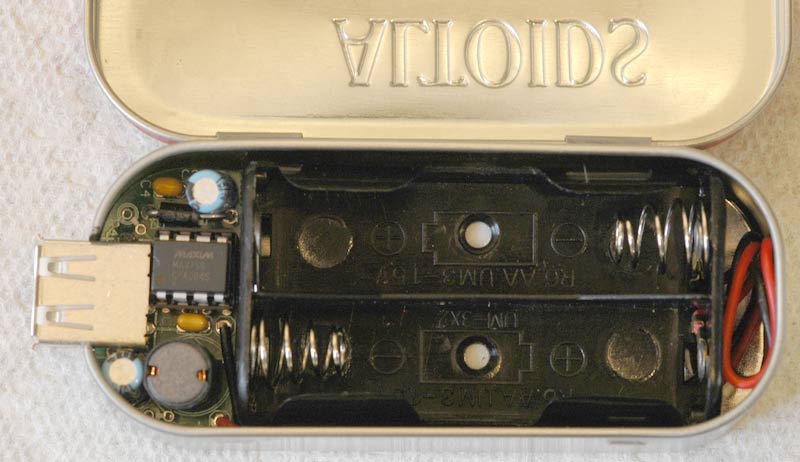
MintyBoost in Altoids Gum Tin Case

Do the Right Thing

I was watching Do the Right Thing and it reminded me of the time Kenny and I went out to Buzz-a-Rama in Brooklyn. Buzz-a-Rama is a slot car track that opened around 1965.

Early vs Late Slot Cars

It’s more in the neighborhood of Kensington, I think, not the movie’s Bed-Stuy. We had been making our grand tour of local slot car tracks in New Jersey, Westchester and Long Island sometime in the latter part of the 20th century.

Slot car racing was something I’d done as a kid in the 1960’s. I also participated in the brief New York City revival at Manhattan Raceway, as a member of the Rasta-Pasta-Noodle team. The pop culture status of the revival (I know, some people never stopped) was made apparent when Robin Leach and a film crew came to the track.

After Kenny and I left Buzz-a-Rama, we proceeded to the next course of our pastime, getting something to eat. We went to the local pizzeria. I told Kenny that he should ask why they didn’t have any pictures of African-American celebrities on the wall.

My Parents at Bimbo’s 365 c 1962

Sophia C. Wong and Honki L. Wong, parents of Alberta Mayo and Leslie Wong mrlesliewong

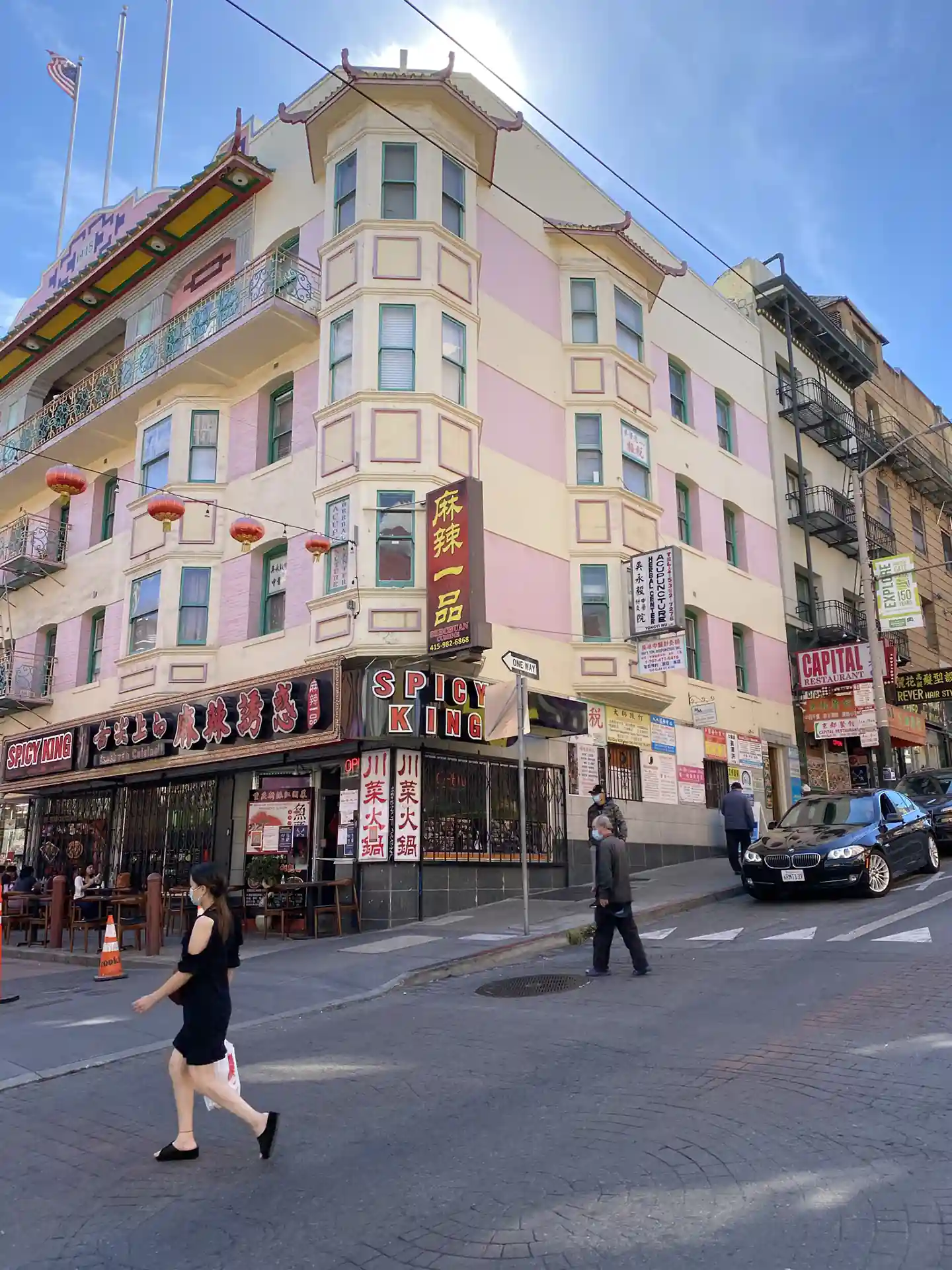
Though my family lived in Oakland, we had a close connection with San Francisco. In the 50’s and 60’s, my dad, an accountant, had an office in 835 Clay St in San Francisco’s Chinatown.

A small political pin-back button with black on white lettering that reads: [Dizzy Gillespie for President] Collection of the Smithsonian National Museum of African American History and Culture, Gift of Jeff Gold and Jody Uttal Gold
A small political pin-back button with black on white lettering that reads: [Dizzy Gillespie for President]

From the collection of the Smithsonian National Museum of African American History and Culture, Gift of Jeff Gold and Jody Uttal Gold

Our family often had dinner in Chinatown and afterwards we would stop at the Lucky Corner, a mom and pop grocery store on Grant and Washington that was one of my father’s accounts. I’d get candy for desert. Once, in the store, a tall, African-American man bent over and gave me a Dizzy Gillespie for President pin.

former office of Honki L. Wong, 835 Clay St, San Francisco mrlesliewong
The former office of Honki L. Wong, 835 Clay St, San Francisco mrlesliewong

Then we would walk over to City Lights, the North Beach bookstore. My father, mother and sister browsed the books. As a 12-year-old, I was bored in the bookstore.

On Broadway, we walked past the topless club barkers, who thankfully did not encourage us to go in. When I was older, my father, somewhat embarrassingly, talked about going to the Condor Club to see Carol Doda with my friends’ fathers.

My parents also liked to go out on special occasions. This portrait of them at Bimbo’s 365 Club, probably taken in the early 60’s, was in a frame that sat on our TV room bookcase for 30 years. I can imagine it was taken by a house photographer, dressed in a skimpy outfit and fishnet stockings.