Should You Be An Engineer

In the late 1950s to the early 1960s, from kindergarten to the sixth grade, I was a student at Crocker Highlands Elementary School in Oakland,

The Oakland educators must have been forward looking, because I remember taking a Strong Vocational Interest test (Strong Vocational Interest Blank). I also received a bunch of small pamphlets distributed by the New York Life Insurance Company Career Information Service. (Link to Career opportunities; a series of articles designed to help guide our children to a better future on the Internet Archive) There were titles, “Should You Be…” an Accountant, an Actuary, an Aeronautical Engineer, etc. And “Should You Go Into…” Advertising, Agriculture, the Construction Business, etc.

One pamphlet in particular stood out: ‘Should You Be an Engineer?’ It was one of the things that seems to have pointed me towards engineering through high school and my college applications.
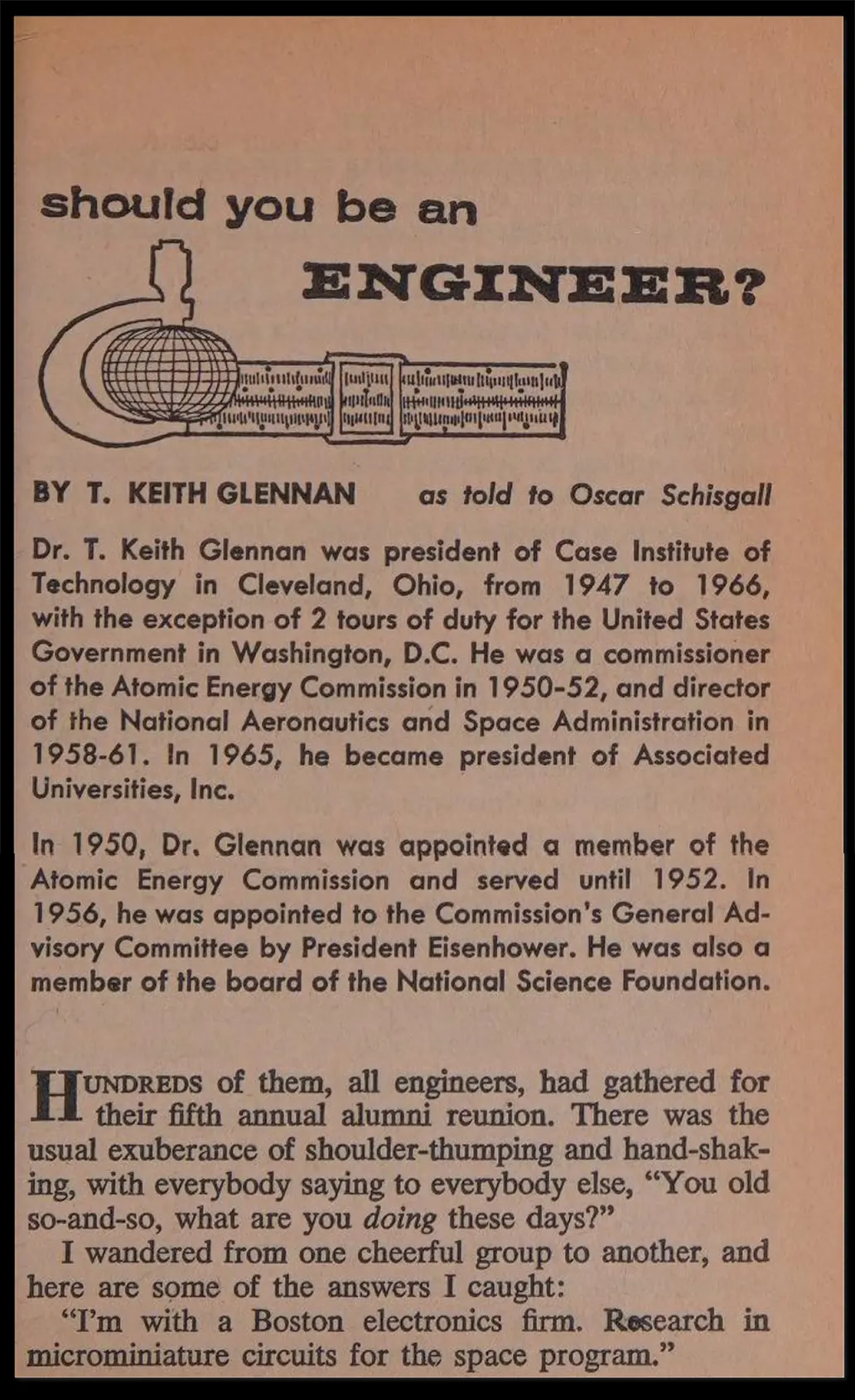
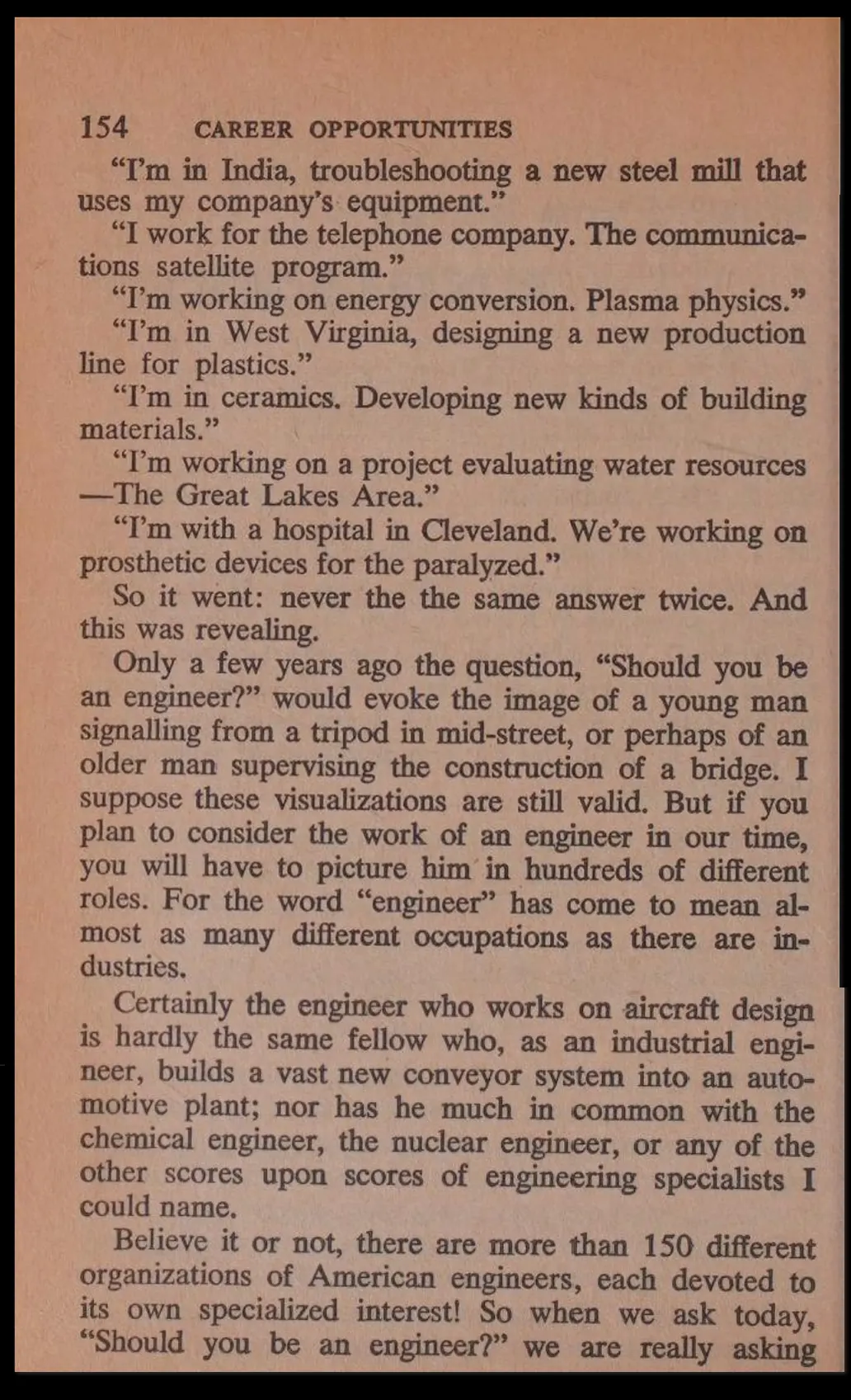
Should You Be an Engineer, T. Keith Glennan; New York Life Insurance Company; career information service; 8th revision; September 1966. An excerpt from the 8th revision (1966) of a New York Life Insurance Company career information service pamphlet

I liked making things. I carried around this Popular Science Audible Tach project for weeks while I worked on it in my Electronics class in high school. We also built power supplies and amplifiers from vacuum tubes. I still have the schematics. My electronics teacher at Oakland High, Mr. Ferguson, piqued my interest in engineering by explaining that an engineer might create a device to measure the temperature differential on a leaf.
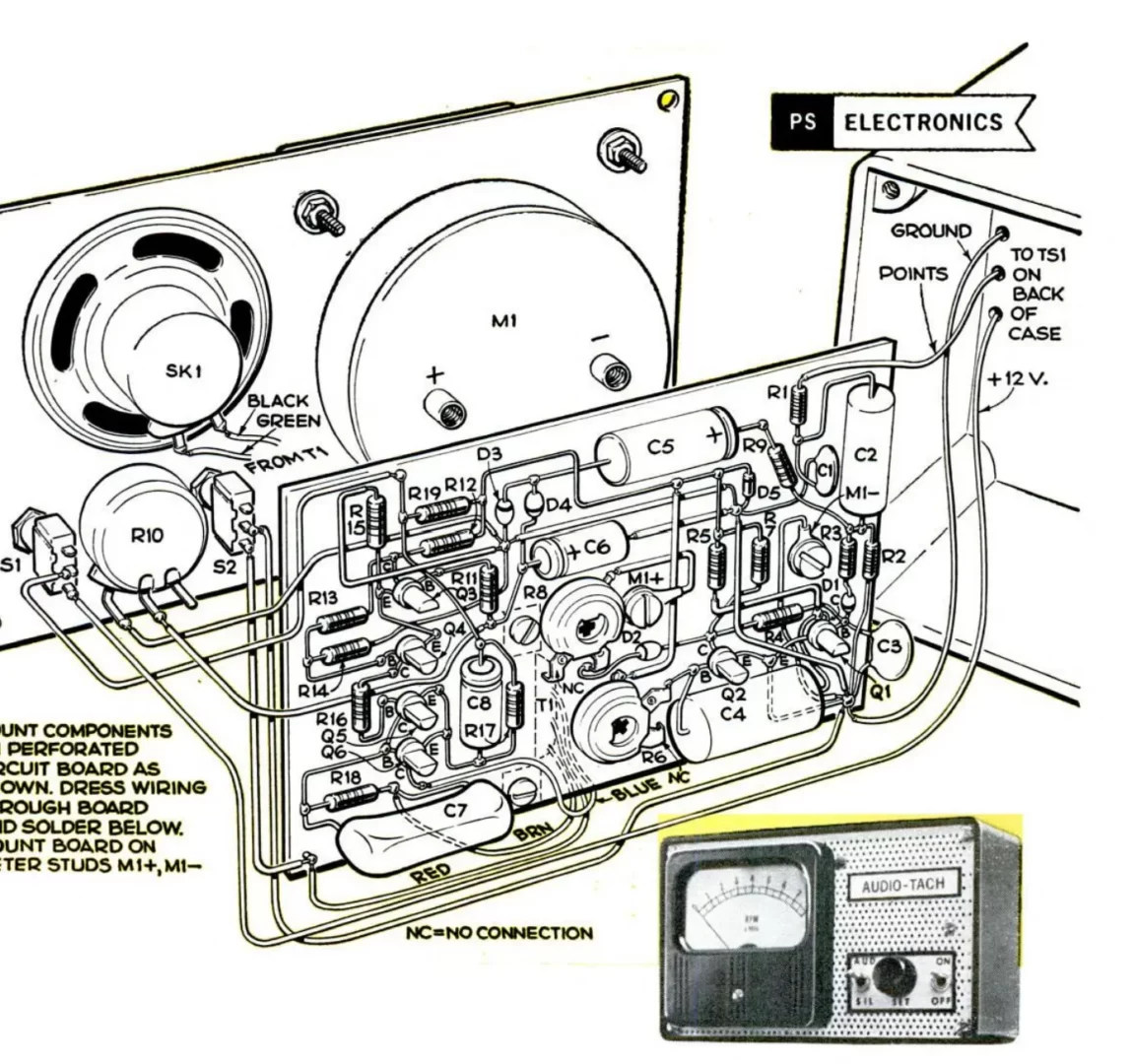
Audible Tach for your car or boat; Popular Science; December 1968; page 121
From Popular Science, December 1968, page 121; Audible Tach for your car or boat;

I was an A or B student in math, physics and chemistry so accordingly, I applied to the engineering programs at UC Berkeley, Caltech, MIT and Harvey Mudd. I was accepted only at Berkeley.

In the fall of 1970, I started at the College of Engineering at Berkeley. My first quarter, I took Math 1A, Engineer 1, Philosophy, Art History, and Asian Studies. My advisor told me it was too heavy a load, but he let me do it. It may have been my downfall. I didn’t realize it at the time, but I was trying to learn a new mathematical language (Calculus) and a new machine language (Fortran) while simultaneously writing papers for three different departments.
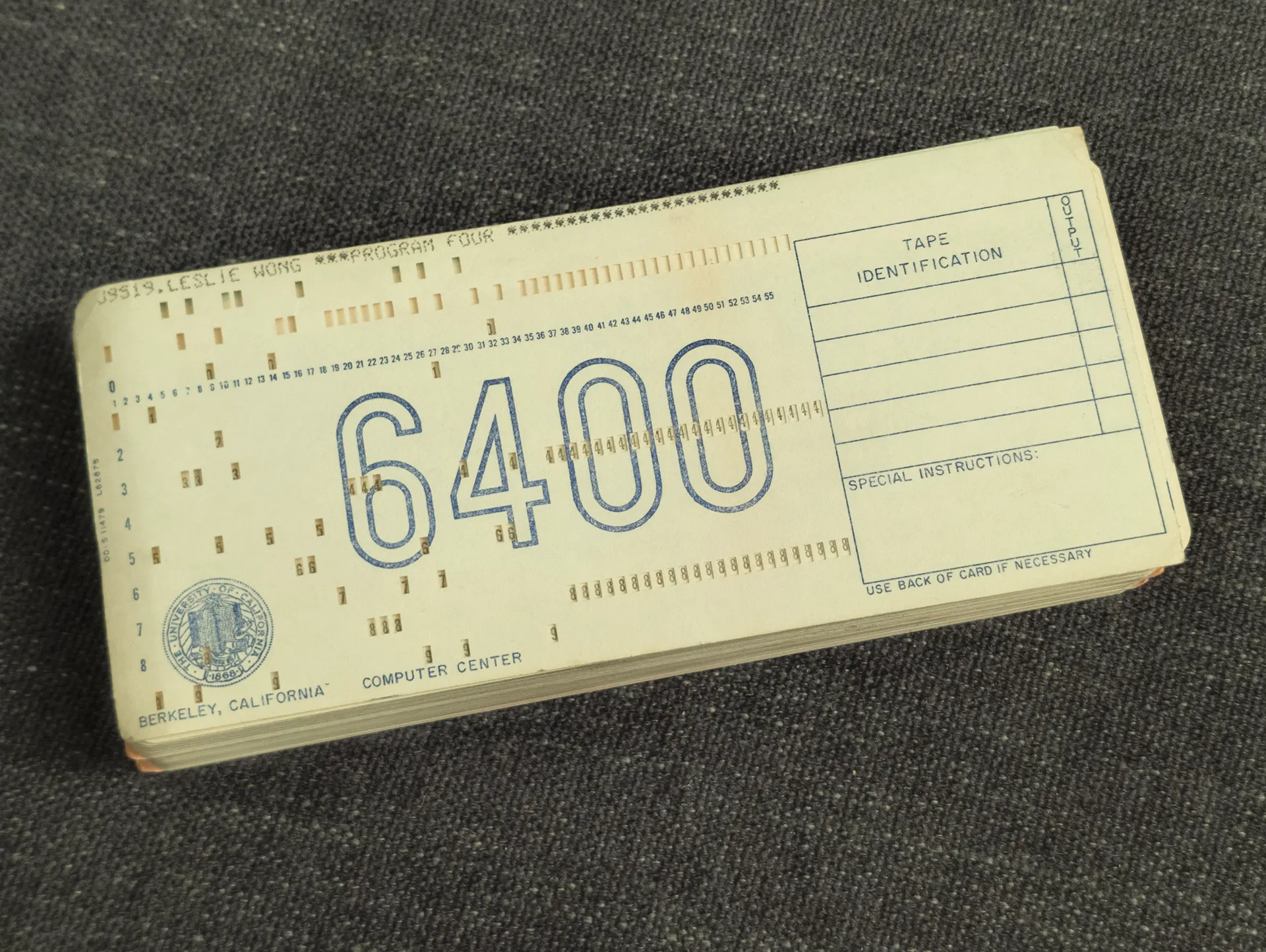
A hand-punched FORTRAN IV job deck for the Engineering E1 course, Fall 1970, UC Berkeley

Engineering 1 was something like Computers and their Applications. We learned Fortran IV, used an IBM 029 Keypunch to write the code to punch cards, then submitted the deck to Computer Center. The next day, you’d pickup your green-and-white striped printout.

I learned how to jump the line at the Computer Center using a remote terminal that produced your program on paper tape. Gemini says was likely a Teletype Model 33 ASR.

My engineering education at Berkeley didn’t last too much longer.

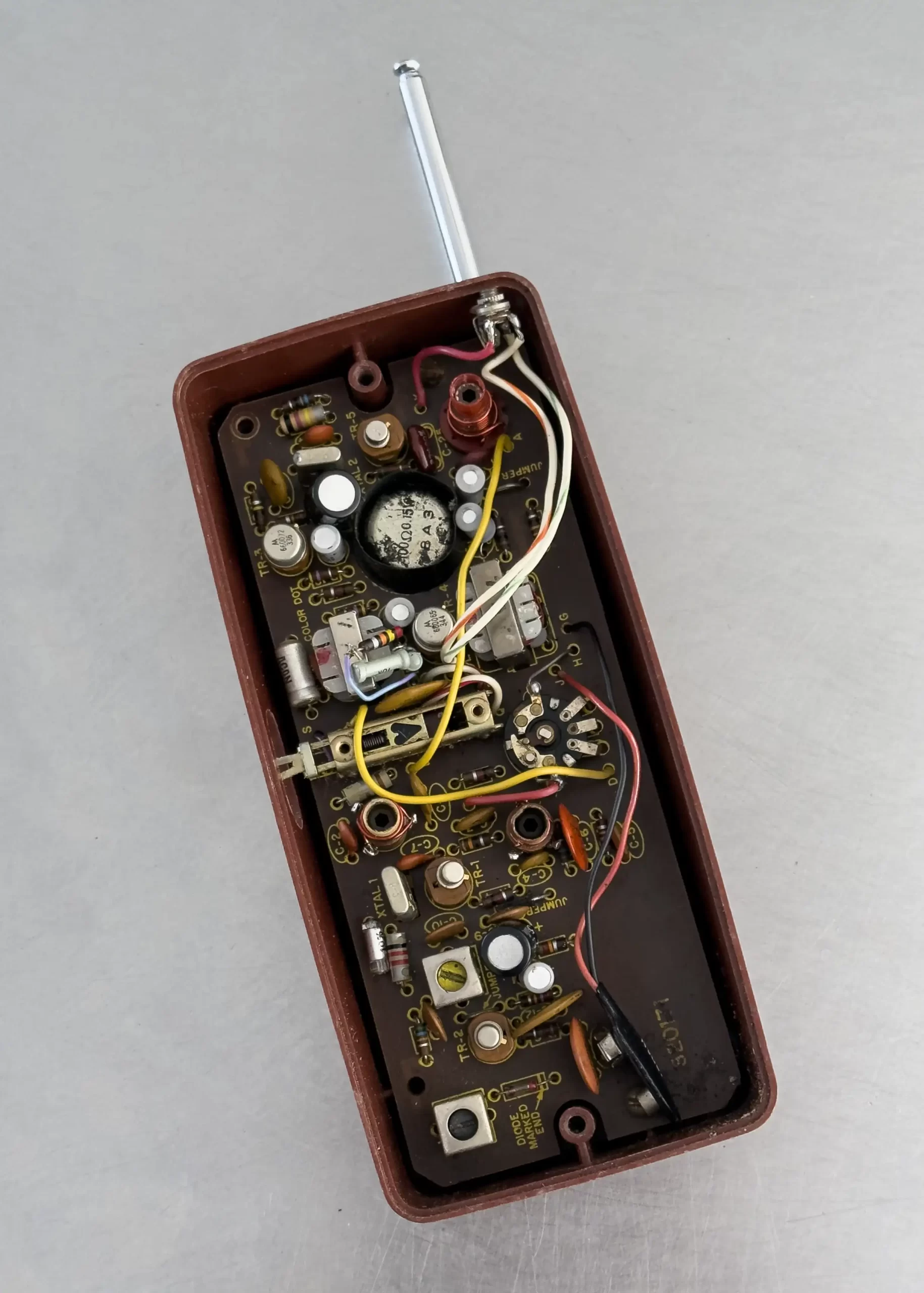
Knight Kit C-555 Walkie Talkies

When I was 10 or 11 years old in the early 1960s, one of my best friends, Scott Simonds, lived about 2,565 feet away from my house on Calmar Avenue. Scott lived Mandana Blvd, just below Ashmount Ave. That distance was significant because I thought that the Knight Kit C-555 Superhet Walkie Talkie Transceiver Kit would be a great way for Scott and I to keep in touch.

The 1964 Allied Radio catalog (page 2) said that the walkie talkies had a 3/4 mile (~1.2 km) operating range with their 100 mw input. (Currently in the U.S., FRS – Family Radio Service – has a 2 watt maximum)

C-555 Walkie Talkie Kit
Page 2 of the 1964 Allied Radio Catalog showing the Knight Kit C-555 Superhet Walkie Talkie Transceiver Kit

I thought that I could build the kit because, my father, for some reason, owned a Weller Junior Model 8100 Soldering Gun. After soldering the components to the circuit board, the walkie talkies didn’t work. Unfortunately, troubleshooting the kit was a little beyond the my capabilities when I was 11 years old. Fortunately, my Uncle Jimmy went through them and he got the C-555 walkie talkies talking to each other.

Knight Kit C-555 Superhet Walkie Talkie Transceiver Kit with rear cover removed showing electronic components
What my Knight Kit C-555 Superhet Walkie Talkie Transceiver Kit with rear cover removed showing electronic components looks like on May 17, 2025

One modification that I made was to replace the battery connectors with the common PP3 9V Battery Snap Connectors. The original design used a PP4 (Eveready 226, NEDA 1600) cylindrical 9V battery with a snap connector at each end. (see Joe Haupt’s flickr photo)

The ironic thing about this is that I don’t recall ever actually talking to Scott using these walkie talkies from my house to his.

For some reason, 61 years later, I still have both of these walkie talkies in my possession.

Lakeshore Ave, Oakland, California

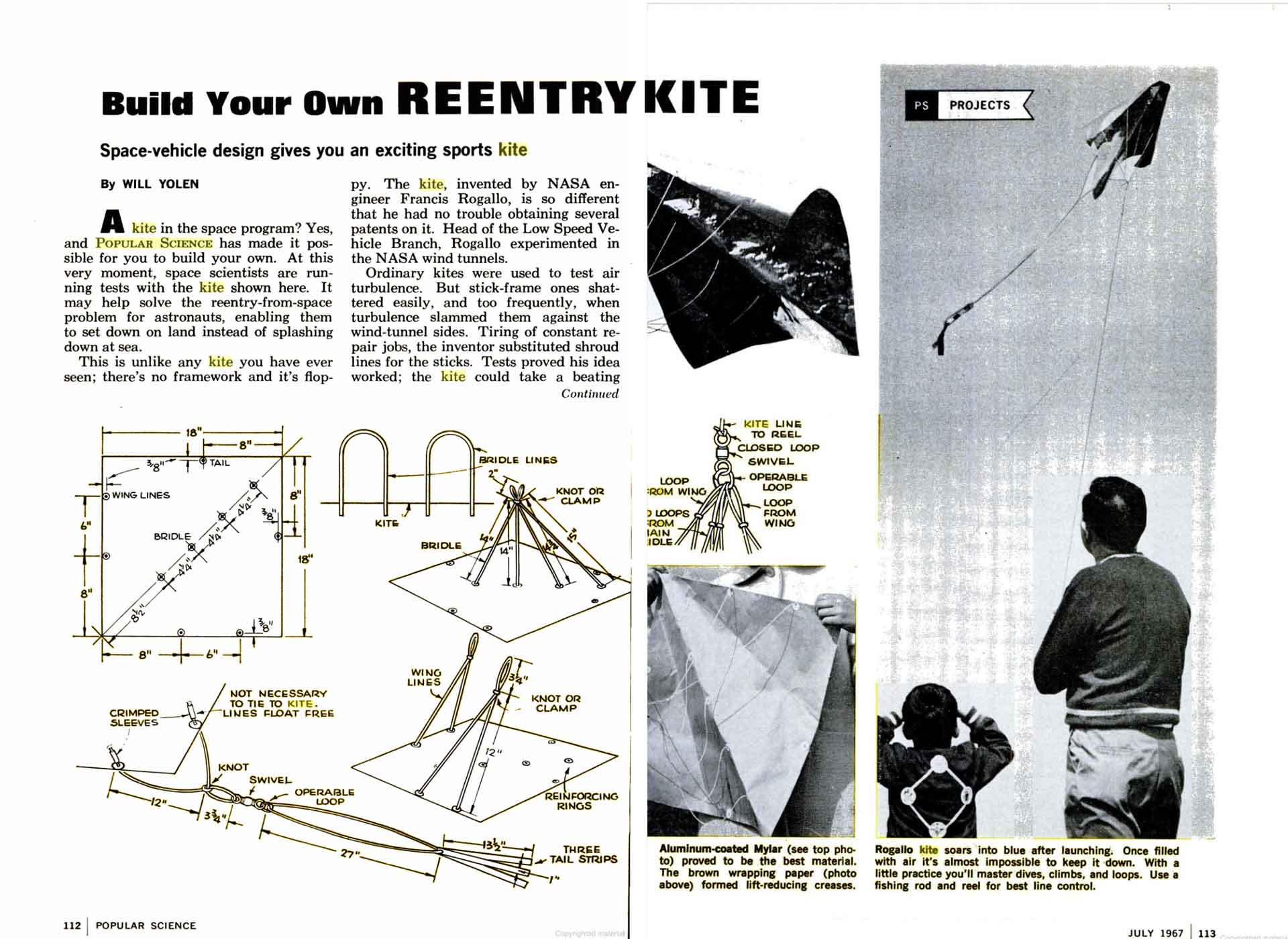
Plans from the July 1967 Popular Science Magazine for building your own Re-entry kite out of mylar.
Plans by Will Yolen. from the July 1967 Popular Science Magazine for building your own Re-entry kite out of mylar.

What does Lakeshore Avenue have to do with plans to build your own reentry kite? In the late 1960s, the Dime and Dollar store didn’t sell one of the materials needed to make it – biaxially oriented polyethylene terephthalate – mylar.

Lakeshore Avenue in Oakland, California, runs from the south end of Lake Merritt and ends a block from the house that I grew up in on Calmar Avenue. In the 1970s, Huey Newton lived at the south end at 1200 Lakeshore Avenue.

When I was a kid, going down to “Lakeshore” meant going to the commercial area between Mandana Boulevard and Lake Park Avenue. The main business that was my focus as a child and teen was the Dime and Dollar Store, which my family referred to as the “Dime Store.”

This Oakland Wiki entry pretty much sums up the Dime and Dollar Store for a kid growing up in the 1950s and 1960s:

“…they had pretty much everything…including fabrics and toys and lots of candy. They always had all those wax lips and mustaches and movie magazines. The lady with the black beehive would follow the kids all around the store. You could buy ‘caps’ too and squirt guns”

Candace Miller Blackman

In the late 1960’s, my Uncle Jimmy gave me a subscription to Popular Science. I’m pretty sure that Uncle Jimmy and that subscription launched me on a lifetime of making things.

The July 1967 issue of Popular Science Magazine had and article titled, “Build Your Own REENTRY KITE” It detailed a kite designed by NASA aeronautical engineer, Francis Rogallo, who was trying to solve the problem of space vehicle reentry on land, instead of water. Rogallo had invented what became known as the “Rogallo Wing”, the basis of the modern hang glider.

Space technology was fascinating to the 15 year old me, and the idea that I could build something using NASA technology made it even more so. The article suggested making the kite out of brown wrapping paper or aluminum coated mylar.

I went to the Dime Store and asked if they had any mylar. They didn’t know what it is was. I tried to describe it as a metallized plastic. That didn’t help.

Mylar (BoPET – biaxially oriented polyethylene terephthalate) was developed in the mid-1950s by Dupont and other chemical companies. NASA used mylar in a balloon, Echo 2, launched in 1964. Unfortunately, the technology had not yet trickled down the the Dime Store, so I built my kite out of brown wrapping paper.

Phil Wood Spokes

Phil Wood spokes, Campagnolo 8 speed hub

When I went to Montano Velo to buy some spokes and a rim for a new wheel build, they sold me Phil Wood spokes. I bought double butted spokes, so it took a few minutes to prepare them on the spoke machine. I had always used DT spokes and I really didn’t notice that they weren’t DT spokes until I started threading them through the hub and saw “PHIL” embossed on the butted section near the spoke head. I used Damon Rinard’s free spoke length calculator, which is an Excel spreadsheet with macros, to calculate the length of spokes that I needed. After truing and dishing the wheel, the spoke length calculations proved correct.

I also used a Mavic Open Pro rim. The Mavic Open Pro rims have double eyelets, which hopefully distribute the stresses through the two sections of the rim. I considered the Mavic CXP33, which has more of a V-profile than the Open Pro. I guess I’m a traditionalist. I’m not interested in saving weight – I just need strong wheels that will hold up to someone who weighs 13.8571 stone and occasionally bunny hops on craggy Oakland streets. I have never had any problems with Mavic rims. In the past, I have used the G40, GP3, GP4, MA40 and MA3. On my first ride today, the wheel didn’t pretzel so I guess it’s working.

Camera: Nikon D7000. Lens: Nikon Micro-NIKKOR 105mm f/2.8 (lens gift of Joe McNally)

Modifying a Campagnolo Cog

Grinding the splines on a Campagnolo 10 speed compatible cog

After building a new wheel and acquiring a new 13-26 Campagnolo Record 8 Speed Ultra Drive cassette, I needed to change the cog in the final position from a 26 tooth to something larger so I could have a lower gear for hills. My normal ride has a Category 3 climb, according to the Tour of California’s rating of bike climbs. There is also a short 9.5% grade that I dread every time I get there, so the extra 2.6 gear-inches makes a difference.

I couldn’t find an 8 speed Campagnolo cog larger than a 26 tooth but there seemed to be Miche (Campagnolo 10 speed compatible) cogs with 27, 28 and 29 teeth for sale on eBay. According to every source I found, Campagnolo 10 speed cogs would not work on an 8 speed hub, mainly because the splines are deeper and there is a stepped-ridge on one of the splines. That’s where the Dremel cut-off wheels come in. After a few minutes with the cut-off wheel and some chamfering of the splines with a file, the 10 speed cog was now 8 speed compatible.